


CRYSOUND has officially launched the CRY5620 SonoDAQ Go, a portable sound and vibration DAQ that brings acquisition, analysis, and signal output into one unit. This post covers its portability and measurement performance, dual-slot module options, field-ready design, onboard analysis, and typical applications.
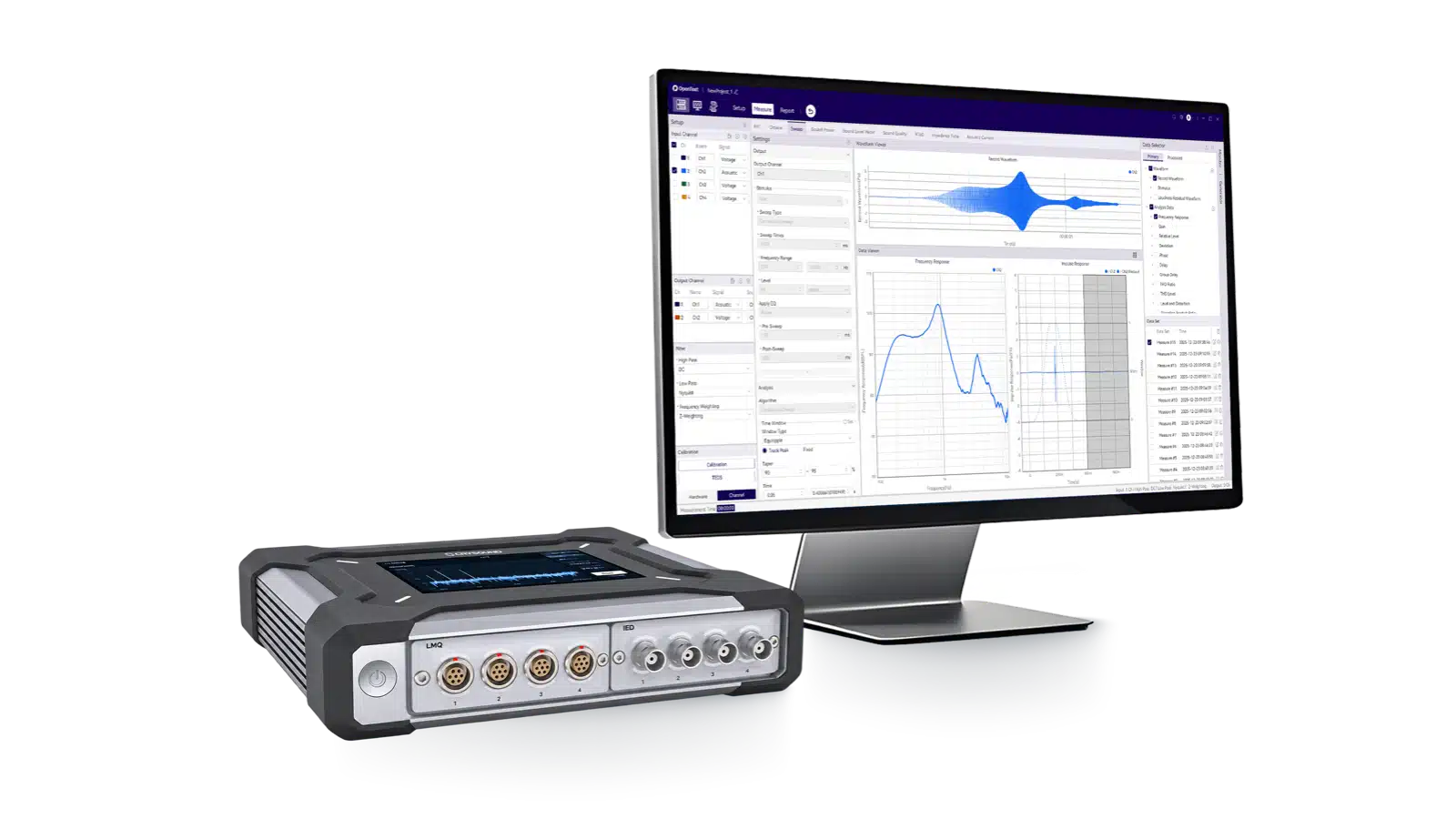
Portable Without Compromising Performance
Portable test equipment often comes with a trade-off: easier to carry, but weaker on specifications. SonoDAQ Go is built so that engineers do not have to choose.
Carry a Complete Test Setup in One Hand
The main unit weighs just 1.25 kg, or 1.75 kg with two modules installed. Acquisition, display, storage, and battery are all built in, so one hand is enough to move a complete, configured test setup from the lab bench to a vehicle cabin or a test point beside the production line.
Engineers can measure where the product actually operates, and the same unit is easy to bring along for customer demonstrations, teaching labs, or a temporary test point.
Acquisition Accuracy Independent of Main Unit Model
Acquisition accuracy is determined primarily by the installed input module, rather than the main unit model. The module defines key performance characteristics such as ADC resolution, noise floor and distortion. Using the same module with the same acquisition settings, SonoDAQ Go delivers consistent acquisition performance in a more portable format.
Two Slots for Flexible Test Setups
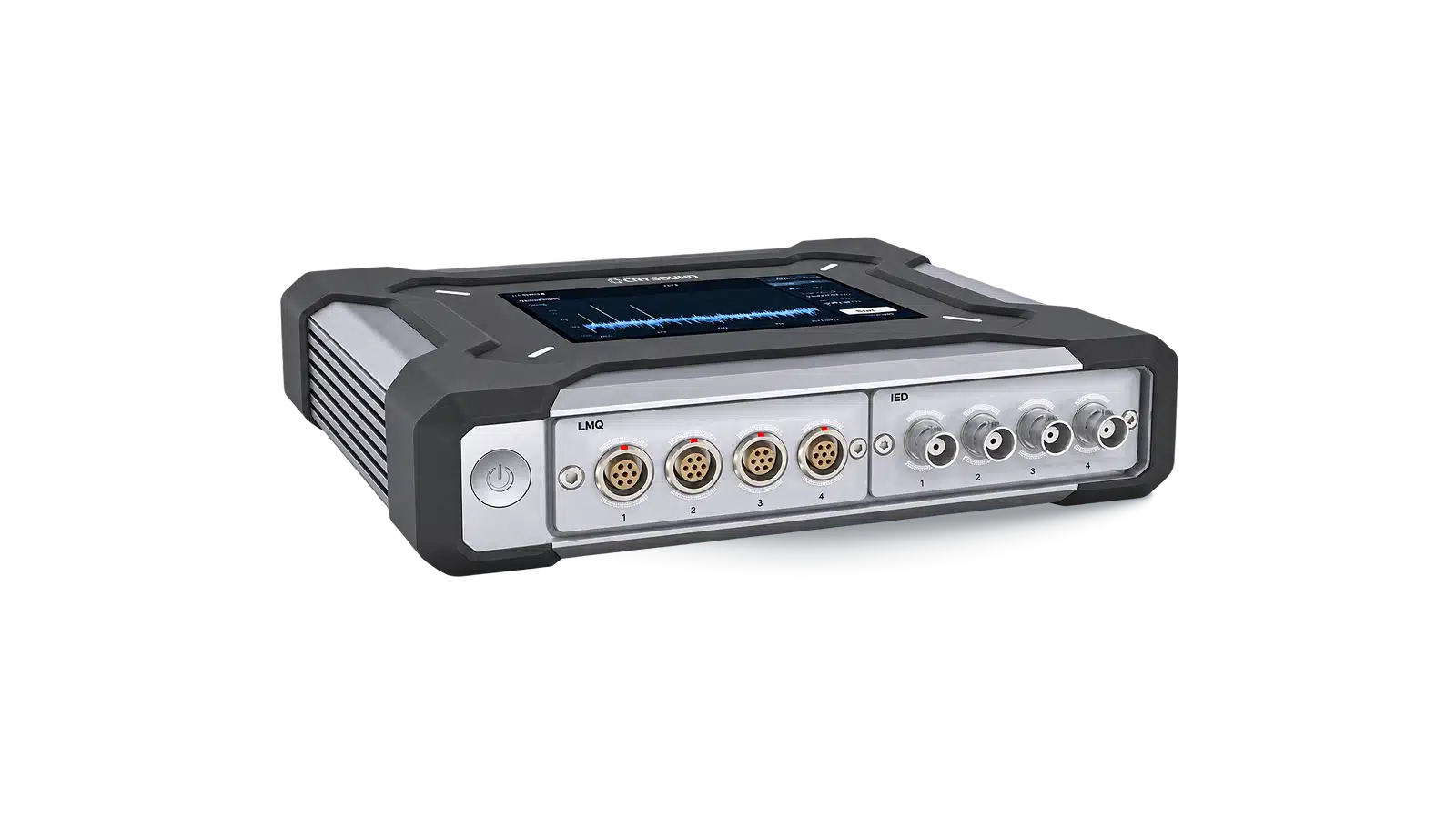
SonoDAQ Go has two module slots. Fit the modules the current test needs, then reconfigure when the next project comes along.
Scale From 4 to 8 Input Channels
Start with one four-channel input module for a small sensor setup. When the test covers more measurement points, add a second input module to reach eight synchronized input channels.
Reuse Modules Across the SonoDAQ Ecosystem
SonoDAQ Go is compatible with the SonoDAQ modular ecosystem. Teams already working with SonoDAQ can reuse suitable modules, and SonoDAQ Go can also serve as a compact supplementary node in a larger SonoDAQ system. Multiple units can be time-synchronized via PTP or GPS.
Choose the Right Input Module for Your Sensors
Three input modules cover the most common sound and vibration sensors:
- CRY5010 IES: four-channel IEPE and voltage input module with 32-bit resolution, a maximum sampling rate of 204.8 kS/s and 120 dB dynamic range. Supports TEDS, making it an entry-level choice for sound and vibration measurements.
- CRY5011 IED: four-channel IEPE and voltage input module for measurement microphones, accelerometers, and voltage sources, featuring 32-bit resolution and a maximum sampling rate of 204.8 kS/s. Its 160 dB dynamic range mode combines a 10 Vp input range with a noise floor of ≤1.5 μVrms over 20 Hz-20 kHz, capturing low-level details alongside high-amplitude signals. Supports TEDS, selectable AC/DC coupling, and differential or single-ended inputs, with ±30 ns channel-to-channel synchronization error.
- CRY5014 LMQ: four-channel universal input module with four 7-pin LEMO connectors supporting 200 V externally polarized microphones, IEPE, charge, and voltage inputs. A quad-ADC architecture on each channel delivers 32-bit resolution and up to 170 dB dynamic range, with selectable sampling rates from 10 S/s to 204.8 kS/s. Supports input amplitudes up to 31.6 Vp, TEDS, and CIC self-check, with ±100 ns channel-to-channel synchronization error, making it suited for NVH, acoustic, and structural vibration testing.
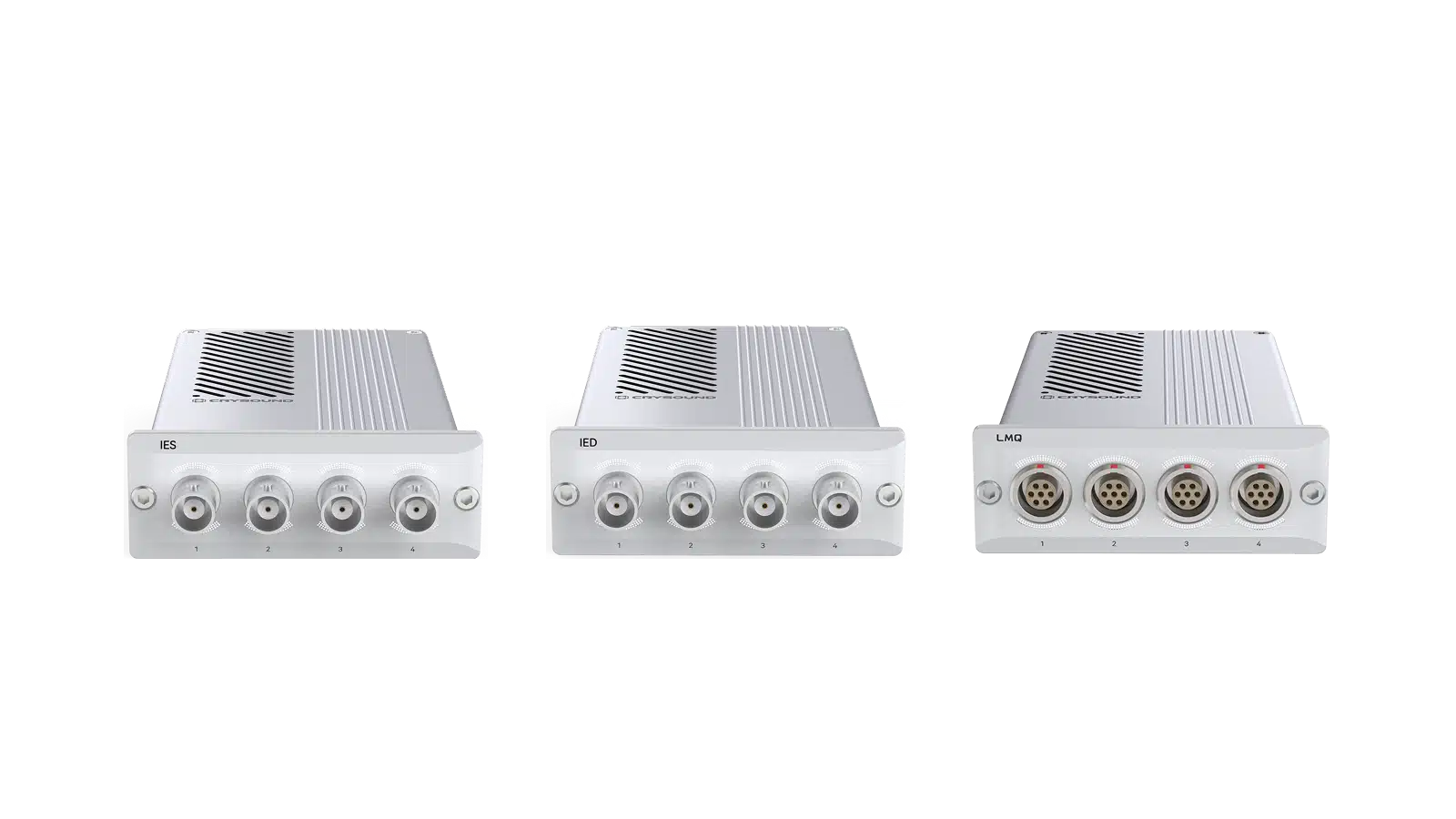
SonoDAQ Go also supports other compatible input modules to suit different sensor types and measurement requirements.
Flexible Output Options for Different Excitation Needs
Pair an input module with either AOS or ADD to combine signal output and response acquisition in one SonoDAQ Go.
- CRY5083 AOS: four-channel analog output module with 32-bit DAC resolution and a maximum sampling rate of 204.8 kS/s, providing a 4-in/4-out configuration when paired with a four-channel input module. Supports differential outputs up to 20 Vp or single-ended outputs up to 10 Vp, with channel synchronization error ≤100 ns and independent phase configuration-suited for multichannel excitation, system calibration, and driving external amplifiers.
- CRY5085 ADD: two-channel analog output module with 32-bit DAC resolution and selectable sampling rates of 48, 96, or 192 kS/s, providing a 4-in/2-out configuration when paired with a four-channel input module. Offers selectable signal and Class D amplifier modes: signal output reaches up to 30 Vpk, while the built-in amplifier delivers 10 W into an 8 Ω load. Integrated impedance measurement covers 4-600 Ω with accuracy ≤0.5% over 20 Hz-20 kHz, supporting loudspeaker and electroacoustic testing.
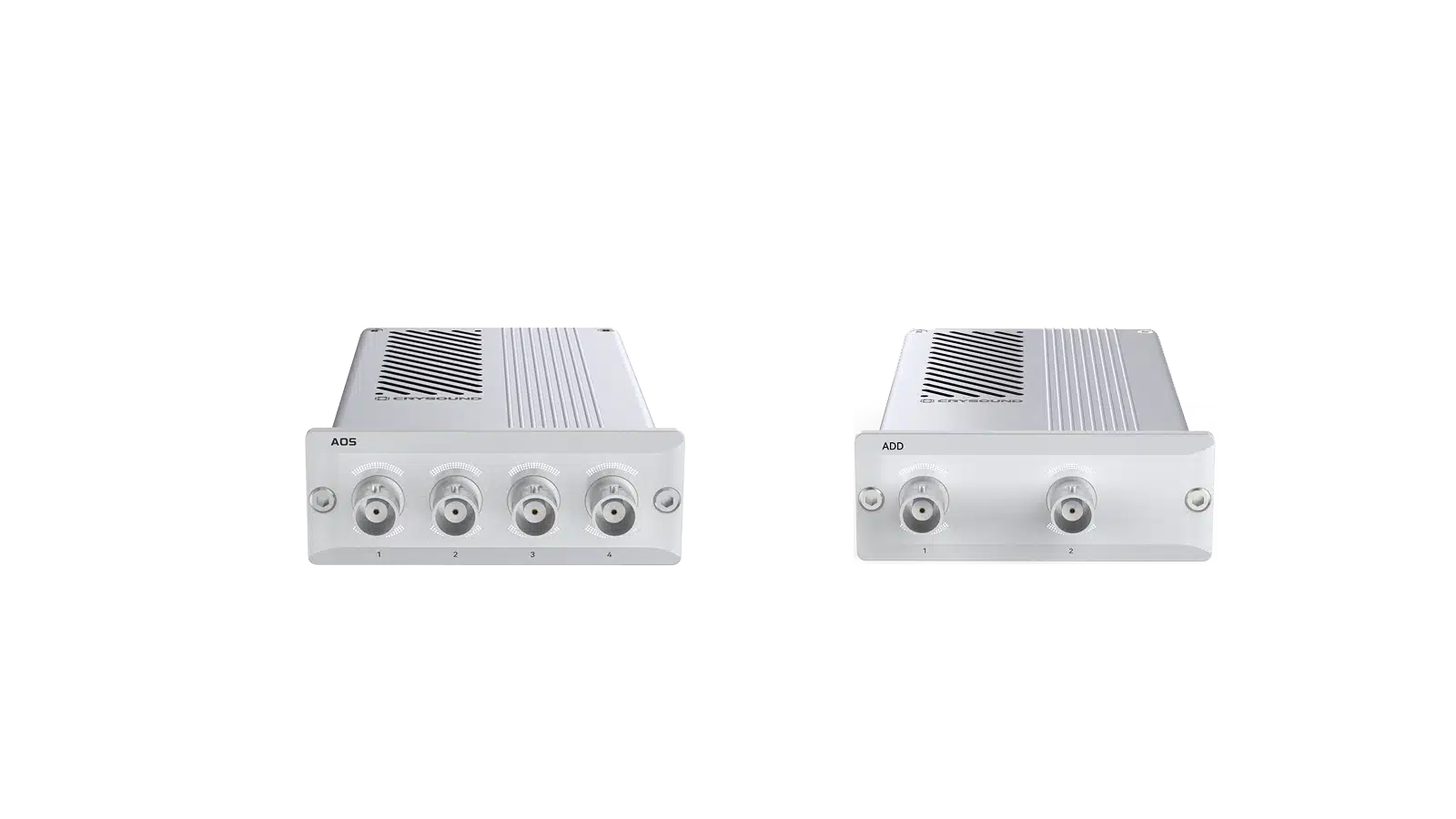
SonoDAQ Go also supports other compatible output modules for different signal generation and excitation requirements.
Onboard Analysis for Instant Results, Built for Field Testing
Field testing often leaves little room for a laptop. SonoDAQ Go combines standalone data acquisition with onboard sound and vibration analysis, bringing measurement and results directly to the test point. Engineers can review data on site and repeat a measurement immediately if something looks wrong, rather than discovering problems back at the office.
Touchscreen Control and Onboard Analysis with Built-In Battery Power
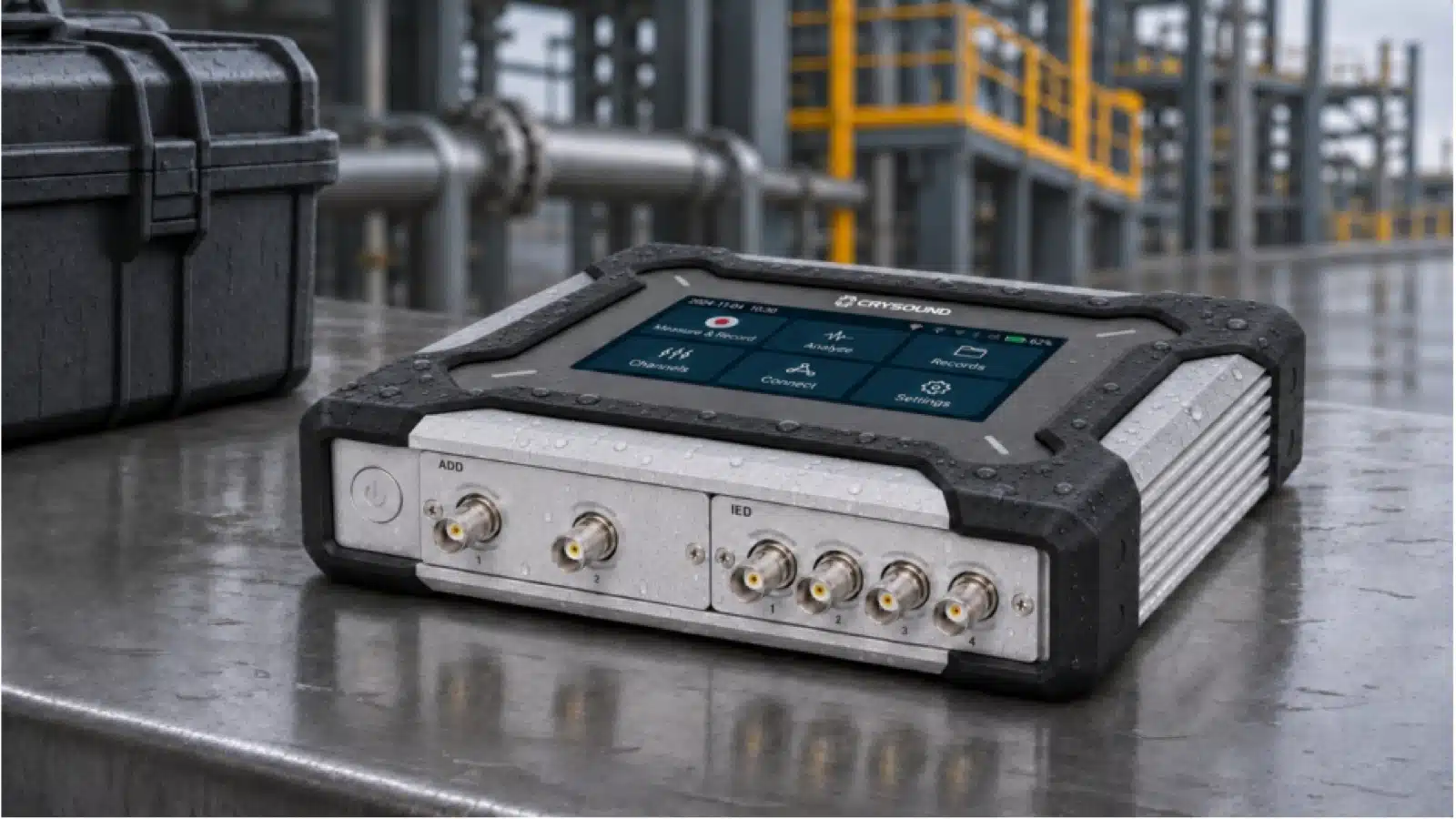
The 5-inch touchscreen lets engineers configure measurements, monitor signals, start recording, and review analysis results directly on the unit. FFT and octave analysis reveal dominant noise frequencies, sound level and sound power functions assess acoustic performance, and vibration analysis with tachometer inputs supports rotating equipment testing. The built-in battery enables operation without a nearby power outlet, while DC and PoE power are available for lab benches and fixed test stations. Input and output EQ is planned for a future release.
Standalone Recording to microSD
SonoDAQ Go records straight to a microSD card, so no PC needs to stay connected during the measurement. A 256 GB card is included, and a 2 TB option is available for long recording sessions. Collect data on site, then review and post-process it later.
IP67 Protection for Harsh Environments
With IP67 protection against dust and water, SonoDAQ Go is ready for production floors, vehicles, and outdoor test sites, not just the laboratory.
Fanless Design with No Added Noise
SonoDAQ Go has no cooling fan, which matters for acoustic testing in particular: the acquisition hardware adds no fan noise near the microphone, even when it sits right beside the measurement point.
Integration with OpenTest and openDAQ
For PC-based testing, SonoDAQ Go works with OpenTest for channel configuration, real-time waveform display, FFT, sweep testing, sound power analysis, and custom test workflows.
Support for openDAQ and an SDK lets engineers control the unit directly and integrate it into existing test benches and automation systems.
Applications of SonoDAQ Go
With its compact size, standalone operation, and flexible modules, SonoDAQ Go fits a wide range of sound and vibration tasks. Here are three typical examples.
Sound and Vibration Testing
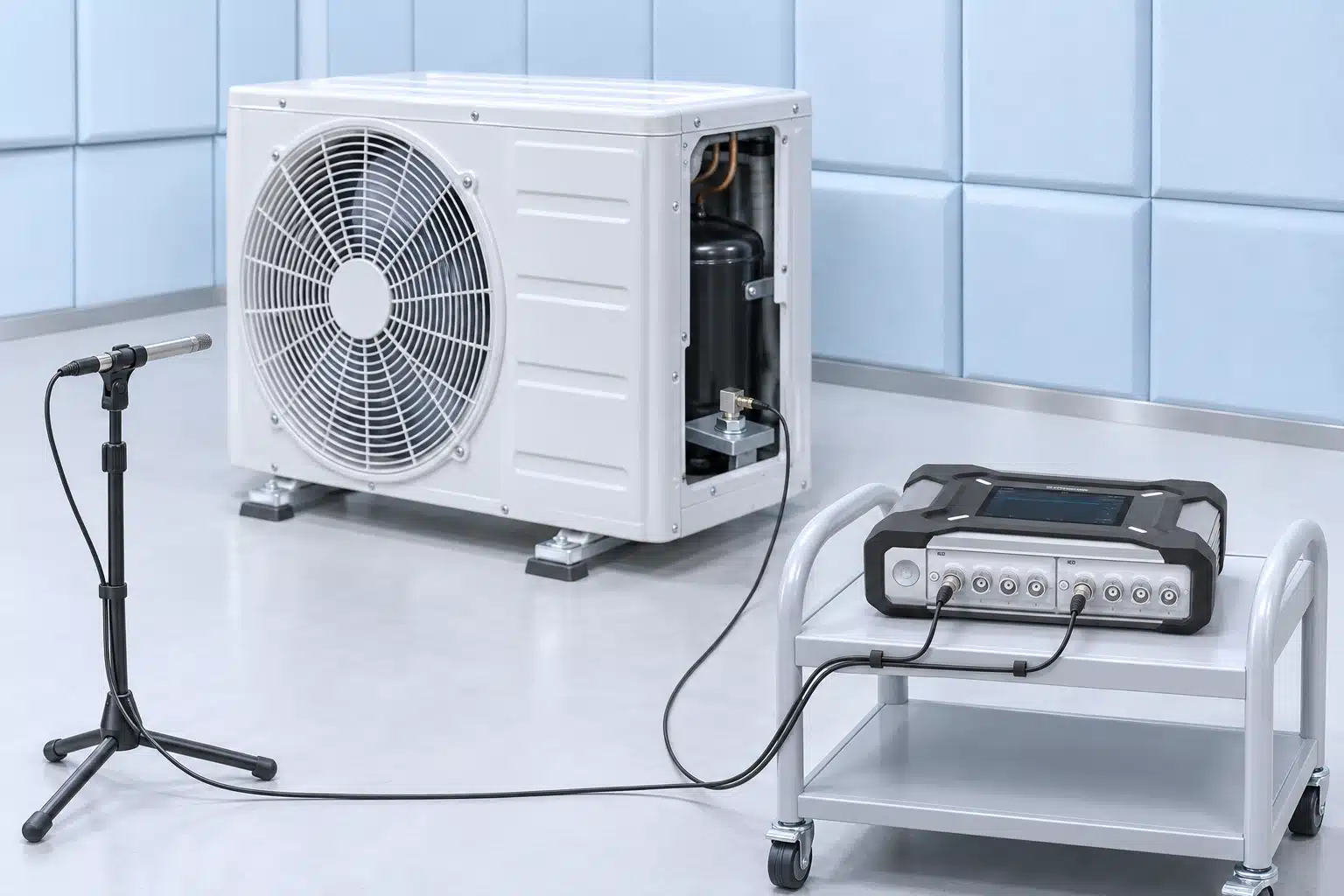
Take SonoDAQ Go to an appliance such as an air conditioner outdoor unit, set up a microphone and accelerometers, and record noise and vibration on site. Onboard FFT and sound level results show immediately whether a tonal peak or a high noise level needs a closer look.
Automotive NVH
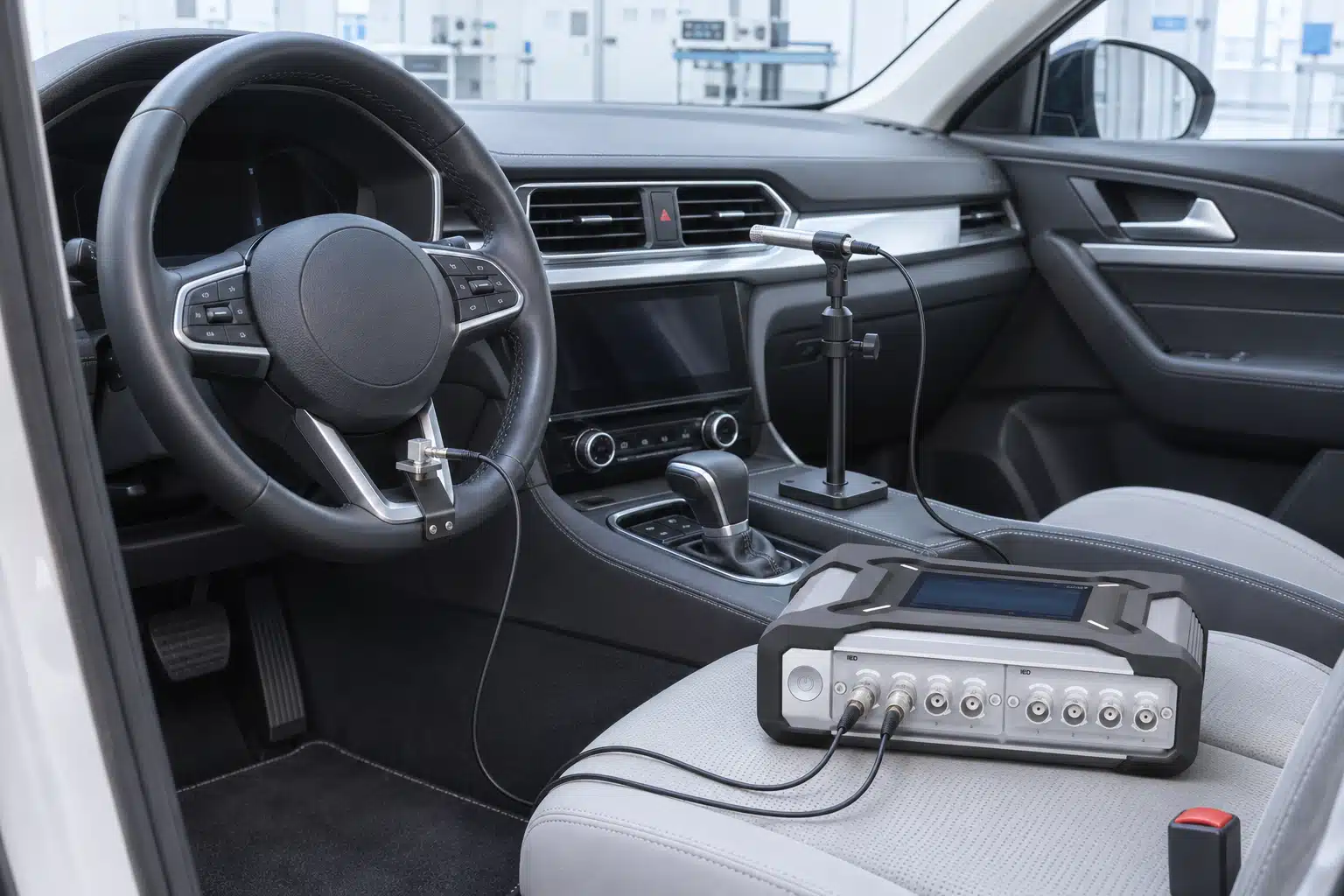
Inside the vehicle cabin, the compact unit fits on a seat, runs on battery, and records to microSD while the vehicle is driven. The LMQ module covers the microphones and accelerometers typical of NVH testing, and the fanless design keeps the cabin measurement free of added noise.
Electroacoustic R&D
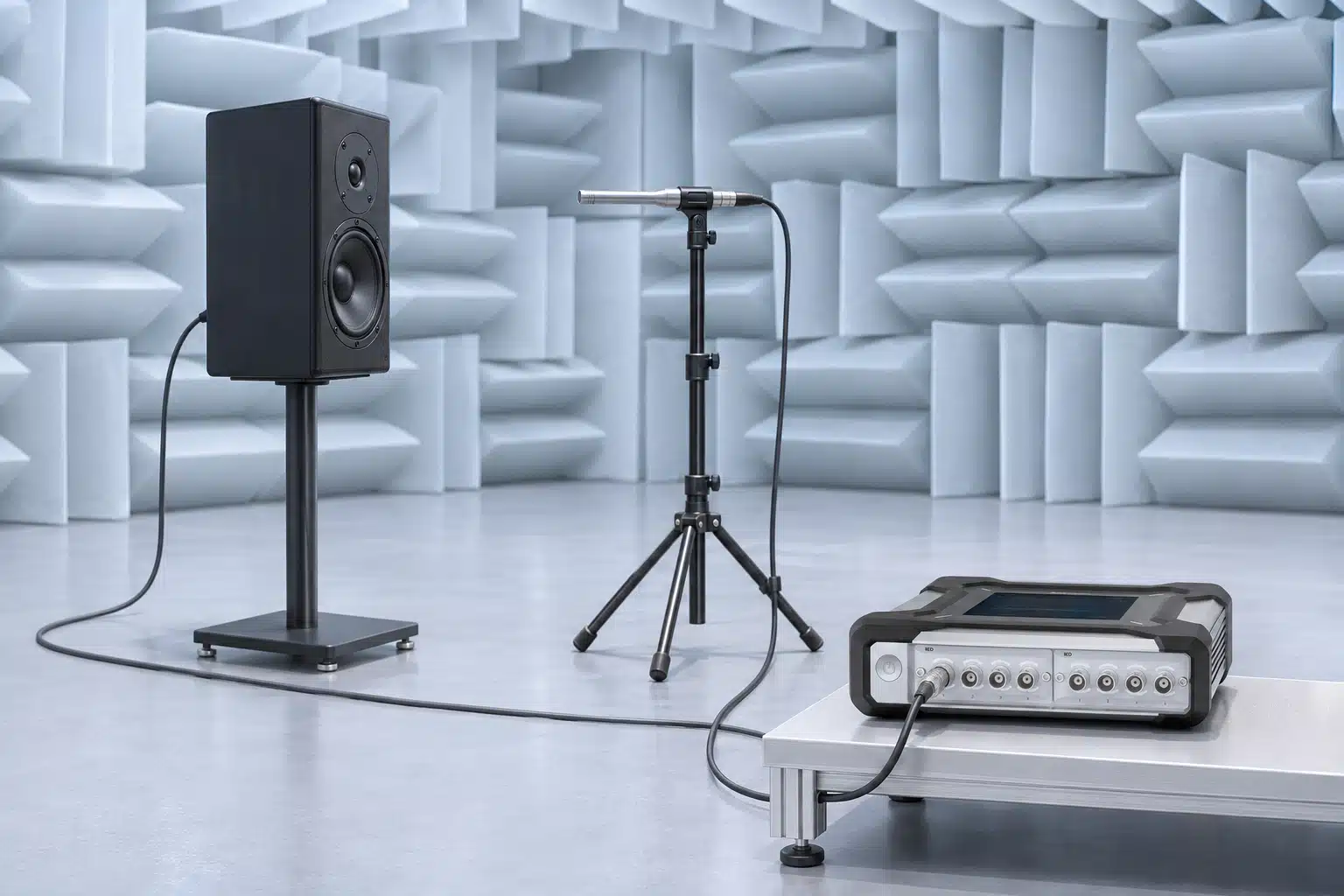
In an anechoic chamber, an input module plus the ADD output module turns SonoDAQ Go into a compact loudspeaker test setup. The built-in amplifier drives the speaker, the microphone captures the response, and impedance is measured with the same unit.
SonoDAQ Go Specifications
Key specifications of SonoDAQ Go are listed below.
| Item | Specification |
| Module slots | 2 |
| Input channels | Up to 8 |
| Weight | 1.25 kg (main unit); 1.75 kg with two modules |
| Supported modules | IES, IED, LMQ, ADD, AOS, ADS |
| Acquisition (with IED) | 32-bit, up to 204.8 kS/s, up to 160 dB dynamic range |
| Output (with ADD) | 2 channels, 10 W Class D amplifier, impedance measurement 4-600 Ω |
| Display | 5-inch touchscreen |
| Dimensions | 213 × 183 × 50 mm |
| Operating temperature | −20 °C to 50 °C |
| Isolation | 1000 V between modules |
| Synchronization | PTP / GPS |
| Wireless | Wi-Fi |
| Tachometer / CAN | 2 tachometer inputs, 2 CAN channels |
| Storage | microSD, 256 GB included (2 TB optional) |
| Power | Built-in battery, DC, PoE (PD) |
| Interfaces | USB-C, Ethernet, CAN FD |
| Protection | IP67, fanless |
| Onboard analysis | FFT, octave, sound level, sound power, vibration, tacho |
| Software | OpenTest, openDAQ, SDK |
Acquisition and output performance depend on the installed modules.
Conclusion
SonoDAQ Go brings acquisition, analysis, and signal output together in a 1.25 kg unit that records on its own, runs on battery, and is ready for the field. Choose the modules your test needs today, and expand as your requirements grow.
Stay tuned for the SonoDAQ Go launch bundle: the main unit, an input module and a sensor in one ready-to-measure package, offered at a special introductory price and with a complimentary full-featured OpenTest license. Pricing will be revealed soon.
To discuss your sensors, channel configuration, or a demo, please fill out the Get in touch form below and we'll reach out shortly.


