


This article is a hands-on review of the all-new CRYSOUND CRY3018, an intelligent microphone calibration platform that senses the environment in real time and compensates automatically. For the review, audioXpress also received the CRY3213 NVH 1/2" measurement microphone for demanding test situations, and the CRY3203-S01 high-precision 1/2" measurement microphone for everyday applications.
Measurement of noise and other acoustic phenomena for industrial environments and development of non-acoustic products (e.g., machinery, automobile components) has a different set of requirements compared to conventional audio-based acoustic measurement (e.g., loudspeakers, rooms, music production). For example, loudspeaker and room measurement require very flat frequency response but are uncritical regarding absolute SPL measurement, within reason. Repeatability is more important than knowing that the SPL is 96dB rather than 95dB. Additionally, environmental issues are not stringent - most studios, performance venues, and listening rooms will be somewhere between 15°C to 30°C, will not be wet, and vibratory disturbance will be minimal.
By contrast, industrial, automotive, and machine measurement can involve wide ranges of temperature, exposure to water, oil, and dirt, and often significant vibration. For example, if I needed to test various rubber compounds for tires for their road noise performance, this would have to be done in snow, rain, heat, and cold, as well as flying road dirt. The microphone used would need to withstand these conditions without failure and maintain accurate calibration. This is a tall order!
Microphones made for this sort of use differ from studio or other acoustic measurement mics in several ways. First, rather than using conventional balanced voltage outputs run with (generally) 48V phantom power, industrial measurement mics use a single-ended constant current interface. Noise immunity is achieved by having the signal current be overwhelmingly larger than induced noise currents; typical signal currents are on the order of 5mA or so, several orders of magnitude higher than any physically plausible noise current. Additionally, the current sensing end of the detector is usually configured as a virtual ground, so essentially a zero impedance node.
Second, the ruggedness and environmental resistance requirements preclude the use of any practical polymer-based diaphragms; the canonical metallized polyester (e.g., Mylar) used in most studio and audio measurement mics will drastically change properties or even fail when exposed to harsh thermal environments. So industrial microphones will generally use materials such as stainless steel as a diaphragm. Because of the higher density of steel, achieving satisfactory bandwidth requires some clever engineering and fabrication tricks.
Third, absolute accuracy is more important in industrial applications. For example, if a machine is being qualified under OSHA noise guidelines, the mic's calibration must be certified and absolutely stable.
Finally, industrial mic applications will often require high performance in the presence of strong electromagnetic fields that are not present in conventional acoustic measurement.
All of this comes at a price, of course. Industrial mics can run many thousands of dollars per microphone, and since many noise measurement applications require arrays of mics to capture noise from multiple positions, that expense can add up quickly.
The Products
CRYSOUND is a Hangzhou-based company that, despite 30 years in business, was not on my radar screen until recently. It was founded by Cao Ruiying, after whom the company is named. CRYSOUND makes a broad range of industrial acoustic measurement equipment comprising microphones, interfaces, audio analyzers, sound level meters, ear and mouth simulators, acoustic chambers, acoustic cameras, and mic calibrators. Where it is positioned in the market is in direct competition to established professional brands such as GRAS, Bruel & Kjaer, PCB Piezotronics, and Audio Precision, using its manufacturing and materials cost advantages to market products of comparable or higher quality but at significantly lower prices.
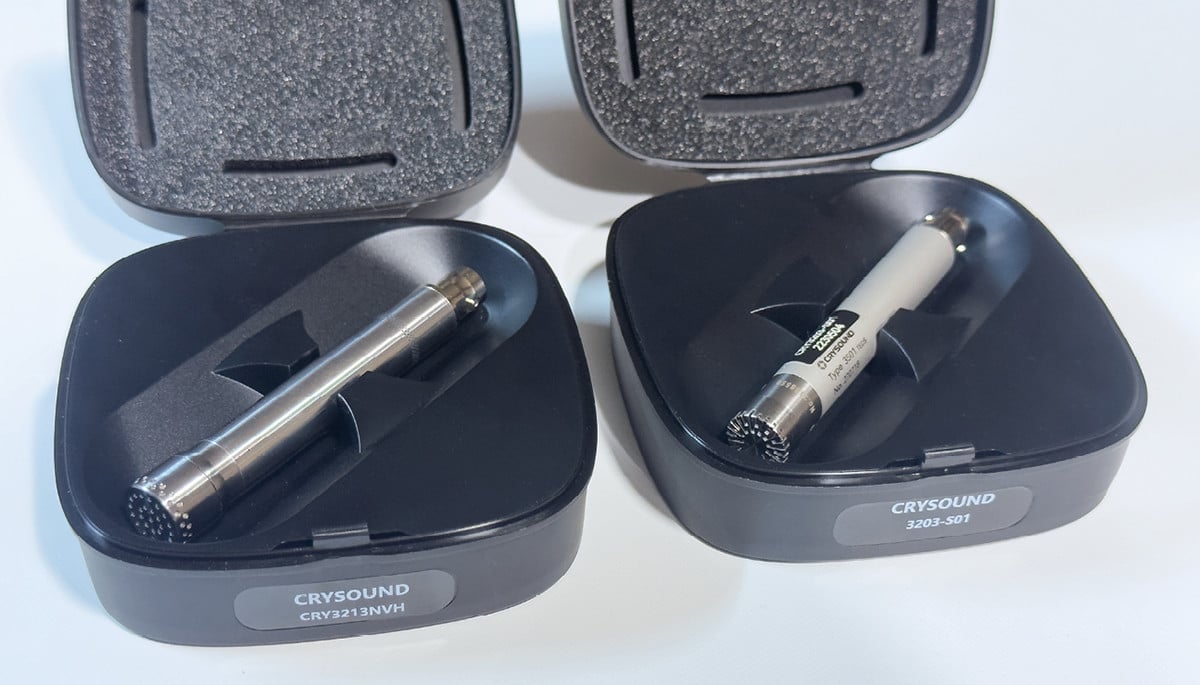
I recently received a few very interesting products from CRYSOUND, the CRY3213 NVH 1/2" measurement microphone for demanding test situations, and the CRY3203-S01 high-precision 1/2" measurement microphone, both shown in Photo 1.
These two microphones arrived with the new CRY3018 microphone calibrator (Photo 2) for verifying mic sensitivity and linearity with level. It features two selectable test frequencies (250Hz and 1kHz) and two different SPLs (94dB and 114dB), which are selected through two mechanical push-buttons on the front panel. With the included adapters, it can accommodate 1/4", 1/2", and 1" diameter mics. The front panel also has an LED display to indicate the chosen settings.
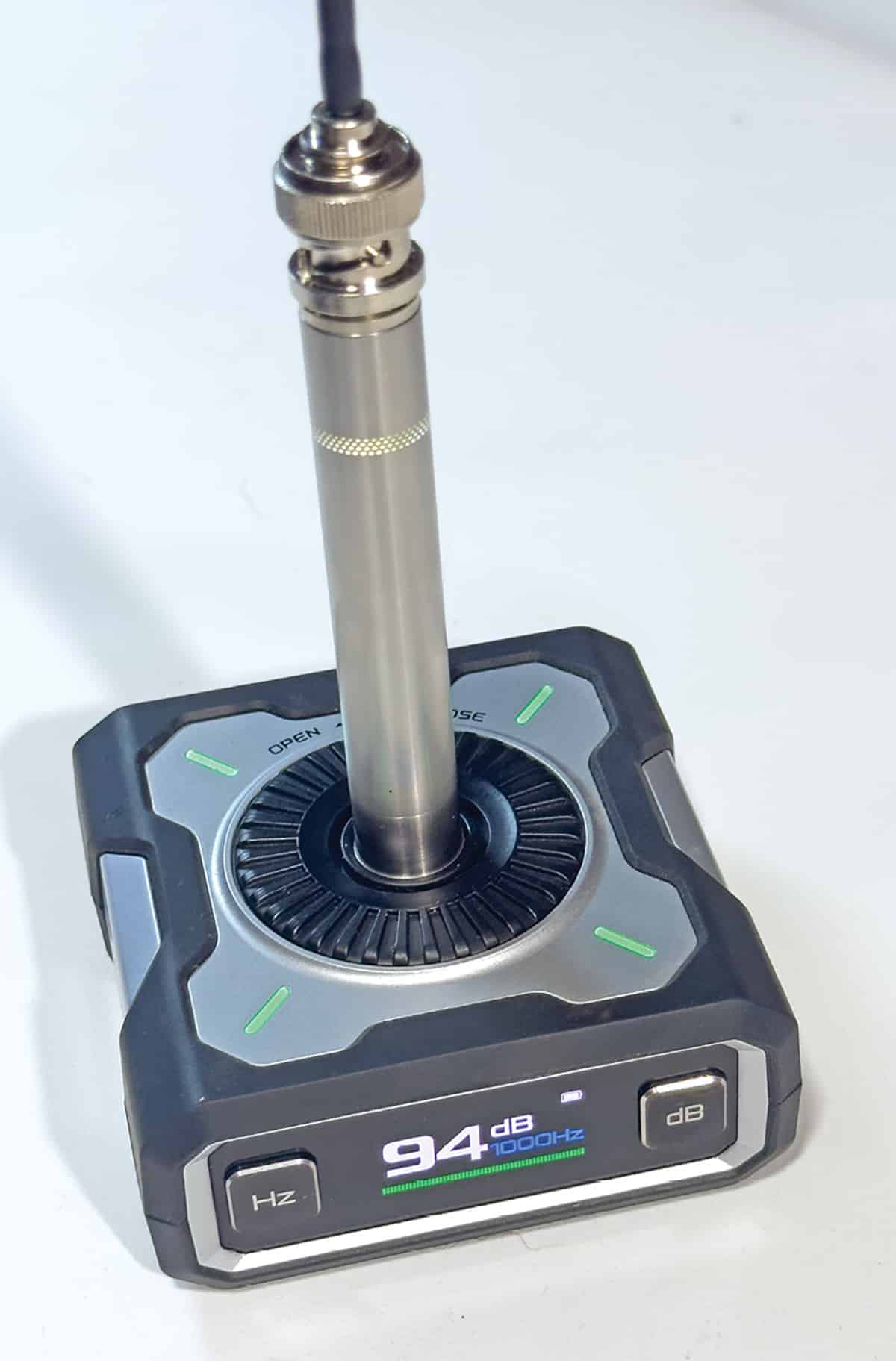
The CRY3018 also has environmental sensing with readouts for temperature, barometric pressure, and humidity, all of which can affect mic sensitivity. Additionally, the design uses a feedback system to maintain constant SPL regardless of environmental conditions and aging of internal elements.
Interestingly, I accidentally discovered an undocumented feature, pseudo-white noise at 94dB. Apparently, this is used during CRYSOUND's burn-in and stabilization process before shipping the units. To access the pseudo white noise function, press and hold both buttons for 2 to 3 seconds, which will take you to the "About" page on the display. Release the buttons, then before the page scrolls off, press and hold them both again.
The CRY3018 is charged via a USB-C port and has automatic on and off functions when a mic is inserted or removed. CRYSOUND claims that more than 1,000 calibrations can be performed on a single charge. I did not verify this, but after my initial charge, I never had to recharge the unit even after several weeks of testing on several microphones under varying environmental conditions.
With the calibrator, I received the CRY3203-S01 1/2" free field mic and the CRY3213 NVH (Photo 3), both of which are designed to connect via an IEPE interface, 2mA to 20mA. The former mic is a combination of CRYSOUND's CRY3203 pre-polarized capsule and the CRY3501 IEPE preamplifier.
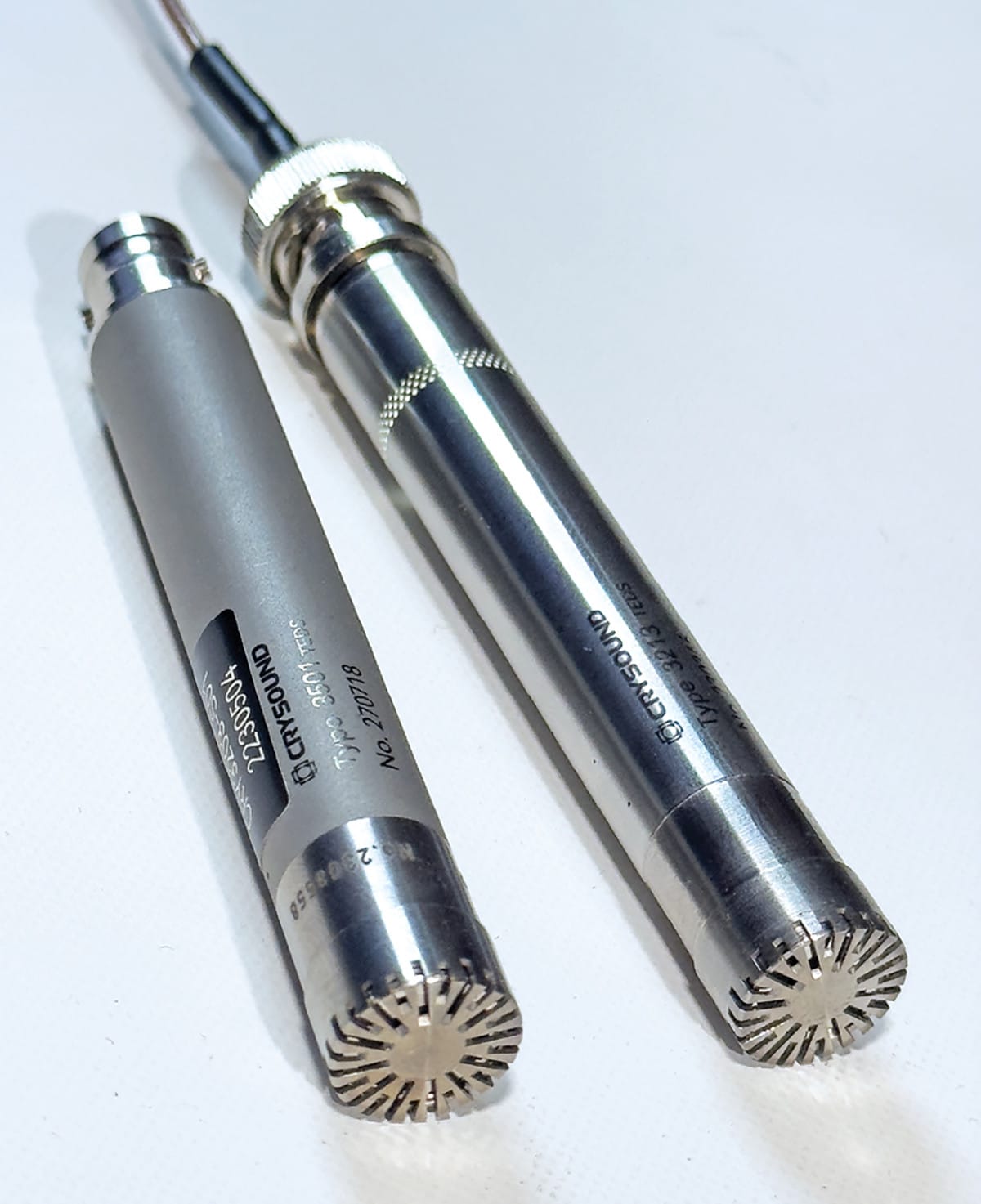
The latter mic is a ruggedized version of the former and is expressly designed for noise, vibration, and harshness (NVH) measurement scenarios, especially those associated with vehicle and vehicle component testing. It is rated to an IP67 standard. For those (like me before reading the standards) unfamiliar with this rating system, this means that the mic has been tested to ANSI/IEC 60529, which is a harsh set of tests usually performed on enclosed electronics. Under this rating, the mic is guaranteed against any dust or particulate ingress. The test itself is brutal: exposure to a swirling air-borne talcum powder environment inside the test chamber. Also, an IP67 rating means the mic is unaffected by road spray or rain and can be immersed in water to a one-meter depth for at least 30 minutes without impacting operation. Additionally, the CRY3213 NVH has high resistance to conducted or radiated electromagnetic interference and is EMC compliant to IEC 61000-4.
As is visually evident in Photo 3, to achieve that level of ruggedness, the CRY3213 NVH has a rather elaborate front grid, which increases the mic's diameter to 0.6". When I removed the front grid, there was a protective screen visible (Photo 4). Both the CRY3213 NVH and the CRY3203-S01 feature titanium alloy diaphragms, which exceed most industrial mics' stainless steel for mechanical and chemical resistance properties. The diaphragm can also be seen in the photo. As part of making the mics stable to environmental conditions, the spacers for the diaphragm and back plate are fabricated from sapphire.
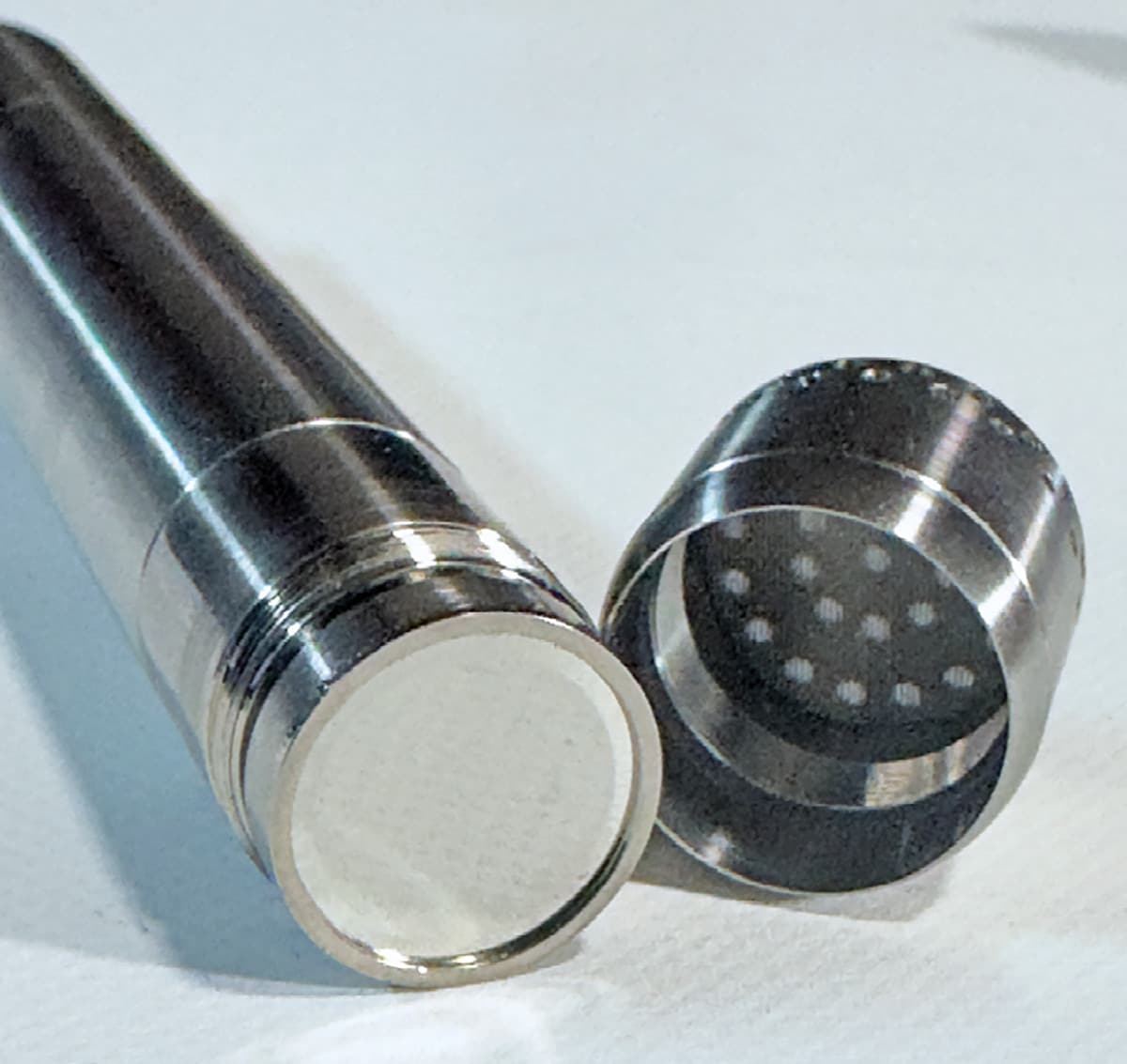
Because of the odd size of the CRY3213 NVH's front grid, conventional calibrators won't work- generally, their adapters will be 1/4", 1/8", and 1/2" (too small) or 1" (too large). To allow calibration, CRYSOUND includes an alternate front grid with a standard 1/2" diameter to replace the ruggedized front grid so that the mics can fit into a standard calibrator. Of course, this extra grid is for calibration purposes only and the mic should not be used under IEC 60529 conditions with the calibration grid. The mic package also comes with an adapter for the CRYSOUND CRY3018 or other 1" diameter calibrators so that, with changing the ruggedized grid, the calibration can be verified.
Other operational details of note: both the mics are back-vented, with a pressure relief hole located on the mic body a few millimeters behind the capsule. The CRY3213 NVH has a second back vent for redundancy in case something fouls the primary one. Both mics are pre-polarized, meaning that the diaphragm includes an electret. CRYSOUND did not provide details on the electret material, but given the environmental stability and specified temperature range, I would guess that it is an ion-implanted polypropylene. Both mics are also TEDS compliant so that, with a suitable interface, the mics' serial numbers and calibration data can be read (Figure 1).
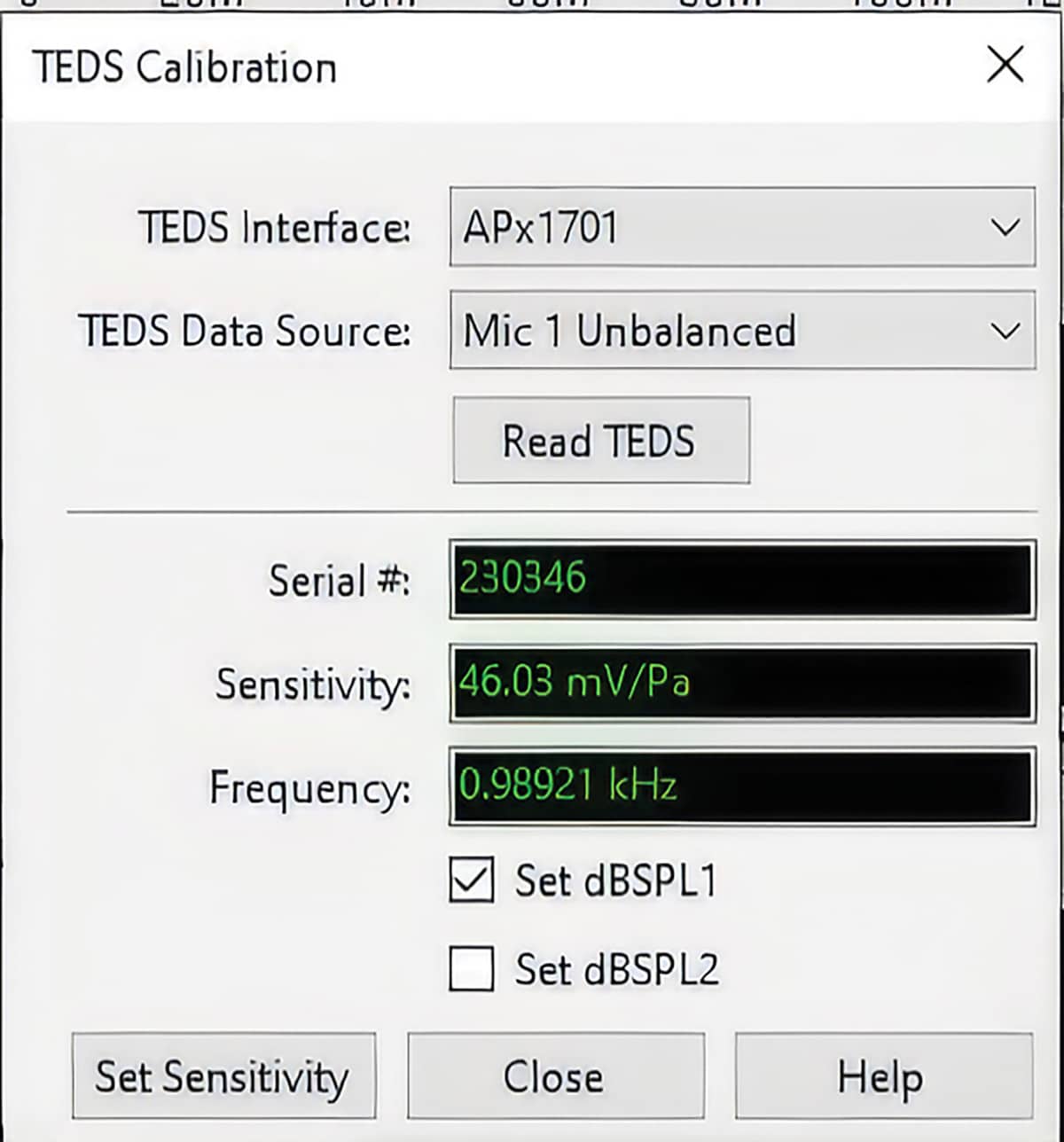
A very nice feature of the CRY3213 NVH is that when the constant current interface is activated, an LED band around the mic illuminates. This is particularly useful when a mic array is being used, allowing a quick visual verification that all the mics are activated. I first saw a similar feature on a GRAS mic, the 246AE, featuring SysCheck2. The function lights on the CRY3213 NVH are not quite as versatile, but work with any interface (the SysCheck2 requires Audio Precision 7.x or later) and still give the basic functionality of go/no-go for troubleshooting.
Both mics are free field, meaning that they are designed for largely non-reverberant measurement (i.e., where the sound is coming from a known location). The mics can then be pointed toward the source so that the measurement is at 0° incidence relative to the mic's axis. This is distinguished from diffuse field (random incidence) mics, used in highly reverberant environments or situations where sound is impinging from multiple sources at different angles, and pressure mics, used in enclosed chambers and flush-mounting on acoustically large planes. Each mic comes with a traceable calibration certificate and serialized factory measurements (Figure 2).
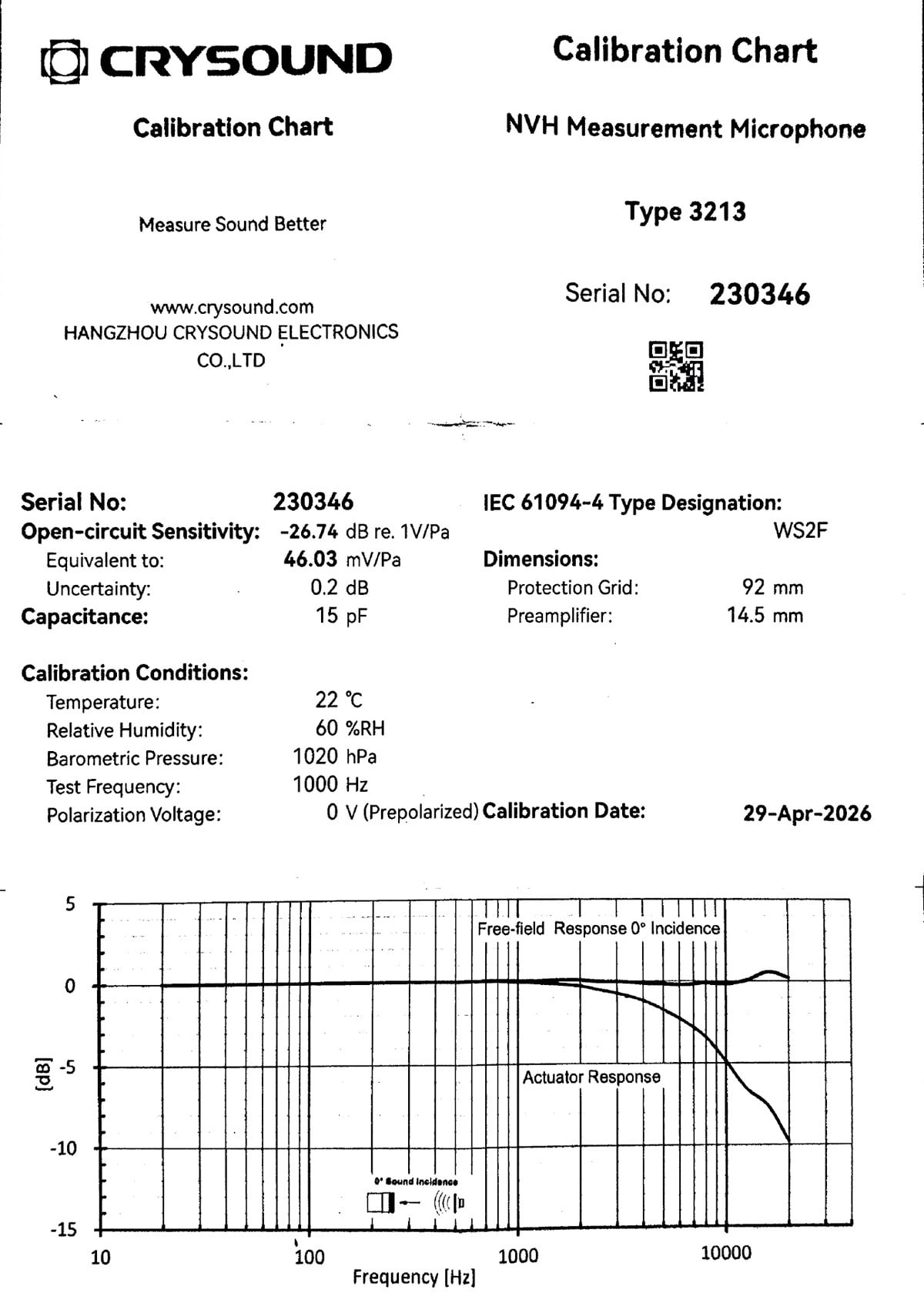
The CRY3018 calibrator sells for $1,000. The CRY3203-S01 test mic is $998, and the CRY3213 NVH ruggedized IP67 test mic is $1400.
On the Bench
My lab is equipped with an Audio Precision APx525 analyzer running APx version 6.1 software, an APx1701 Transducer Test Interface, a GRAS 42AB microphone calibrator (recently verified to be in calibration), and several reference microphones, including a GRAS 246AE mic with a constant current power (CCP) preamplifier. I use a Vanatoo T1E powered loudspeaker as a reference for comparing frequency responses.
First, I set up a comparison test between the CRY3018 and the GRAS 42AB calibrator. Being the sort who likes to multiplex tests when possible, I ran the comparison using the CRY3203-S01, the CRY3213 NVH with the measurement front grid, and a reference GRAS 246AE. As a check, I also ran the CRY3213 NVH with its standard front grid, but using the calibration adapter provided for it. The mics were attached to the CCP inputs of the APx1701, the TEDS were read and imported to the APx525 analyzer, and the mics inserted into the calibrators. The default for the 42AB is a 1kHz stimulus at 114dBSPL, so I echoed those settings on the CRY3018. The comparison results are shown in Table 1.
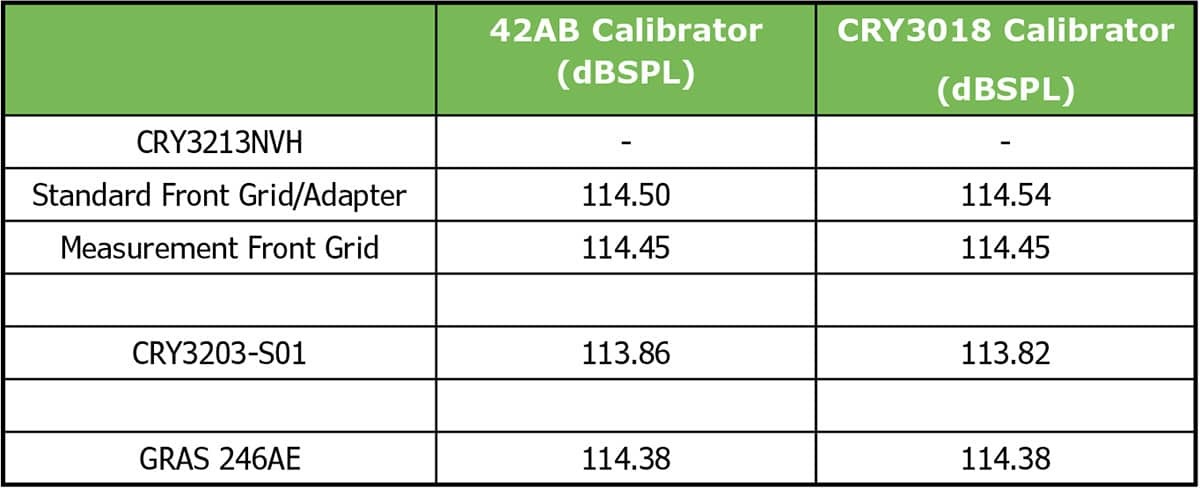
Evidently, there's no real difference in readings between the calibrators - the readings are consistent to the second decimal place as one would hope for two properly calibrated units. Likewise, and a bit surprisingly given the extra screening and smaller grid holes for the CRY3213 NVH's standard front grid compared to the measurement front grid, the difference between SPL readings is minimal, less than 0.1dB. This makes calibration of that mic quite flexible regardless of installation and available equipment.
The CRY3018 is equipped with an internal sensing and feedback system to minimize the impact of environmental conditions on calibration. As a simple check, I measured the SPL with a test mic in my stock (a PCB Piezotronics 376A32 phantom power 1/2" condenser mic) at room temperature (27°C), with the CRY3018 set to 1kHz and 114dBSPL. The measurement indicated 114.40dBSPL. The CRY3018 was then placed in a freezer overnight to reach a temperature of approximately -15°C and the measurement repeated - note that the mic was held at room temperature. The measurement indicated 114.56dBSPL, which is not significantly different. This again removes a potential complication for calibrating mics in situ.
Once validated, I did use the presence of the CRY3018 in my lab as an excuse to run through my test mic collection; I should calibrate yearly, but sometimes other things get in the way. The results were interesting - I had some PCB mics approaching 10 years old and being used regularly. For a 94dBSPL and 1kHz measurement and using the original calibration data, the PCB 376A32 mic indicated 93.3dBSPL. So over a decade of use, the sensitivity declined perhaps 0.7dB. Was this due to gradual mechanical changes in the diaphragm and suspension? Or more likely, slow depolarization of the polymer electret? Still, given the age of the mic, this is not at all a terrible decline and easily corrected with a new calibration number.
A GRAS 246AE mic with 5-year-old calibration data measured 94.3dBSPL. With a 114dBSPL setting, the mic indicated 114.45dBSPL. As previously noted, this is an almost identical number to freshly calibrated CRYSOUND mics.
Finally, I measured what I call a "sow's ear" mic, that is, one which uses a cheap off-the-shelf electret capsule, often selected from a large batch, but coupled to advanced and sometimes innovative electronics to bring the performance to par. There are quite a few brands of these, and they all seem to be generically similar. I had a pair of these on-hand, rated ANSI Class 1, matched at manufacture time, and with sequential serial numbers. Factory calibration was six years ago.
With the same 94dBSPL settings as before, the first one measured 93.30dBSPL (slightly low but still within tolerances). The second one was a different matter, measuring 91.65dBSPL, more than a 2dB drop. Again, this can easily be dealt with by using a new calibration number, but it was a sobering reminder to me that matched pairs aren't going to be matched forever, and, more importantly, the canonical yearly calibration should never be skipped.
My self-noise test, called the BLANK Chamber, has been previously described in an article about the PCB Piezotronics industrial measurement mics (see Resources); it involves burying the mic (usually wrapped in plastic for protection) under a couple hundred pounds of a mixture of sand and vermiculite. This needs to be done on a sturdy floor! In my case, the lab floor in my basement is solid concrete, which minimizes low-frequency noise leakage. Baseline noise with this kind of setup is 4dBSPL or better.
Because of the IP67 rating for the CRY3213 NVH, I chose to bury the mic without the usual plastic wrapping. This is a severe test of the mic's dust and particle resistance as well as noise. A-weighted noise with a 20kHz bandwidth and no windowing was 17.8dBSPL, very slightly higher than spec (17dBA). It is possible that the excess noise was environmental - the length of my test cables meant that the chamber was in the same room as the APx1701 interface. The 1701 works superbly, but it has a loud fan, and at these low levels, even minuscule acoustic leakage could be significant. In any case, this was very close to spec.
Finally, I measured the frequency response of the CRY3203-S01 and the CRY3213 NVH by a comparison method, where the frequency response of a source (usually a wide-range loudspeaker) is measured by a reference mic, the mic being tested replaces the reference mic, and its frequency response is measured under the same conditions. Then, the frequency response of the tested mic and the reference are ratioed. If the reference and mic under test ratio out to flat, then their frequency responses are identical.
I set up a Vanatoo T1E powered loudspeaker on a 40" high stand. For each measurement, I set up the reference mic (GRAS 246AE) exactly 1 meter in front of the speaker, measured from capsule tip to loudspeaker baffle using a laser distance gauge. The mic was pointed between the tweeter and woofer, again using the laser gauge to verify position (I should add that modern affordable laser gauges are a godsend - I used to do this with a string and plumb bob hanging from the ceiling!).
The calibration file for the reference mic was loaded into the APx software so that its response is presumably flat, and log-sin (Farina) chirps were used as the stimulus signal. The resulting measured impulse response was gated to remove the first and subsequent reflections, then Fourier transformed (48kHz sample rate, 128k data points) to yield the frequency response. The frequency response was then 1/12th octave smoothed and exported as an Excel file.
Next, each mic under test was put in exactly the same position as the reference, and the same Farina chirp run. As before, the impulse response was Fourier transformed, smoothed, and exported. Each frequency response file was ratioed against the reference spectrum (remembering that the reference spectrum was adjusted to flat using its calibration response). The results for the two tested mics are shown in Figure 3.
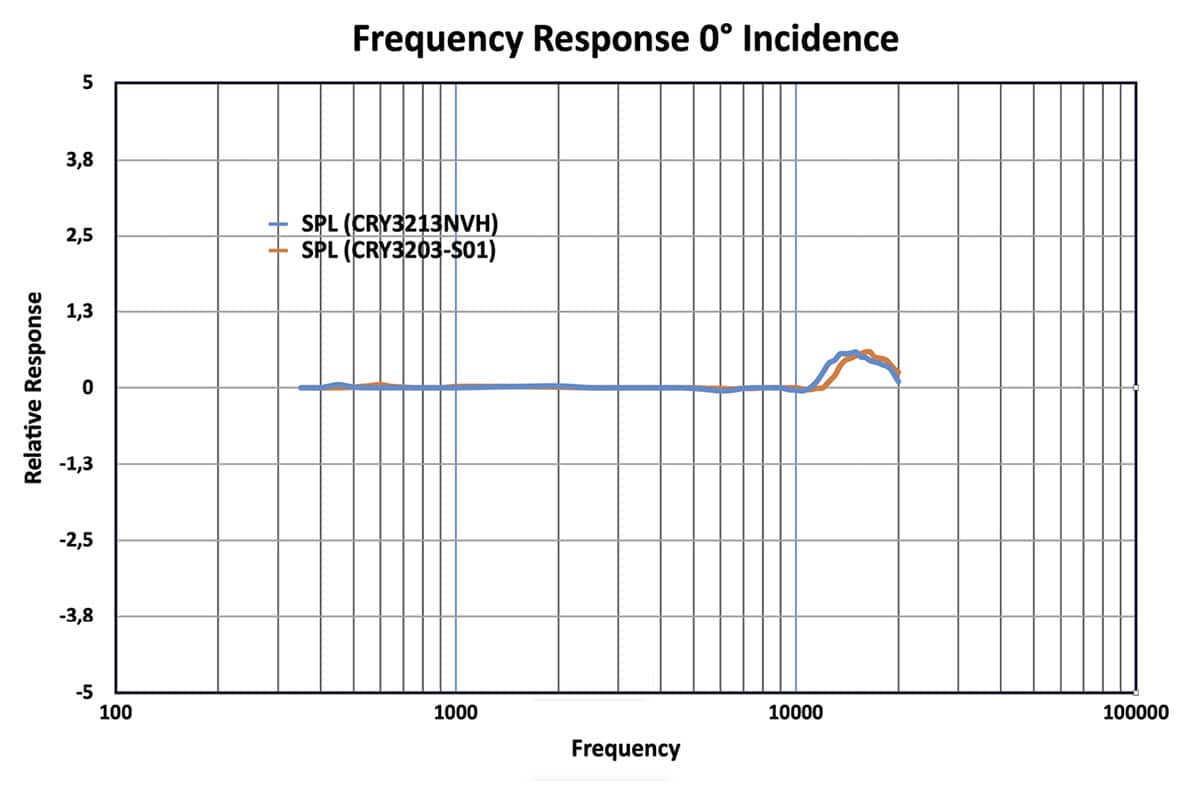
Note that these mics are quite flat in response, up to the top octave. It is almost universal for free field mics to have a top octave rise (the uncorrected reference mic has one as well) due to the mic perturbing the field directly on axis where the diameter is a significant fraction of wavelength. These results correspond closely to the provided free field curves on their calibration sheets and show worst case deviation from flatness at about 15kHz with a magnitude of about 0.5dB in both cases.
A Rather Nasty Use Test
I had several automotive use tests in mind, especially given the very rainy springs here in western New York, but unfortunately my car's auxiliary power was not up to the task of powering an inverter to run all of the Audio Precision gear. So it was time to get creative: How can I do a high SPL measurement in a harsh environment? And while I was wandering around my kitchen, everything became clear. So I picked up my air fryer and marched it down to the lab (Photo 5). I mean, an air fryer basket is a small volume environment, lots of rapidly moving air, high temperatures, and confined noise, so it's a nice model test for harsh environment testing, though it's fortunate that I didn't have anyone see me doing this oddball experiment.
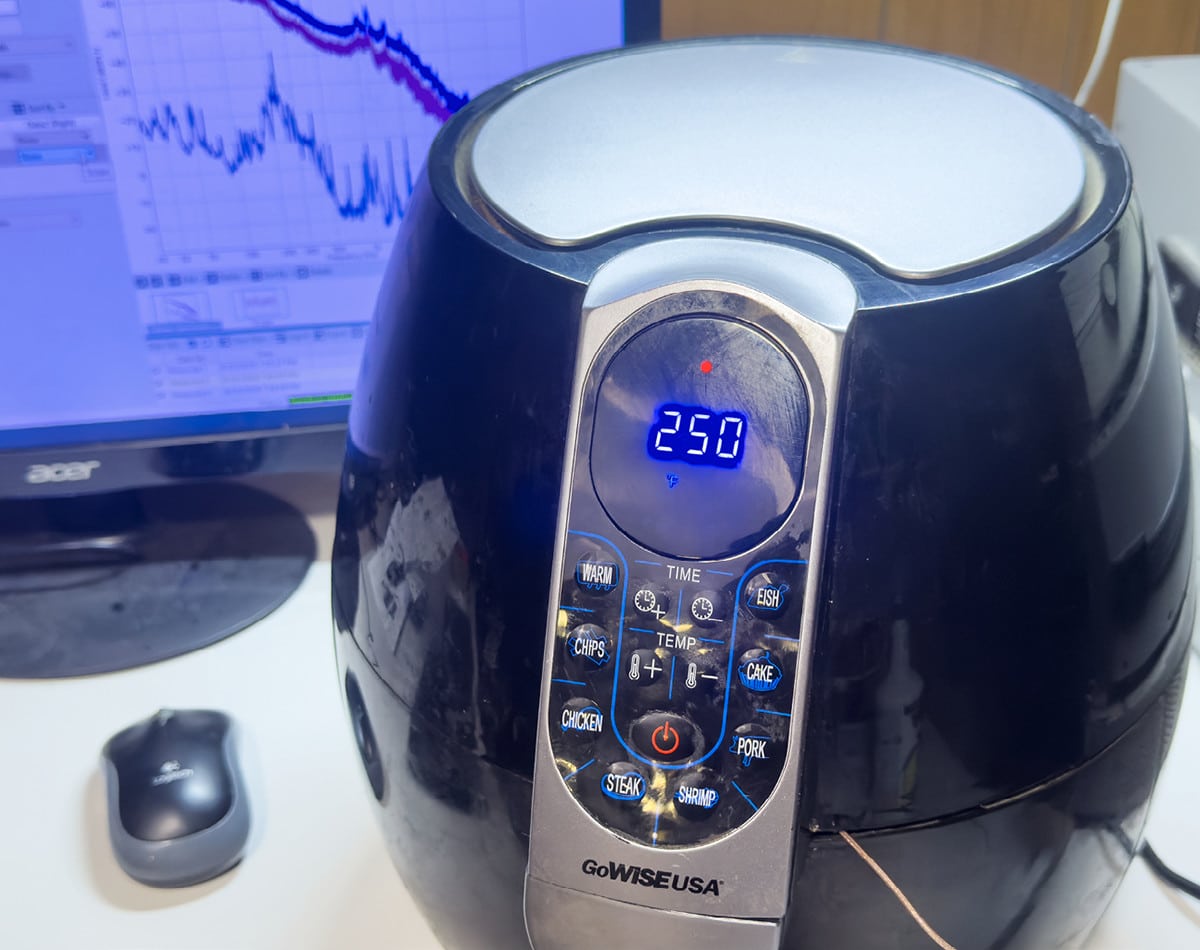
True that this environment is more of a diffuse field than a free field sort of measurement, but we can at least mentally (if necessary) boost the high frequencies to compensate for the diffuse field; for a 1/2" mic, the diffuse field response starts to decline with respect to the free field response at 3kHz or so, smoothly dropping to about -6dB at 20kHz.
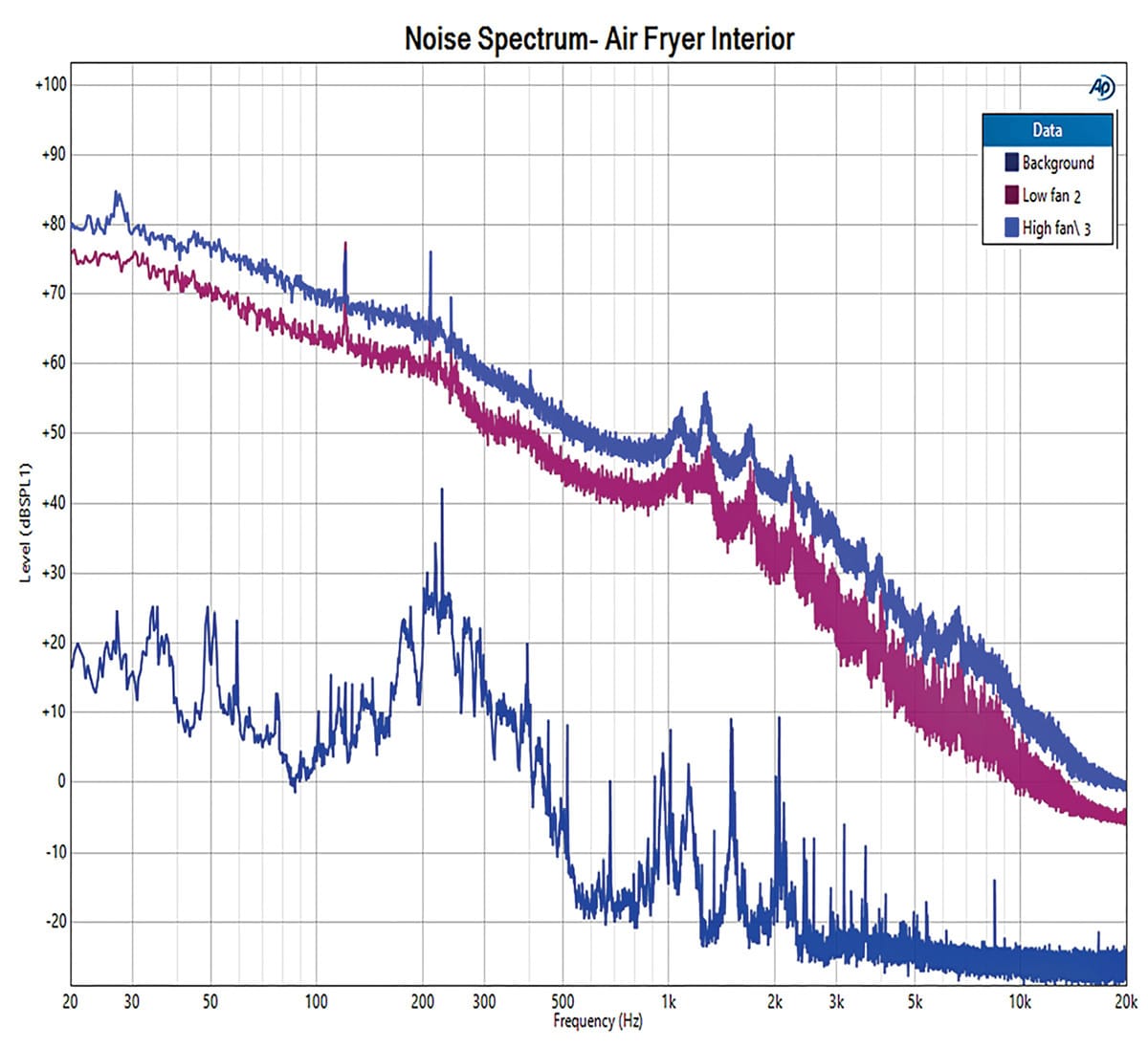
But that quibble aside, I connected the CRY3213 NVH to a thin, high-temperature coaxial cable, placed the mic in the air fryer basket, closed the unit, set it to 250°F, and started it. The air fryer goes through two stages: a preheat and continued heating in cooking mode after reaching its set-point. Between these two modes, the fan increases speed and presumably noise. The A-weighted 20kHz bandwidth noise measured 98dBSPL during preheat and 104dBSPL during the heating cycle. The spectra I obtained are shown in Figure 4; the lowest curve is the background noise before I started the air fryer, then the two curves above are the spectra for the preheat and cooking modes. The SPL difference is obvious, but there are also a lot of sharp spectral features that are characteristic of the air fryer's fan and other mechanical parts, if that's the analysis their designers might engage in. The mic seemed to be perfectly stable during the measurement, which spanned 10 minutes.
Checking the mic's sensitivity immediately after the test when it was too hot to handle with bare hands, using the CRY3018, I still measured 94.3dBSPL. After cooling to room temperature, the sensitivity measured 94.4dBSPL, not significantly different.
While this test might seem frivolous, I think it's a dramatic demonstration of how industrial mics designed for harsh environments can perform under significant stress.
Conclusions
While these tests are hardly comprehensive, they do show that the CRYSOUND mics and calibrator are serious products, superbly built, rugged, and competitive with or even better than comparable products from some long-established and highly respected brands. When it came especially to the CRY3213 NVH, I tortured it and it held up effortlessly. The fact that these products are significantly less expensive despite the use of premium materials and technologies suggests that CRYSOUND could become a dominant player outside its traditional home turf. aX
Resources
CRYSOUND CRY3018 DS325364 Datasheet, https://www.crysound.com/product/cry3018-sound-calibrator
CRYSOUND CRY3203-S01 DS324018 Datasheet https://www.crysound.com/product/cry3203-s01-free-field-microphone-set-1-2-50mv-pa
CRYSOUND CRY3213NVH DS325361 Datasheet, https://www.crysound.com/product/cry3213-nvh-measurement-microphone
IEC 60529, "Degrees of Protection Provided by Enclosures (IP Codes)," ed. 2.1 (Geneva: International Electrotechnical Commission, 2001).
Mic-W Technical Note 1401: Sound Fields and Measurement Microphones,
S. Yaniger, "Innovative Measurement Microphones from PCB Piezotronics," audioXpress, December 2016,
https://audioxpress.com/files/attachment/2615
This article was originally published in audioXpress, September 2026


