


The dynamic range of a measurement microphone describes the span of sound pressure levels it can measure effectively, from weak sounds near the noise floor to high levels near the distortion or overload limit. In practice, the usable range depends on the microphone, preamplifier, data acquisition system, and test environment.
Understanding Measurement Microphone Dynamic Range
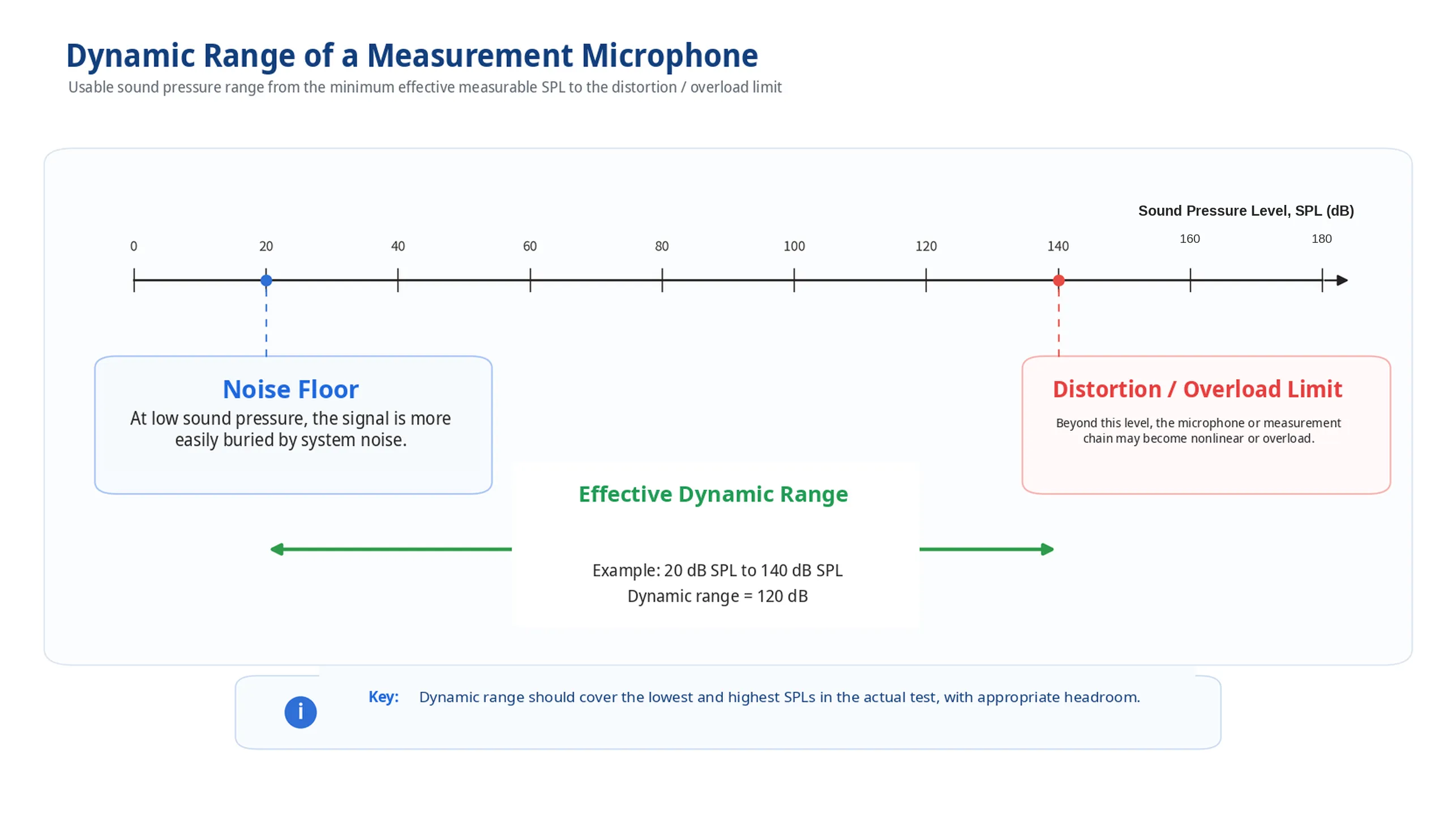
Dynamic range is the interval between the lowest sound pressure level that can be measured reliably and the highest level that can be measured without unacceptable distortion or overload.
For example, a system that measures effectively from 20 dB SPL to 140 dB SPL covers a dynamic range of 120 dB. Datasheet values must always be read together with their stated frequency range, weighting method, and distortion criterion.
What Determines the Lower Limit?
At low SPL, the main question is whether the measured signal can be distinguished reliably from noise. Important noise sources include microphone self-noise, preamplifier equivalent input noise, data acquisition input noise, environmental background noise, and interference introduced by cables or power supplies.
When the measured sound approaches these noise sources, the system may still display a value, but the reliability of the result declines. The lower limit is therefore determined by the noise floor of the complete measurement chain.
What Determines the Upper Limit?
As sound pressure rises, microphone output voltage also increases. At a certain level, the microphone or a downstream device may enter a nonlinear region. Typical signs include increased microphone distortion, preamplifier overload, acquisition-system over-range, and ADC clipping.
The upper limit therefore depends on both the microphone maximum SPL and the linear input ranges of the preamplifier and data acquisition system. Sensitivity affects output voltage, but it does not independently determine the microphone maximum SPL.
Is a Wider Dynamic Range Always Better?
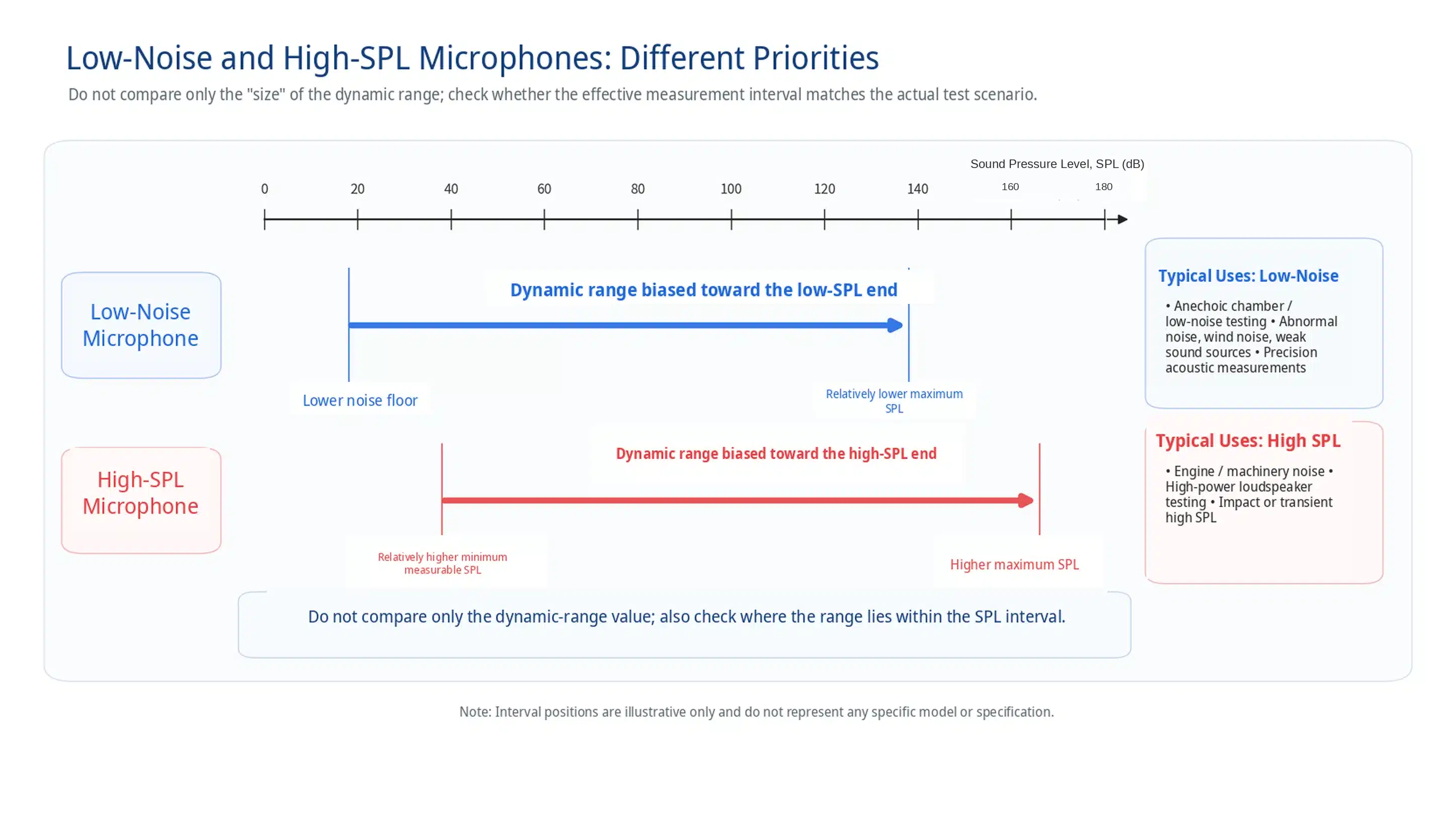
A wider usable range can cover larger SPL variations, but its position must match the application. Low-noise measurements place more emphasis on the lower end, while high-SPL measurements place more emphasis on the upper end.
For product self-noise, quiet appliances, and similar weak-signal tests, the CRY3261-S02 offers inherent noise as low as 6.5 dBA. For impact noise, industrial blasting, and other extremely high-SPL applications, the CRY3408-S01 covers 70 to 180 dB SPL.
Why Does the Complete Measurement Chain Matter?
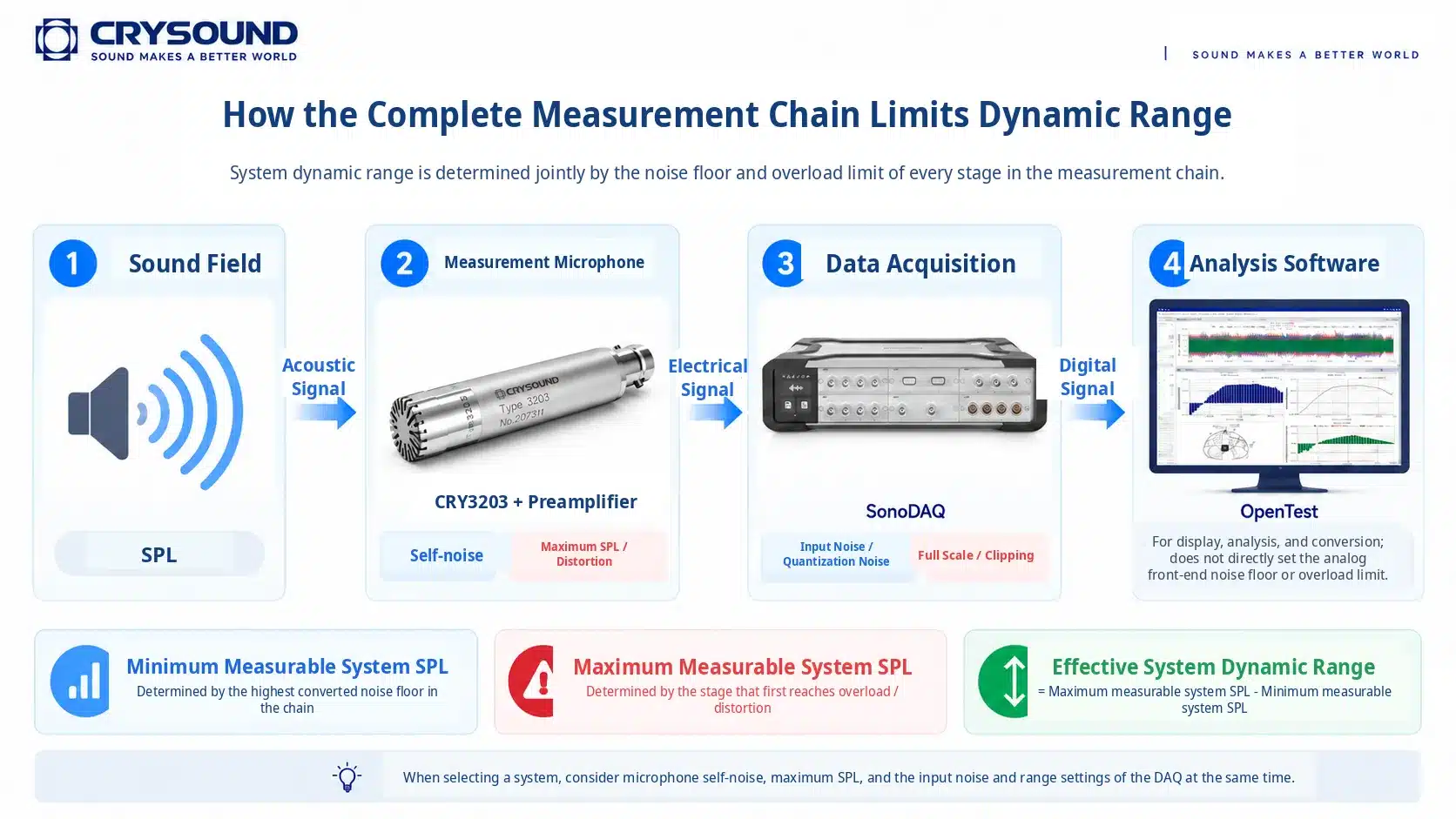
A microphone may have a wide specified dynamic range, but the usable system range can be narrower. A high noise floor at any stage raises the minimum reliably measurable SPL. A low input limit at any stage can reduce the maximum measurable SPL.
Engineering decisions should therefore be based on the effective dynamic range of the complete chain, not only one number in the microphone datasheet.
How Should Dynamic Range Be Matched to a Test?
Define the Minimum SPL
For weak sounds, check microphone self-noise, sensitivity, preamplifier noise, and environmental background noise. The lowest target SPL should remain clearly distinguishable from the system noise floor.
Define the Maximum SPL
For high-level tests, check microphone maximum SPL and distortion conditions together with sensitivity, preamplifier maximum input, and the acquisition-system range. Occasional peaks should remain within the usable range.
Verify the Complete system
For general laboratory acoustic measurements, the CRY3203-S01 has a dynamic range of 16 dBA to 138 dB and a nominal sensitivity of 50 mV/Pa. When it is used with a modular platform such as SonoDAQ Pro, also check the input range, noise performance, and dynamic range of the selected input module.
How Are Dynamic Range and Sensitivity Related?
Sensitivity describes the voltage produced per unit sound pressure, while dynamic range describes the span of sound pressure the measurement chain can process reliably. Higher sensitivity can produce a larger voltage from a weak sound, but it can also reach a downstream input limit sooner. The two specifications should therefore be considered together.
Summary
Measurement microphone dynamic range extends from the lowest reliably measurable sound to the highest level that remains within the specified linear operating conditions. The lower limit is mainly controlled by microphone and system noise; the upper limit depends on maximum SPL, distortion, and the input range of the measurement chain.
Start with the minimum and maximum SPL expected in the test, then verify that the microphone, preamplifier, and data acquisition system are matched across the complete range.
Frequently Asked Questions
Is microphone dynamic range the same as system dynamic range?
No. The usable system range can be narrower because preamplifier noise, acquisition-system input noise, gain settings, and input limits all contribute.
What mainly determines the lower end of dynamic range?
The lower end is determined by the combined noise floor of the microphone, preamplifier, acquisition hardware, environment, and installation.
What mainly determines the upper end of dynamic range?
The upper end is limited by the first stage that reaches unacceptable distortion, overload, over-range, or clipping.
If you need help matching microphone dynamic range to your acoustic measurement system, please complete the Get in touch form below.


