


Not every sound is easy to record. Common sources such as speech and machinery are usually within the capabilities of general-purpose measurement microphones. When the target drops to the level of insect activity, product standby noise, or precision equipment operation, however, the measurement system's own noise can become a limiting factor.
In this case study, Zhaohua Electronics CRYSOUND uses the CRY3261-S02 low-noise microphone and the CRY3203-S01 measurement microphone to record the weak sounds produced by silkworms eating mulberry leaves. The comparison shows how microphone self-noise affects the detection of low-level acoustic signals.
Video Case Study: Recording Silkworm Feeding Sounds
Watch the test video to hear the recording and see the measurement setup.
Video: Silkworm feeding sound recorded with low-noise measurement microphones. Open the video on Bilibili.
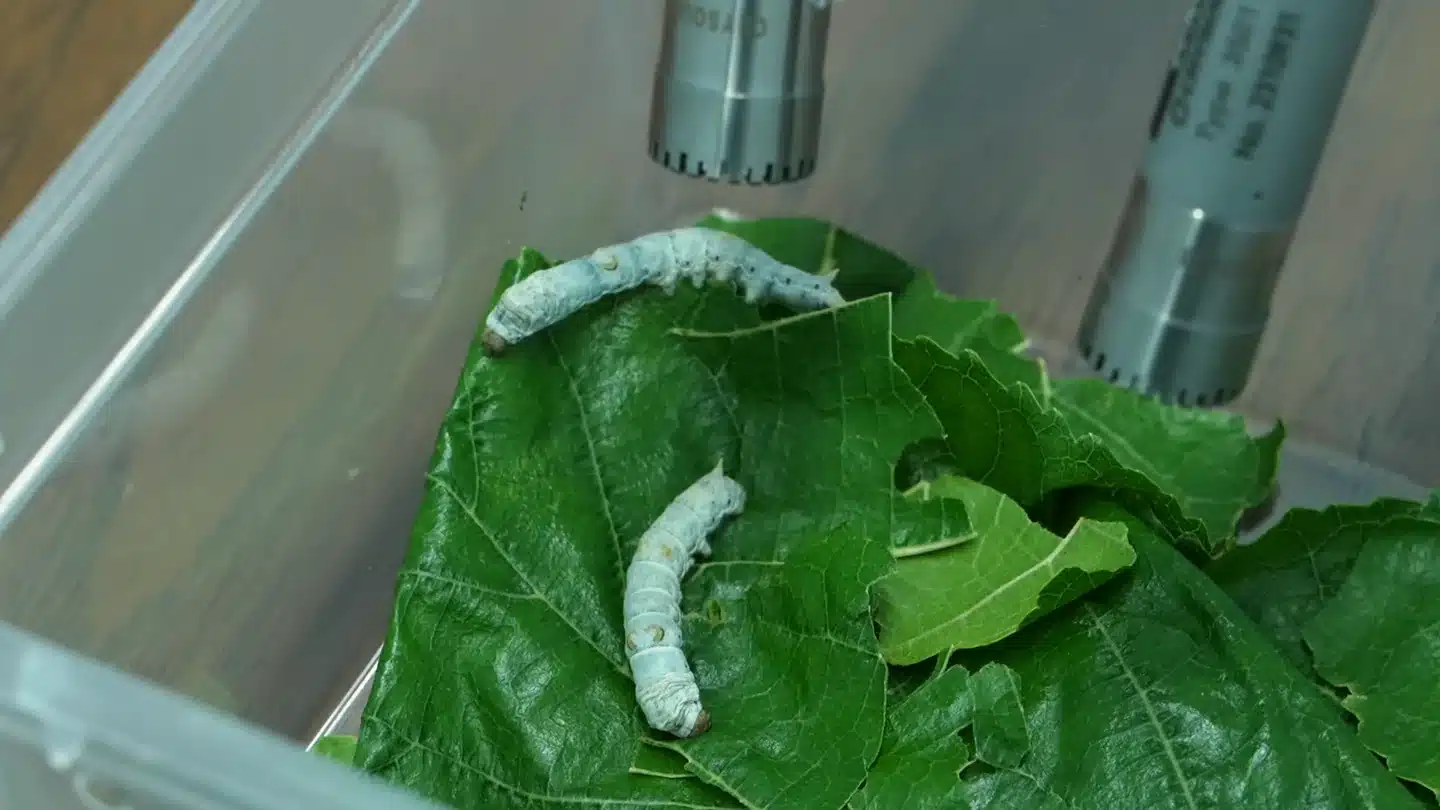
Why Silkworm Feeding Sounds Are Difficult to Measure
Silkworms produce very weak, intermittent sounds as their mouthparts cut and chew mulberry leaves. These signals may be close to the ambient noise level and may also overlap with airflow, vibration, electrical interference, or handling noise.
A quiet room alone does not guarantee a clean recording. When the acoustic signal approaches the microphone's self-noise, the useful details can be masked even if the microphone nominally covers the required frequency range.
How Self-Noise Affects Weak-Sound Measurement
Microphone self-noise is the equivalent acoustic noise generated by the microphone and its electronics. A lower self-noise value generally provides more usable headroom for weak signals, allowing small waveform and spectrum features to stand out more clearly.
Sensitivity also matters because a higher output per pascal can improve the signal level entering the acquisition chain. However, sensitivity should be evaluated together with self-noise, dynamic range, frequency response, measurement environment, and the input noise of the data-acquisition system. For background, see Measurement Microphone Sensitivity Explained.
CRY3261-S02 and CRY3203-S01 Recording Experiment
The two microphones were used simultaneously to capture the same silkworm feeding event. This arrangement reduces differences caused by timing and animal behavior and makes the comparison easier to interpret.
Microphone Performance Comparison
| Parameter | CRY3261-S02 | CRY3203-S01 |
|---|---|---|
| Type | 1/2-inch free-field prepolarized microphone set | 1/2-inch free-field prepolarized microphone set |
| Primary use | Ultra-low-noise measurement | General acoustic measurement |
| Nominal sensitivity | 450 mV/Pa | 50 mV/Pa |
| Frequency response | 6 Hz to 20 kHz, ±3 dB | 3.15 Hz to 20 kHz, ±2 dB |
| Self-noise / lower dynamic-range limit | 6.5 dBA | 16 dBA |
| Dynamic range | 6.5 dBA to 100 dB | 16 dBA to 138 dB |
| Typical applications | Weak-sound measurement, quiet-product testing, and bioacoustics | General noise and electroacoustic testing |
Specification note: For the CRY3261-S02, 6 Hz to 20 kHz corresponds to ±3 dB; its ±2 dB range is 10 Hz to 16 kHz. The CRY3203-S01 self-noise value shown here is 16 dBA, following the current product page. Values should be checked against the latest product specifications and calibration information before use.
Test Method
- Both microphones were positioned at the same time.
- Measurement distance and orientation were kept consistent.
- The same data-acquisition equipment was used.
- The same analysis method was applied to both channels.
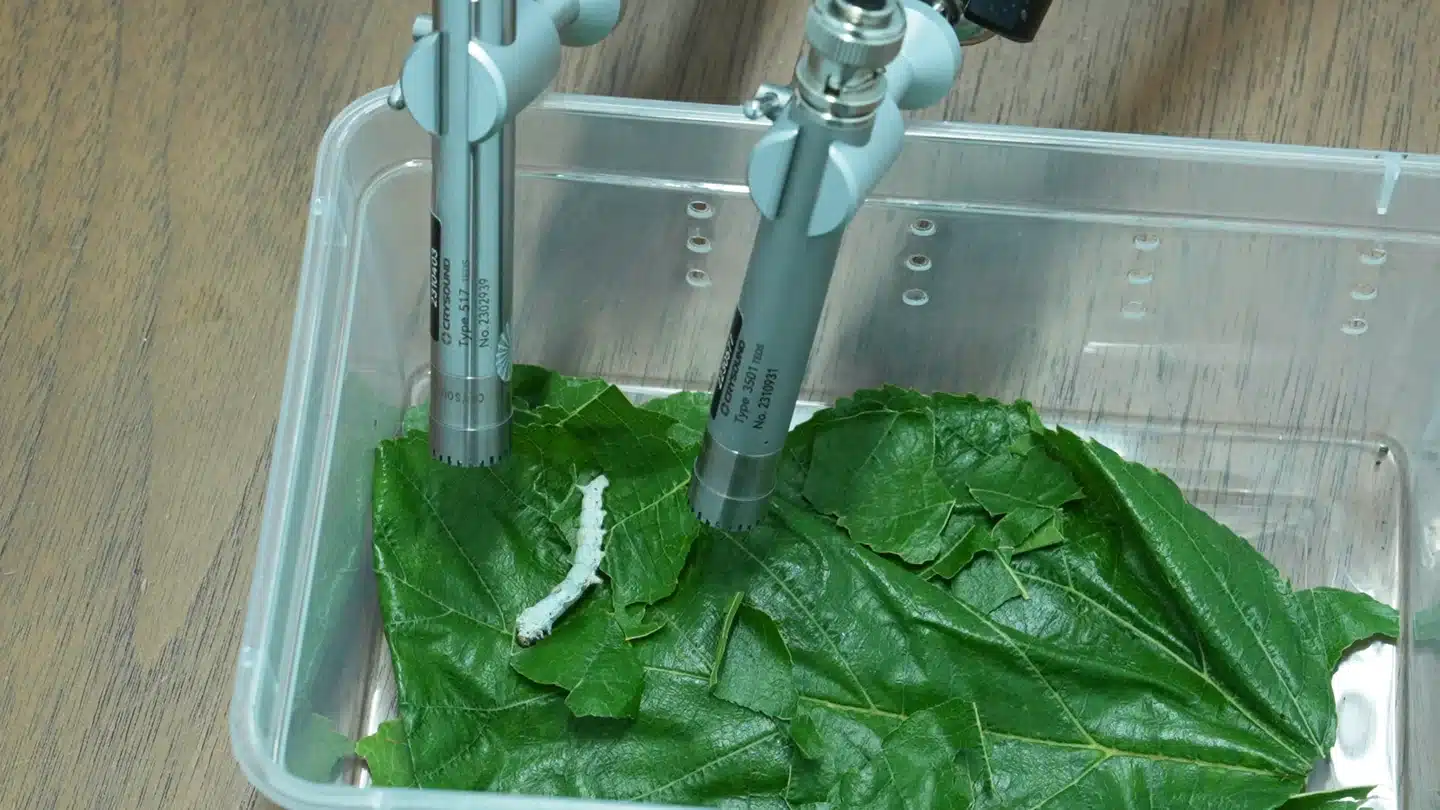
Recording Results
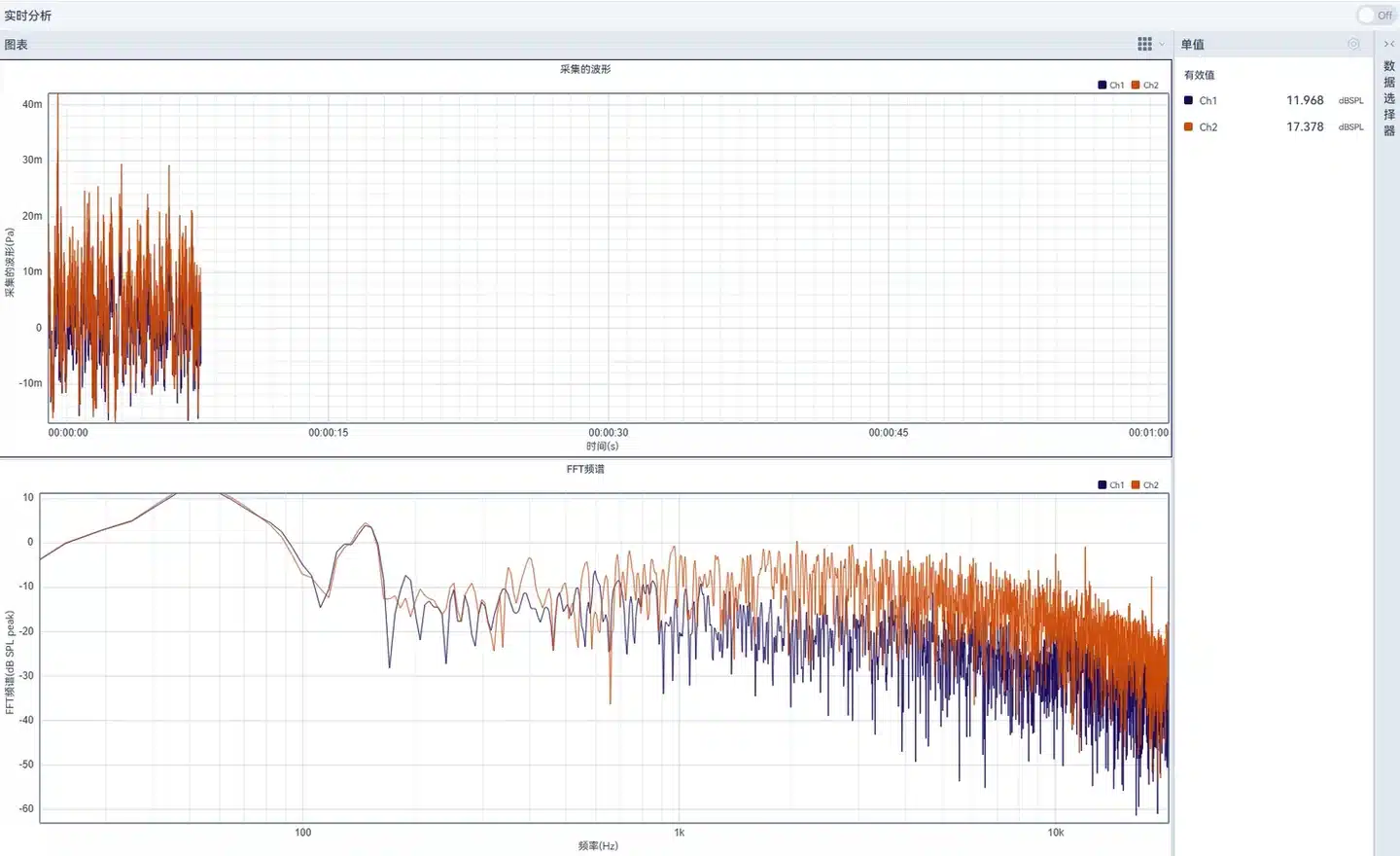
Both microphones captured activity associated with the silkworms feeding. The low-noise channel showed a lower baseline and clearer separation between the feeding events and the system noise, which made weak details easier to identify in the waveform and spectrum.
The comparison does not mean that one microphone is suitable for every measurement. The CRY3203-S01 offers a wider upper measurement range for general acoustic work, while the CRY3261-S02 is designed for cases where low self-noise is the priority. Read more in Ultra-Low-Noise Testing Solutions.
Typical Applications of Low-Noise Microphones
- Product self-noise and standby-noise evaluation
- Quiet-environment and bioacoustic research
- Precision equipment operating-sound analysis
- Weak structural vibration and acoustic-event detection
Frequently Asked Questions
Do silkworms really make a sound when eating mulberry leaves?
Yes. Their mouthparts cutting and chewing the leaves produce weak, intermittent sounds. Whether those sounds are audible or measurable depends on distance, background noise, microphone self-noise, and the rest of the acquisition chain.
Is a high-sensitivity microphone always better for weak sounds?
Not always. High sensitivity can raise the electrical output, but self-noise, frequency response, dynamic range, preamplifier noise, and environmental control must also be considered.
Why can a general microphone record the sound but miss details?
If the target signal is close to the microphone's self-noise or the system noise floor, fine details may be masked. A lower-noise microphone can improve the signal-to-noise ratio for this type of measurement.
How can weak-sound tests be made more repeatable?
Keep microphone position, distance, orientation, acquisition settings, room conditions, and analysis parameters consistent. Simultaneous recording with multiple channels is also useful when comparing sensors.
Reference
For measurement microphone terminology and performance requirements, refer to IEC 61094-4: Measurement microphones - Specifications for working standard microphones.
Explore Low-Noise Measurement Solutions
For weak-sound testing, explore the CRY3261-S02 low-noise microphone, compare it with the CRY3203-S01 measurement microphone, and use CRY5820 SonoDAQ Pro for multichannel acquisition and analysis.
If you need help selecting the right setup for your weak-sound tests, please complete the Get in touch form below.


