


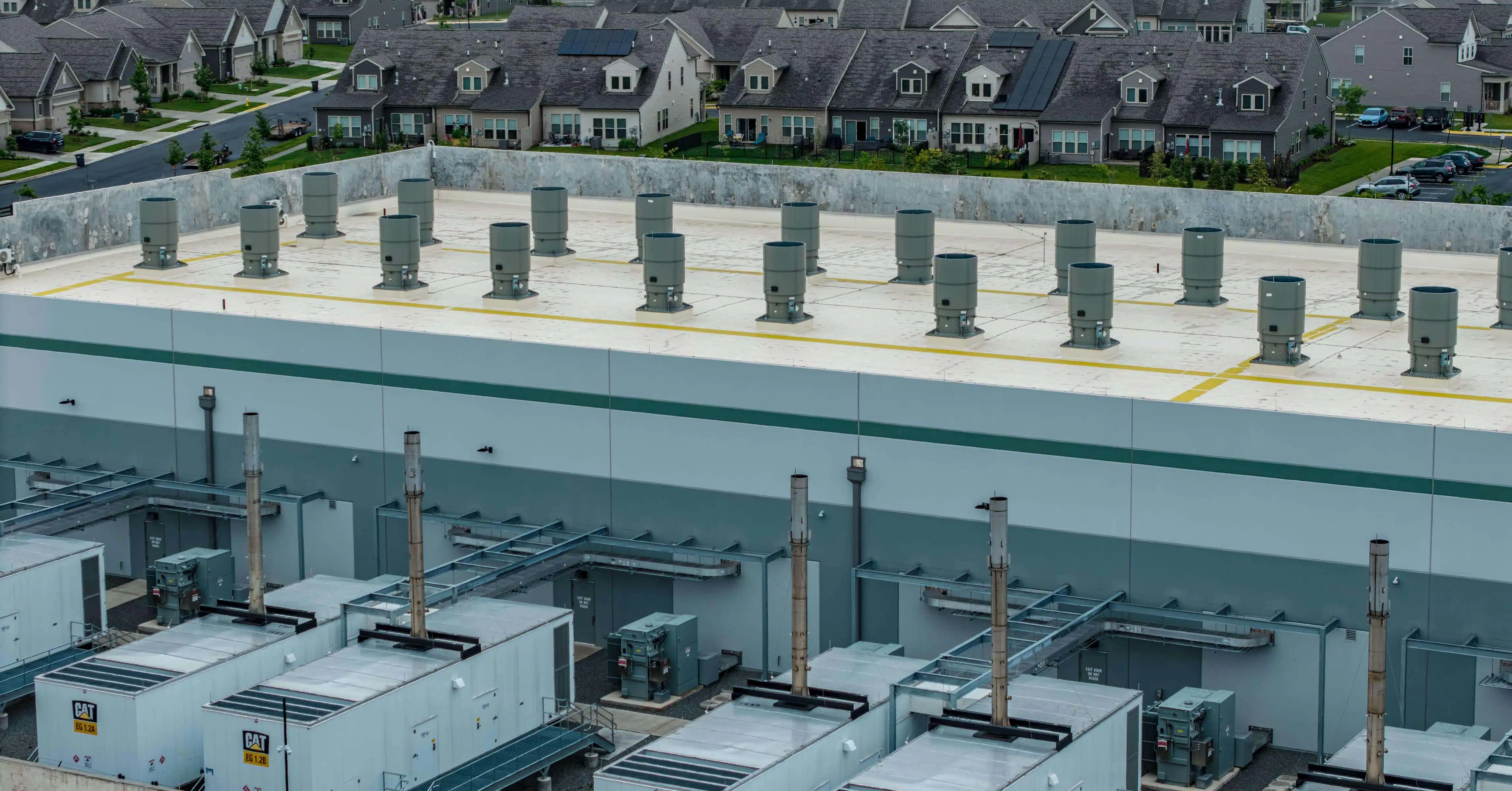
Data centers operate around the clock, with cooling systems, transformers and backup generators generating continuous noise, including low-frequency hum. As facilities expand closer to residential areas, noise assessment is becoming increasingly important. This article explores local noise regulations, low-frequency measurement methods and practical solutions using CRY2833 and CRY2851.
Why Data Center Noise Requires a Site-Specific Assessment
Data-center noise is not a single event that can be characterized by one short reading. Cooling equipment may run continuously, while generator tests create higher-level events at scheduled intervals. Transformer hum may contain strong tonal components, and several cooling units can combine into a higher cumulative level at a nearby property line.
The affected receptor also matters. A measurement beside a highway may be dominated by traffic noise, while a quieter residential boundary at night may reveal a low-frequency component that is less obvious during the day. A single number without the operating state, location and time context is difficult to reproduce and easy to challenge.
What Local Regulations Actually Require
In the United States, there is no single national numerical noise limit for data centers. Requirements commonly come from local zoning codes, conditional-use approvals, permits and project-specific conditions. Some rules specify only an A-weighted property-line limit. Others require background measurements, different daytime and nighttime criteria, statistical descriptors or additional evidence when low-frequency sound is a concern.
For operators and acoustic consultants, the practical question is therefore not simply which sound level meter is best. It is what evidence the applicable regulation requires. The following examples show different regulatory approaches. They should be read as evidence of how local rules are developing, not as a national US standard.
Kent County, Delaware
The referenced approval condition requires the data-center site to be designed to minimize noise impact on neighboring residential properties, with an A-weighted property-line limit of 55 dB(A). The exact code and approval text remain controlling.
Mason, Michigan
Mason has adopted objective local noise and vibration standards and has considered a dedicated data-center approval framework. Pre-development assessment, measurement location, time period and post-construction conditions can be relevant. Project-specific conditions still need to be checked.
Cumberland County, North Carolina
Draft data-center standards have discussed different limits at residential boundaries. As of October 2026, these are proposed requirements still moving through the local policy process, not a final national benchmark.
Before selecting equipment or designing a test, confirm the applicable requirements:
- Measurement location: property line, facility boundary, residential receptor or another defined point.
- Metric: LAeq, LCeq, LZeq, Lmax, statistical levels such as L90, or octave-band data.
- Time conditions: daytime, nighttime, 24-hour average, generator test or full-load operation.
- Background sound: whether a baseline study is required and how existing ambient sound should be handled.
- Instrument class: IEC Class 1, ANSI Type 1 or another accepted specification.
- Calibration and reporting: calibration evidence, raw data, weather records and report format.
- Approval stage: pre-construction, commissioning, post-construction verification or complaint investigation.
Why dB(A) May Not Explain a Low-Frequency Complaint
A-weighting is designed to reflect the relative sensitivity of human hearing and is appropriate for many environmental and occupational limits. However, it attenuates low-frequency energy more than C- or Z-weighting. A facility can therefore appear compliant on an A-weighted total level while nearby residents still perceive a persistent hum or tonal component.
That does not mean dB(A) is wrong. It means the applicable metric must be understood before additional analysis is requested.
- A-weighting is commonly used for environmental and community-noise limits.
- C-weighting retains more low-frequency energy and can help reveal whether a low-frequency contribution is present.
- Z-weighting is close to a flat frequency response and is useful for spectral analysis.
- L90 is the sound level exceeded for 90% of the measurement period. It describes a relatively steady background, but is not a low-frequency metric by itself.
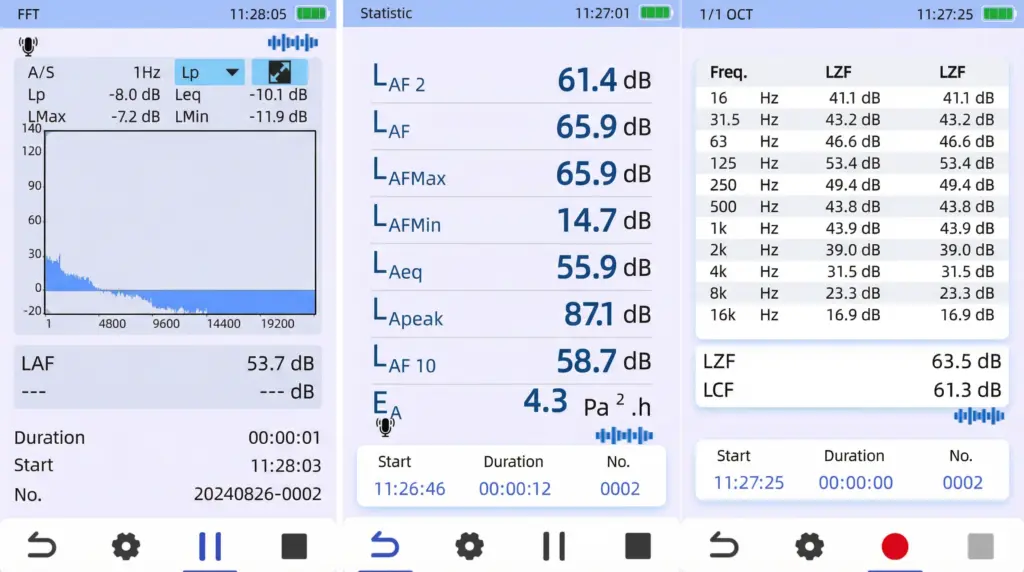
- 1/3-octave analysis shows how energy is distributed across frequency bands.
- FFT provides finer frequency resolution for identifying narrow-band tones, harmonics or equipment-specific components.
- Time history connects changes in sound to cooling load, equipment start-up, generator tests and other operating events.
A difference between LCeq and LAeq can be a useful screening clue, but it is not automatically a violation or proof of a particular source. The same principle applies to a strong peak in a spectrum. Measurement data describes acoustic behavior; source attribution still requires equipment logs, operating conditions and engineering judgment.
The practical evidence chain is: A/C/Z overall levels, low-frequency screening, 1/3-octave band location, FFT for narrow-band detail, and operating data for source confirmation.
From Regulation to Measurement Plan
A defensible data-center noise study usually follows these steps:
- Obtain the current ordinance, permit condition, measurement procedure and acceptance criteria.
- Identify the property-line points and nearby sensitive receptors defined by the authority.
- Record the weather, ground conditions, site layout and any reflecting surfaces that may affect the result.
- Measure background sound and record L90 where required.
- Calibrate the instrument on site and preserve the calibration record.
- Measure normal operation, high-load conditions, generator tests or other required states.
- Collect LAeq, LCeq and other required parameters over the specified period.
- If low-frequency or tonal issues are indicated, collect 1/3-octave or FFT data at the same time.
- Link measured events to equipment logs and operating records.
- Report the result against the exact metric, location, time period and instrument requirement in the regulation.
Common weaknesses include taking one brief reading, measuring an arbitrary location, omitting the operating state, failing to document background sound, or treating a spectrum as an automatic source-identification result.
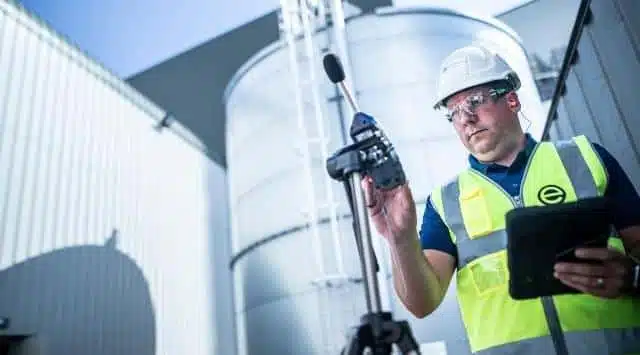
Figure 3. Environmental Noise Measurement at a Data Center Property Boundary
CRY2833 and CRY2851: Two Class 1 Field Measurement Options
CRY2833 and CRY2851 both provide Class 1 acoustic measurement capability, a 10 Hz to 20 kHz frequency range, A/C/Z frequency weighting, integrated and statistical parameters including L90, and octave-band functions according to the selected model and configuration.
CRY2833 is well suited to routine field investigation. Its portable workflow supports property-line checks, background and L90 measurement, A/C/Z comparison and post-mitigation surveys. When the applicable rule requires a conventional A-weighted assessment, it provides the essential measurement functions without adding unnecessary workflow complexity.
CRY2851 is intended for projects that need deeper evidence. Depending on configuration, it adds FFT analysis, flexible octave-band analysis, larger data storage, Ethernet and Wi-Fi connectivity, GPS-supported records and outdoor monitoring options. That makes it a stronger fit for disputed low-frequency complaints, tonal investigations and long-duration evidence.
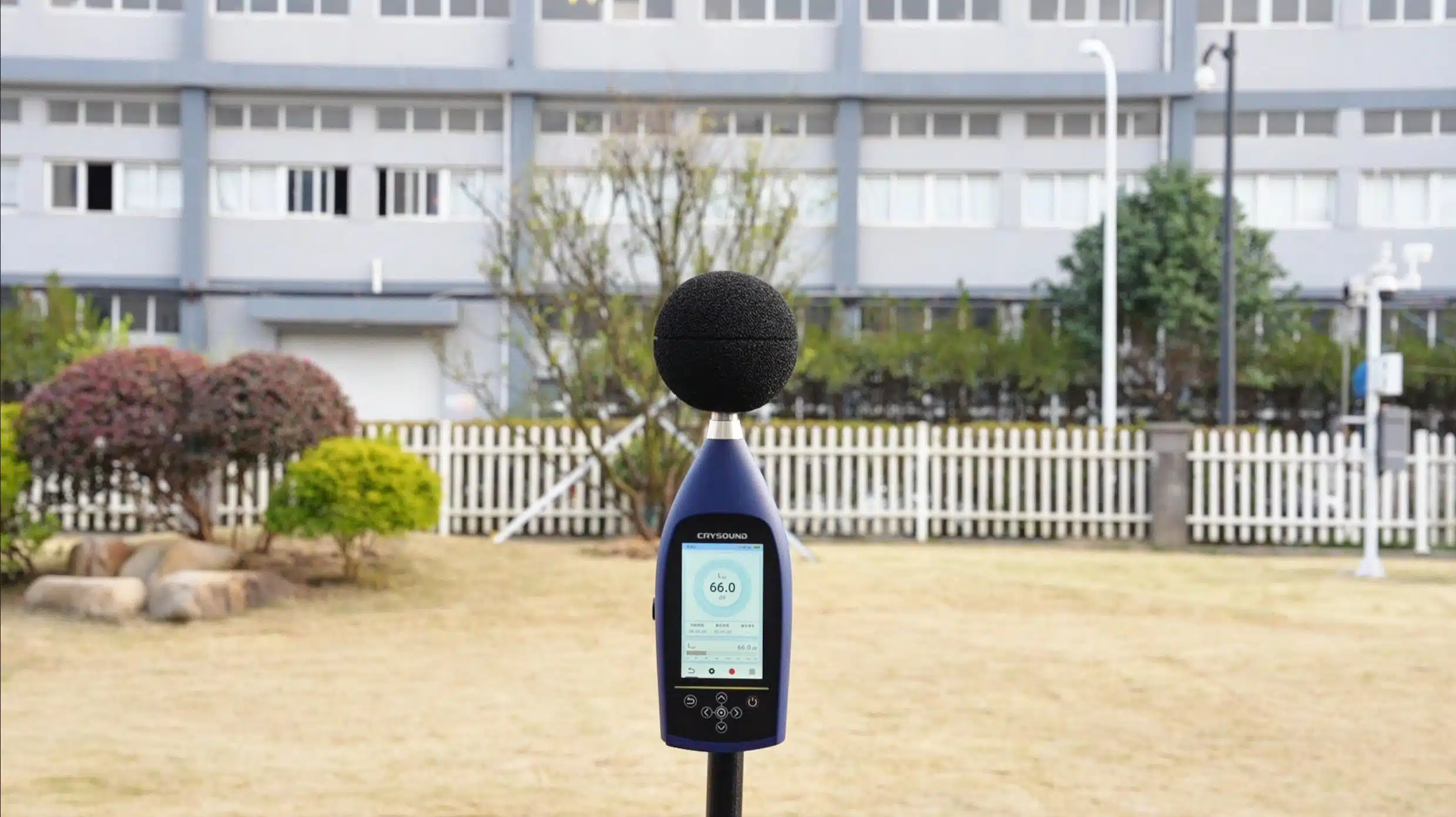
The distinction is therefore not frequency range. It is measurement depth and deployment requirements. CRY2833 prioritizes a clear field workflow for routine surveys; CRY2851 provides more options for detailed analysis, longer data sets and connected deployments. Feature availability still depends on the exact model, license and configuration.
What to Confirm Before Purchase
First, ask whether the authority accepts IEC Class 1 performance during site measurements or requires ANSI Type 1, a specific test method or another verification route. EU or international conformity does not automatically replace a local acceptance requirement.
Second, confirm that the instrument configuration includes the required filters and reporting functions. 1/3-octave capable is not enough unless the exact SKU, license and saved data format meet the project requirement.
Third, verify calibration, frequency range, microphone type, measurement duration and data export. Finally, match the deployment method to the project. A portable survey meter and a networked outdoor monitoring configuration solve different problems.
Frequently Asked Questions
Is dB(C) required by every data center noise regulation?
No. It may be required by a local rule, requested by an acoustic consultant or used as a screening measurement when low-frequency complaints are present.
What does L90 add to a noise assessment?
L90 describes the sound level exceeded for 90% of the measurement period. It is useful for characterizing steady background sound and comparing ambient conditions.
Can both CRY2833 and CRY2851 measure low-frequency noise?
Yes. Both cover 10 Hz to 20 kHz and support A/C/Z weighting. The appropriate option depends on whether the task needs basic field evidence or deeper spectral and long-duration analysis.
When is FFT necessary?
FFT is useful when a complaint involves tonal or narrow-band sound, or when 1/3-octave data suggests a component that needs finer frequency resolution.
Can a sound level meter identify the exact noise source?
It can measure the acoustic contribution and reveal spectral characteristics. Confirming a source usually also requires equipment operation records, selective shutdown tests and an engineering assessment.
Does IEC Class 1 automatically satisfy a US local requirement?
No. The acceptance criteria depend on the local code, permit or consultant specification. Always verify the exact requirement before commissioning the test.
Sources and Regulatory Note
This article summarizes how different regulatory approaches affect measurement planning. Local codes and project approvals remain controlling, and proposed rules may change.
Kent County, Delaware: Article VI, Conditions of Approval
City of Mason, Michigan: City Charter and Ordinances
Cumberland County, North Carolina: Proposed data-center policy discussion
IEC 61672-1:2013 and IEC 61260-1:2014 define relevant Class 1 sound measurement and filter terminology. Always confirm the exact edition and acceptance procedure specified by the authority.
This article is intended for general technical education. It does not constitute legal advice or confirmation that a particular instrument satisfies a specific jurisdiction's acceptance procedure.
If you have questions about selecting a Class 1 sound level meter for a data-center noise study, please complete the Get in touch form below.


