Headphone end-of-line testing must detect anomalous sounds that response-curve limits alone can miss. Based on a CRYSOUND headphone production-line pilot, this article explains how AI listening was integrated with acoustic fixtures, OpenTest software, retest mechanisms, and production data to support continuous mass-production inspection.

Figure 1. AI listening pilot line for headphone anomalous-sound detection.Why Manual Listening Falls Short In Headphone Testing
In consumer audio products such as headphones, speakers, and laptops, anomalous-sound defects cannot always be identified by checking whether an acoustic response curve is within specification. Hissing, rubbing, electrical noise, or sudden noise-floor changes may occur only under a specific stimulus, product orientation, production batch, or test unit.
Experienced listeners can detect subtle sound defects, but maintaining consistent judgment over long production shifts is difficult. Different operators may apply slightly different standards, and even the same operator's performance may vary between shifts. This makes defect decisions harder to trace, compare, and review after production.
For this reason, AI listening should be evaluated not only as an algorithm, but as a production inspection process. A deployable system needs to answer three questions: whether abnormalities can be detected reliably, whether the cycle time can meet line requirements, and whether the workflow can be standardized across stations.
| Production-Line Pain Point | Impact on Quality and Efficiency |
| Subjective judgment | Sensitivity to minor anomalous sounds varies between operators, leading to inconsistent standards. |
| Long-term fatigue | High-intensity repetitive listening reduces concentration and increases the risk of false accepts or false rejects. |
| Lengthy operator training | Qualified listeners need experience, and new operators cannot quickly take over. |
| Limited data traceability | What an operator "heard" is difficult to convert into structured data for later review. |
| Labor-dependent scalability | Increasing output requires additional listening operators and higher management costs. |
The purpose of AI listening is therefore not merely to "replace human ears," but to convert human listening experience into a measurable, repeatable, and traceable production capability. People still participate in verification and root-cause analysis, but no longer need to perform large volumes of repetitive listening.
AI Sound Inspection Is More Than An Algorithm
While maintaining anomalous-sound detection capability, a mass-production solution must also account for floor space, equipment investment, staffing, and test cycle time. Based on these conditions, the project adopted a combined station for AI listening and noise-floor testing and validated it on the actual production line. Before integration, the noise-floor test had a cycle time (CT) of approximately 60 seconds. After combining it with AI listening, the CT increased to about 80 seconds. To meet a throughput requirement of 600 pcs per hour, the number of test systems increased from five to seven, without adding operators. Manual listening stations only needed to retain MMI-related tests, reducing the overall amount of manual testing time.
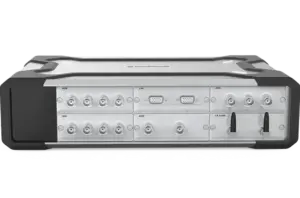
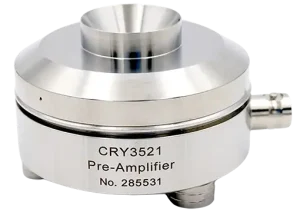
Beyond the model itself, the solution also requires a stable low-noise acoustic environment, repeatable fixture coupling, reliable Bluetooth control, electroacoustic acquisition equipment, a production-test software sequence, data storage, and a retest mechanism.

Figure 2. Complete deployment workflow for headphone AI sound inspection.| Module | Deployment Requirement |
| Low-noise test environment | Reduce the impact of external noise, floor vibration, alarms, and other disturbances on test results. |
| Ear simulator and fixture | Keep headphone positioning and acoustic coupling as consistent as possible. |
| Electroacoustic acquisition chain | Reliably capture WAV audio files and related test data, preventing channel differences from increasing false rejects. |
| AI listening model | Learn the normal sound pattern from data from known-good units while remaining sensitive to abnormal acoustic characteristics. |
| Production-test software platform | Integrate noise-floor testing, conventional algorithms, AI listening, and routing logic into one test sequence. |
| Retest and sample-retention mechanism | Retest, classify, manually verify, and feed confirmed samples back into closed-loop model improvement. |
In this deployment, CRYSOUND OpenTest software executed test sequences, applied pass/fail logic, displayed acoustic curves, and maintained historical records and system logs. AI listening, noise-floor testing, and conventional anomalous-sound algorithms (fixed-frequency testing) ran together in the same sequence, creating a unified software foundation for station replication and multi-line deployment.

Figure 3. CRYSOUND OpenTest software interface for AI listening production testing.Pilot-Line Test Results
The mass-production rollout was completed in three stages. First, data from known-good units was collected over three days and the initial model was deployed. Next, three systems were brought online to collect and analyze test data in volume while the model was continuously optimized over approximately two weeks. After the model stabilized, all seven systems entered production testing and were monitored on the line for another two weeks. Results were reviewed daily to verify defect detection effectiveness and operational stability.
When evaluating an AI listening solution, laboratory validation and isolated defect detections only demonstrate initial model capability; they do not represent long-term stability under real production throughput and cycle-time requirements. Evaluation data must therefore be considered at two levels. Continuous production data is used to track daily pass quantities, fail rates, AI-listening-related retest rates, and changes in defect categories.
Summary metrics are used to assess overall yield, fail rates, and retest volume. By combining both types of data, engineers can further distinguish real defects, false rejects that still need convergence, defect categories requiring additional training samples, and issues related to equipment, the environment, or the hardware signal chain.
The following table shows data from eight consecutive production days after full deployment:
| Metric | Result | Description |
| Production data period | 8 production days | |
| Total units tested | 35,826 pcs | 35,406 pcs passed; 420 pcs were judged as failed. |
| AI-listening first-fail rate | 0.16% | 56 pcs; remained below 0.2% after retesting and model optimization. |
| AI listening retest rate | 0.88% | Calculated as AI-listening-related retests divided by total production tests. |
| AI-listening test result | No escapes observed | No missed anomalous sound was found during manual sampling of good units; AI-rejected units were confirmed to have audible noise or anomalous-sound characteristics. |
Review And Classification: Noise Detection Is Not A Black Box
During early validation, the team recorded not only production yield and retest rates, but also manually reviewed AI-rejected samples and classified their defect types. This is critical: after AI listening is introduced, the system should provide more than a pass/fail result. Customers need to know what was intercepted, whether the defect is audible to a person, and whether the next step should be model optimization or on-site process improvement.
The following table shows actual review results from one period during the early validation stage:
| Review / Classification Target | Recorded Result | Significance for Deployment |
| Samples rejected by the manual listening station and rechecked at the AI listening station | The manual listening station rejected 8 pcs. After retesting with AI listening, all 8 pcs remained failed. | Use human listening experience to validate the effectiveness of AI decisions. |
| Samples rejected only by the AI listening station and reviewed manually | The AI listening station rejected 32 pcs. Manual review confirmed audible noise in 24 pcs. For the remaining 8 pcs, no clear audible conclusion was reached, but abnormal waveform or time-frequency characteristics were present. The customer decided whether to include them in further retesting and model-boundary optimization or reject them directly. | Validate AI decision effectiveness and distinguish clearly audible defects from samples that require further model refinement. |
Note: The two sample groups above came from the manual listening station and the AI listening station, respectively, with no overlap between the datasets.
These data show that AI listening was no longer being validated with only a handful of samples. It was operating over a long period with multiple systems running in parallel. This step is essential for production lines because only operation at real production speed can reveal equipment interference, fixture consistency issues, differences between ear simulators, decision-threshold or specification-limit settings, and model generalization problems.
What Did The Pilot Deployment Actually Establish?
The value of an AI listening pilot is not limited to demonstrating that the station can operate. More importantly, it establishes a repeatable deployment methodology that can be applied to future projects.
| Established Deliverable | Value for Future Replication |
| Standard hardware configuration | Define configuration boundaries for the soundproof enclosure, ear simulator, electroacoustic acquisition, Bluetooth control, and related hardware. |
| Standard test sequence | Coordinate AI listening, noise-floor testing, conventional anomalous-sound algorithms, and routing logic. |
| Combined-station delivery method | Standardize noise-floor testing and AI listening within the same environment, fixture, and data chain. |
| Data storage rules | Ensure abnormal samples, retest results, and waveform data are traceable. |
| Retest classification method | Distinguish real anomalous sound, equipment interference, environmental noise, and occasional false rejects. |
| Model iteration mechanism | Continuously collect new anomalous-sound samples so the model evolves with on-site issues. |
| FAE delivery package | Convert engineers' field experience into a trainable, verifiable, and reusable delivery process. |
Several deployment configurations have been developed: a standalone AI listening station, a combined AI listening and noise-floor test station, and a combined AI listening and man-machine interface (MMI) test station for functions such as tapping and swiping the headphone touch controls. The combined AI listening and MMI station is currently undergoing real-world deployment validation. In the future, the approach can be extended to speakers, smart glasses, laptops, loudspeakers, and other acoustic products. For customers, the most important factor is not the name of the algorithm, but whether the solution can reliably turn human listening experience into production data.
How CRYSOUND Supports AI Listening in Mass Production
To expand AI listening from a pilot line to additional production lines, customers need more than a model file. They need a mass-production solution that can be jointly executed by engineering, quality, and manufacturing teams. CRYSOUND's role is to connect acoustic hardware, test algorithms, production-test software, and on-site delivery so that AI listening can operate reliably within production cycle-time and throughput requirements.
| Support Area | CRYSOUND Capability | Value to Customer Deployment |
| Acoustic test environment and hardware-chain configuration | Configure a low-noise environment, electroacoustic acquisition chain, and related hardware based on product form, production-line noise, and test takt time. | Ensure anomalous-sound results are driven as much as possible by the product itself rather than on-site interference. |
| Ear simulator and fixture consistency verification | Verify headphone positioning, coupling stability, and left/right channel consistency. | Reduce false rejects and retest costs caused by fixture differences. |
| Combination of AI listening and conventional anomalous-sound algorithms | Use AI listening together with noise-floor testing, conventional anomalous-sound algorithms, and other test items. | Cover audible noise, noise-floor abnormalities, and conventional acoustic metrics. |
| CRYSOUND OpenTest test sequence and routing logic | Configure the test order, decision criteria, retest strategy, and routing rules in the production-test software. | Integrate AI sound inspection into the existing production-line process instead of leaving it as an isolated tool. |
| Management of WAV files, results, and retest data | Store audio, decision results, retest records, and manual listening classifications. | Support defect traceability, model optimization, and quality review. |
| On-site FAE deployment and model closed-loop support | Provide on-site debugging, sample retention, issue classification, and continuous optimization of models and decision thresholds. | Replicate pilot-line experience across future models and additional production lines. |
Conclusion: Making Production Data Visible Is Key
The main challenge in headphone anomalous-sound detection is not that people cannot hear the defect, but that human listening experience is difficult to reproduce consistently over time. AI listening converts subjective perception into structured data, repetitive listening into automated inspection, and experience-based judgment into a production process that can be retested, traced, and optimized.
Mass-production deployment of AI listening requires algorithms, acoustic hardware, fixtures, production-test software, and on-site delivery to work together. The pilot line demonstrates that this is no longer merely a technical proof of concept; it has become a scalable methodology validated in a real production environment.
For production lines struggling with manual listening, missed anomalous-sound defects, and quality traceability, AI listening is no longer a distant concept. It is becoming a key step in moving headphone anomalous-sound detection from operator-dependent listening to data-driven production decisions.
Evaluating an anomalous-sound detection solution for headphones, speakers, or other consumer audio products? Based on the product type, production takt time, test environment, and existing production-test process, CRYSOUND can support sample validation, station design, and mass-production deployment assessment.
If you need more information about the AI listening test solution, test sequences, routing logic, or data traceability, please fill out the Get in touch form below. We will be happy to support you.