

1/1
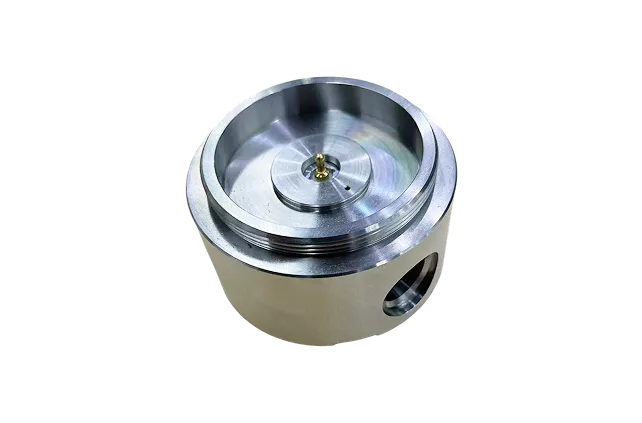
TA0517-6CC Coupling-Cavity Base-Type Adapter
TA0517-6CC Coupling-Cavity Base-Type Adapter, for connecting a 1-inch microphone, 6 cc coupler, and 1/2-inch microphone preamplifier into an integrated test assembly.
Downloads
Product Highlights
Technical Specifications
Main Features
Related Products
CRY3103 Free-field Microphone, 1", Prepolarized, 100 mV/Pa
Field Type
Free-field
Sensitivity
100 mV/Pa, -20 dB±2 dB re 1 V/Pa
Frequency Response
4 Hz to 12 kHz ±2 dB
CRY3605 Mouth Simulator, High-Performance ITU-T Rec.P51
Max Continuous Output SPL(25mmMRP)
110dB (200 Hz to 10 kHz) 100dB (100Hz to 10 kHz)
THD(94dBSPL, 25mmMRP)
<0.8%, Typical: <0.5% (200 Hz to 10 kHz)
Frequency Response
EQ: 94dB ±1 dB(100Hz to 10kHz)
How do CRYSOUND measurement microphones and calibrators perform when independently tested against established reference equipment-and pushed beyond typical laboratory conditions? In the September 2026 issue of audioXpress, technology consultant and long-time audio equipment designer Stuart Yaniger conducted a hands-on review of three CRYSOUND products: The review covered calibration accuracy, frequency response, environmental stability, self-noise, ruggedness, and [...]
We are excited to introduce the newest addition to our product portfolio - the CRY3000 Series Measurement Microphones, a groundbreaking lineup designed to set new standards in precision and versatility for acoustic measurement. Engineered for a wide range of applications, these measurement microphones deliver unparalleled performance and durability, making them the ideal choice for R&D, [...]
In acoustic testing, acoustic metrology, and product noise evaluation, the term measurement microphone typically refers to a condenser measurement microphone. Its signal generation relies on a polarization electric field: sound pressure changes the capacitance, and the front-end circuitry converts this change into an electrical signal. Depending on how the polarization field is provided, measurement microphones generally [...]
In day-to-day acoustic measurements, it's common to hear: "Insert the measurement microphone into the calibrator, press the button, and the microphone is calibrated." From an engineering and metrology perspective, that wording is an oversimplification. To place a sound calibrator correctly in the measurement chain, we should start with what it generates-and what it can (and [...]
Get in touch
If you are interested or have questions about our products, book a demo and we will be glad to show how it works, which solutions it can take part of and discuss how it might fit your needs and organization.