


Organized by the Acoustical Society of China and sponsored by CRYSOUND, the final round of Challenge One at the 4th Shenghua Cup Acoustic Technology Competition concluded at CRYSOUND's Hangzhou headquarters on September 22-23, 2026. The event brought together students, faculty advisors, and acoustics experts for outdoor testing, technical presentations, and industry exchange.
The on-site testing brought together 43 teams, with 14 advancing to the technical presentation and Q&A session. Participants demonstrated their acoustic expertise and practical engineering skills throughout the competition.
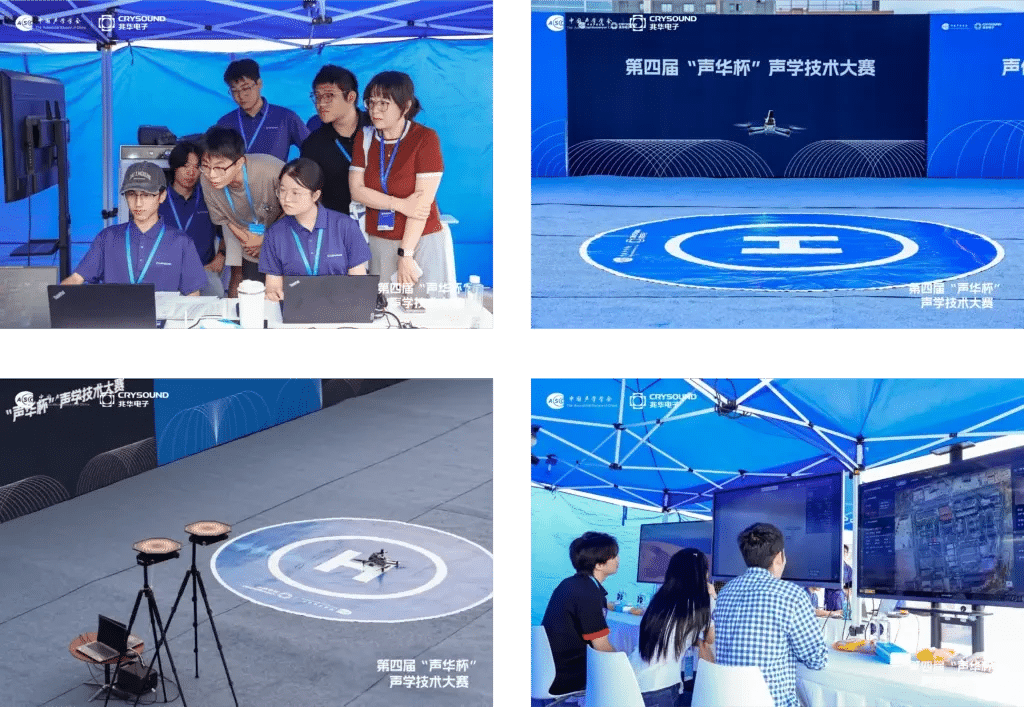
This year's challenge focused on acoustic detection and localization of low-flying, slow-moving, small drones. Using CRYSOUND's open acoustic camera development platform, teams were assessed on algorithm deployment, sound-source detection, localization and tracking, and system troubleshooting.
Putting Acoustic Algorithms to the Test
Outdoor testing brought the challenges of low-altitude acoustic sensing into focus. Wind, environmental noise, and weak signals from distant targets required teams to consider how their algorithms would perform under changing conditions.
Participants worked together to refine their setups and troubleshoot their systems, translating theoretical research into working implementations. Several teams reached the highest scoring tier at the 300-meter primary test distance, demonstrating their ability to address the practical demands of the challenge.
The testing placed equal emphasis on algorithms and implementation: acquiring usable signals, deploying processing methods, and maintaining reliable operation were all part of the task.
An Open Platform for Acoustic Research
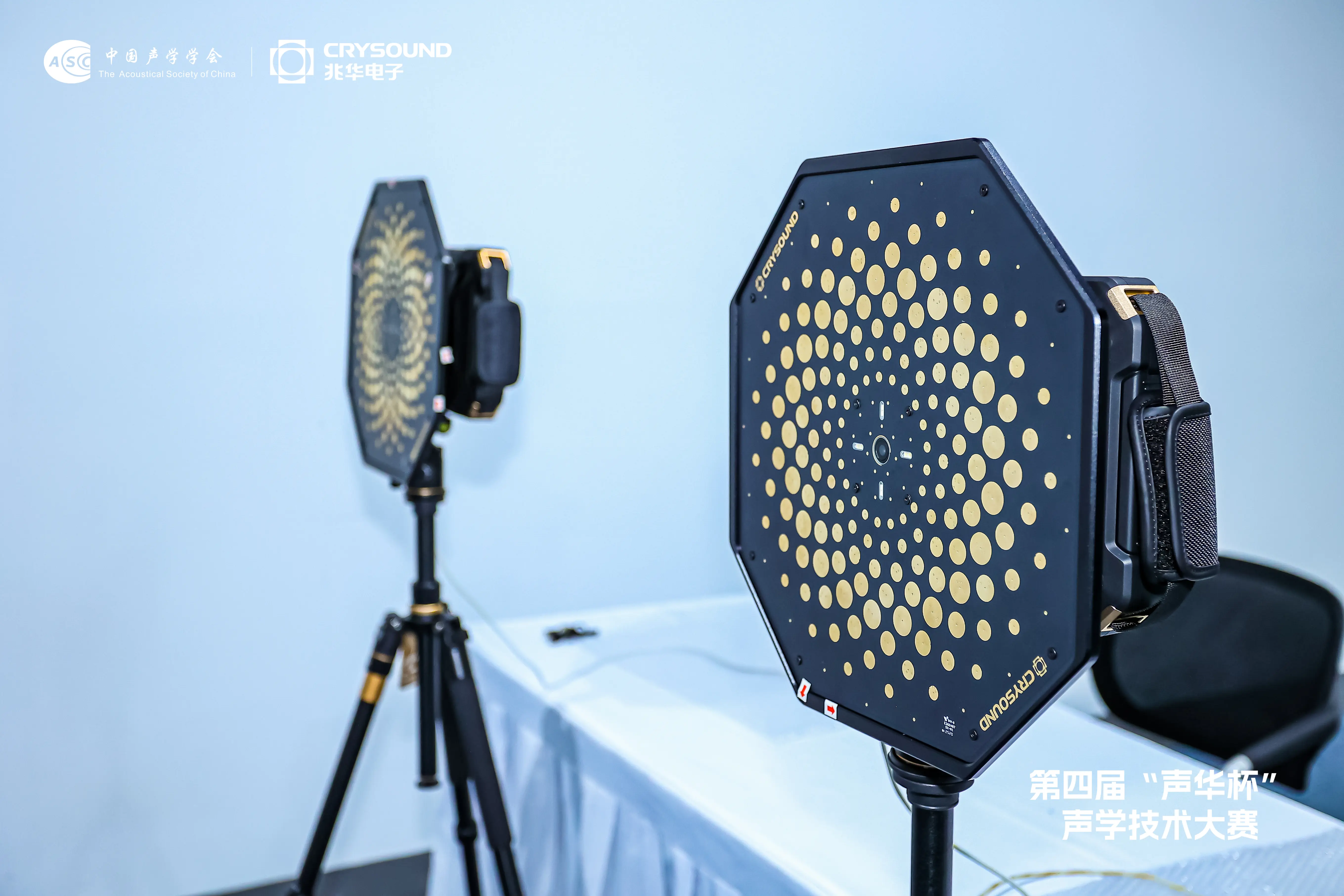
The CRY8500 Series SonoCam Pi Acoustic Camera provided the hardware foundation for the challenge. Designed as a portable acoustic camera development kit, it combines a microphone array with an integrated display and an open interface for custom algorithm development.
The platform supports up to 208 MEMS microphones, with interchangeable arrays in 30, 70, and 110 cm sizes. Its open API provides real-time multichannel waveform data and video output, allowing researchers to develop and evaluate their own signal-processing methods using data from physical hardware.
Beyond drone detection, the platform supports far-field beamforming and near-field acoustic holography for applications such as noise-source localization, laboratory research, and sound and vibration investigations.
The exhibition also introduced an open-source educational edition for drone detection. Its experimental workflow covers multichannel acquisition, signal processing, direction-of-arrival estimation, drone recognition, and angular output. Students can replace filters and algorithms, compare results using live or recorded data, and run third-party algorithms on the RK3588-based platform.
For university teaching and research, these capabilities support a progression from understanding individual processing steps to building and testing a complete working system.
Technical Presentations and Expert Discussion
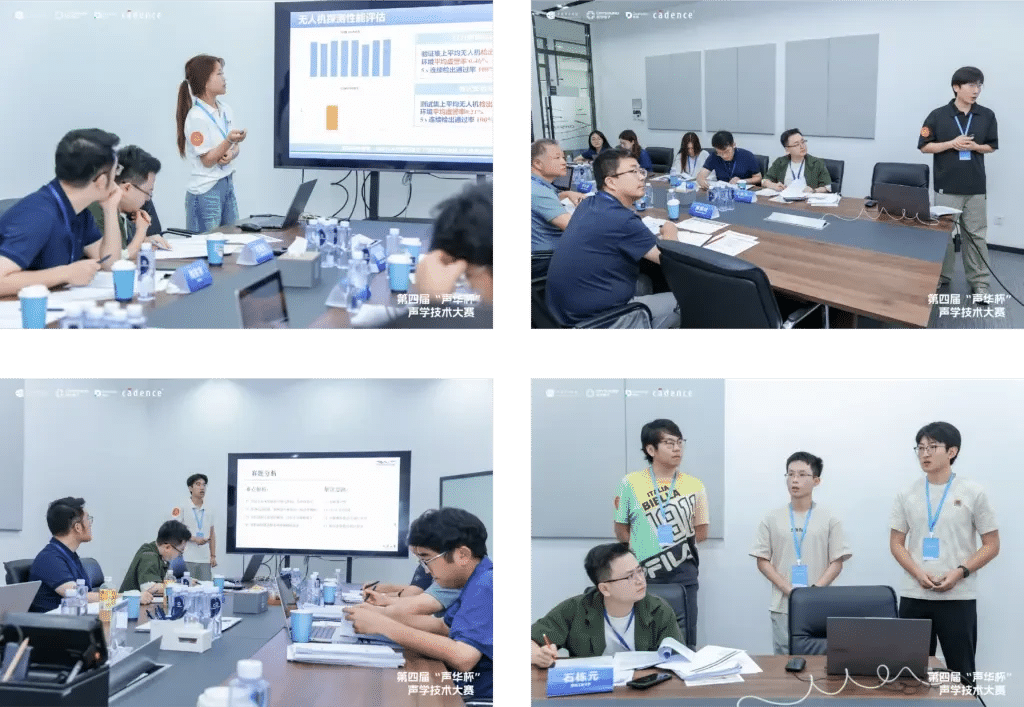
On September 23, the 14 qualifying teams presented their work to the judging panel. Their presentations covered algorithm principles, technical innovations, simulation-based validation, and deployment on the hardware platform.
Questions from the experts encouraged participants to examine the reasoning behind their designs and connect their test results with their technical decisions. The discussions also offered new perspectives for further research and development.
Together, the outdoor tests and technical presentations gave participants an opportunity to demonstrate how their ideas worked-and explain why.
Inside CRYSOUND: From Measurement to Application
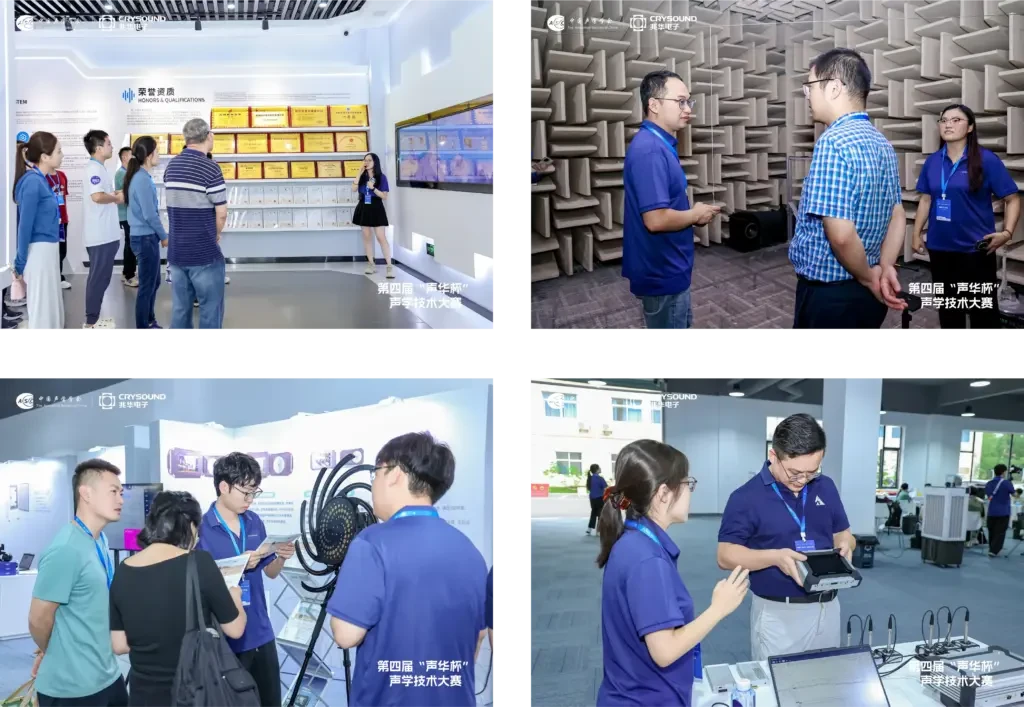
During the event, participating students and faculty visited CRYSOUND, where staff introduced the company's history, core products, and acoustic technology applications.
Covering Sensors, Data Acquisition, Acoustic Imaging, Noise Measurement, and Electroacoustic Test, the visit gave participants a closer look at how acoustic technology progresses from research and development to practical application.
Supporting the Next Generation of Acoustic Engineers
From algorithm development and outdoor testing to expert discussion and industry visits, the 4th Shenghua Cup gave young researchers opportunities to connect theoretical knowledge with engineering practice.
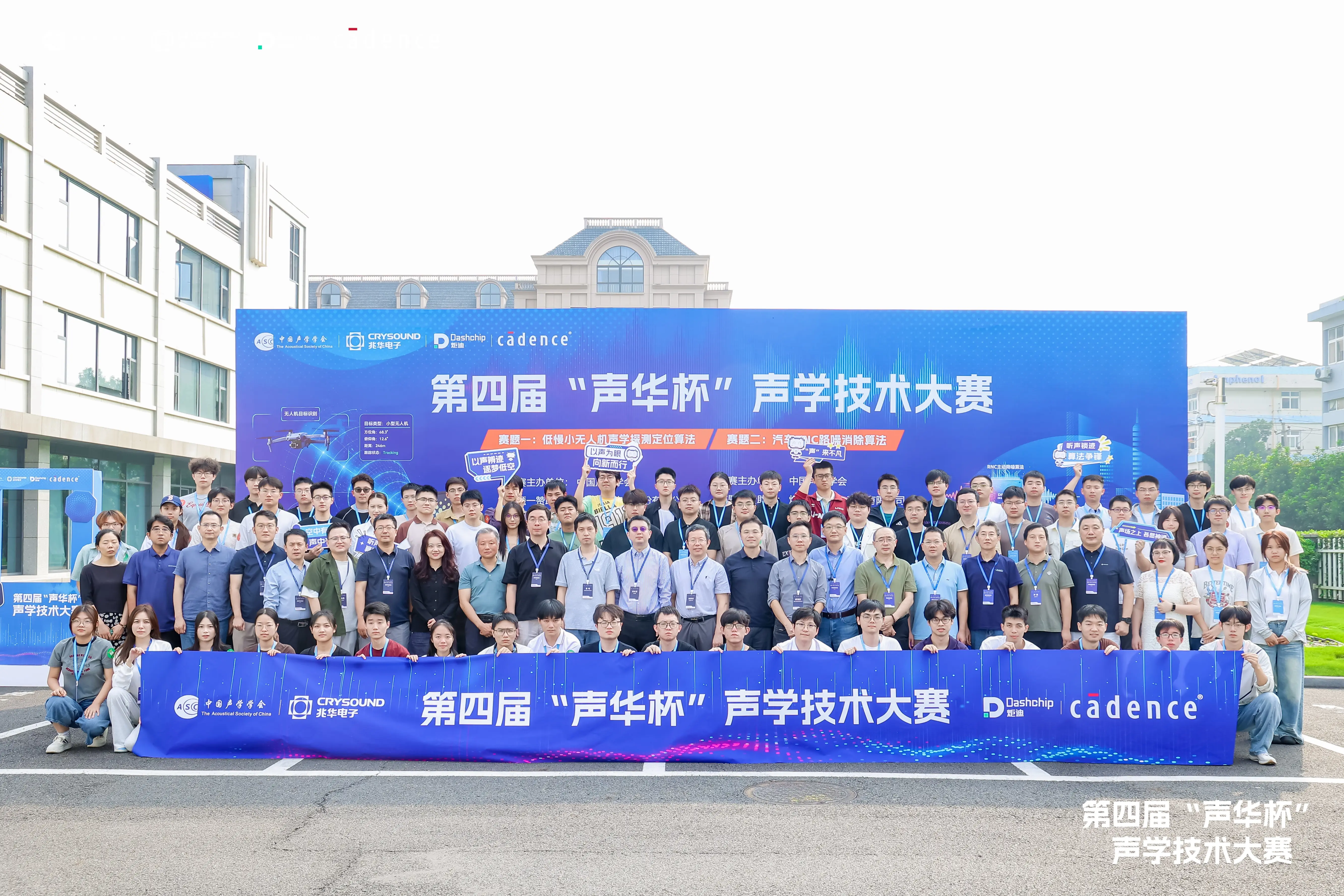
CRYSOUND will continue working with universities, research institutes, and industry partners to create more opportunities for hands-on learning and technical exchange. By making development tools and practical experience more accessible, we aim to support students as they turn promising ideas into working acoustic technologies.
To explore an acoustic research or teaching setup for your team, contact us through the Get in touch form below to discuss development platforms, measurement equipment, or a product demonstration.


