

1/1
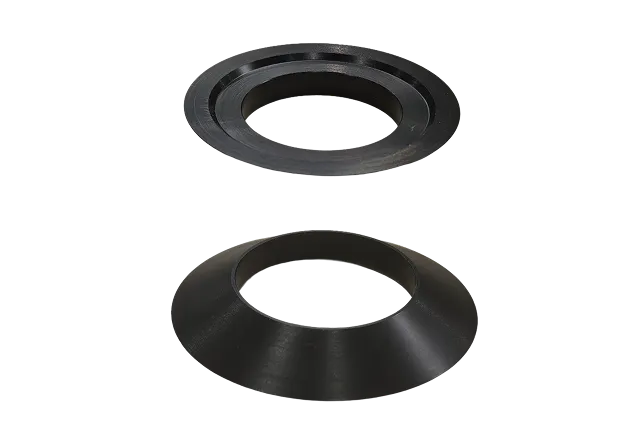
TA0702 - IEC 60318-1 Artificial Ear Conical Ring Adapter
TA0702 - IEC 60318-1 Artificial Ear Conical Ring Adapter (CRY3718, 318), designed for use with the TA0703 rubber sealing ring to ensure an airtight seal during measurement.
Downloads
Product Highlights
Technical Specifications
Main Features
Related Products
CRY3718 Ear Simulator IEC60318-1
Frequency Response
100Hz to 4kHz ±1dB(Simulated human ear impedance)、 20Hz to 16kHz(Coupling cavity use)
Standards
IEC 60318-1、 ITU-T P.57 Type 1、 GB/T 25498.1-2010
Weight
147g
In acoustic measurements (SPL, frequency response, noise, reverberation, etc.), large errors often come not from instrument accuracy, but from a mismatch between the assumed sound field and the actual one. What a microphone reads as sound pressure is not strictly equivalent across different fields-especially at mid and high frequencies, where the microphone dimensions become comparable [...]
We are excited to introduce the newest addition to our product portfolio - the CRY3000 Series Measurement Microphones, a groundbreaking lineup designed to set new standards in precision and versatility for acoustic measurement. Engineered for a wide range of applications, these measurement microphones deliver unparalleled performance and durability, making them the ideal choice for R&D, [...]
How do CRYSOUND measurement microphones and calibrators perform when independently tested against established reference equipment-and pushed beyond typical laboratory conditions? In the September 2026 issue of audioXpress, technology consultant and long-time audio equipment designer Stuart Yaniger conducted a hands-on review of three CRYSOUND products: The review covered calibration accuracy, frequency response, environmental stability, self-noise, ruggedness, and [...]
In acoustic testing, acoustic metrology, and product noise evaluation, the term measurement microphone typically refers to a condenser measurement microphone. Its signal generation relies on a polarization electric field: sound pressure changes the capacitance, and the front-end circuitry converts this change into an electrical signal. Depending on how the polarization field is provided, measurement microphones generally [...]
In day-to-day acoustic measurements, it's common to hear: "Insert the measurement microphone into the calibrator, press the button, and the microphone is calibrated." From an engineering and metrology perspective, that wording is an oversimplification. To place a sound calibrator correctly in the measurement chain, we should start with what it generates-and what it can (and [...]
Get in touch
If you are interested or have questions about our products, book a demo and we will be glad to show how it works, which solutions it can take part of and discuss how it might fit your needs and organization.