

1/1
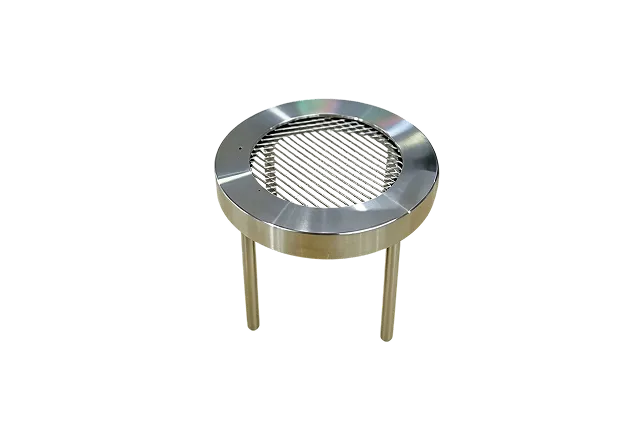
TA0603-Artificial Mouth Adapter (Lip Ring with Mesh, 25 mm MRP),
Artificial Mouth Adapter (Lip Ring with Mesh, 25 mm MRP), compatible with CRY602, CRY605, CRY608, CRY609, CRY3602, and CRY3605 artificial mouths.
Downloads
Product Highlights
Technical Specifications
Main Features
Related Products
CRY3602 Mouth Simulator with Built-In 20dB Amplifier
Max Continuous Output SPL (25mmMRP)
110 dB(200 Hz to 10 kHz) 100 dB (100 Hz to 10 kHz)
THD(94dBSPL, 25mmMRP)
<1.5% ,Typical: <1.0% (200 Hz to 10 KHz )
Frequency Response
EQ:94dB ±1 dB(100Hz to 10kHz)
CRY3605 Mouth Simulator, High-Performance ITU-T Rec.P51
Max Continuous Output SPL(25mmMRP)
110dB (200 Hz to 10 kHz) 100dB (100Hz to 10 kHz)
THD(94dBSPL, 25mmMRP)
<0.8%, Typical: <0.5% (200 Hz to 10 kHz)
Frequency Response
EQ: 94dB ±1 dB(100Hz to 10kHz)
In acoustic measurements (SPL, frequency response, noise, reverberation, etc.), large errors often come not from instrument accuracy, but from a mismatch between the assumed sound field and the actual one. What a microphone reads as sound pressure is not strictly equivalent across different fields-especially at mid and high frequencies, where the microphone dimensions become comparable [...]
In acoustic testing, acoustic metrology, and product noise evaluation, the term measurement microphone typically refers to a condenser measurement microphone. Its signal generation relies on a polarization electric field: sound pressure changes the capacitance, and the front-end circuitry converts this change into an electrical signal. Depending on how the polarization field is provided, measurement microphones generally [...]
In acoustic testing, sensor calibration, electroacoustics, and NVH, gain, input range, and quantization directly determine the quality of the data you capture. This article explains these three factors from an engineering perspective. Using typical CRYSOUND setups-measurement microphones, preamps, acoustic imaging systems, and DAQ system such as SonoDAQ Pro with OpenTest-it shows how to configure them [...]
In day-to-day acoustic measurements, it's common to hear: "Insert the measurement microphone into the calibrator, press the button, and the microphone is calibrated." From an engineering and metrology perspective, that wording is an oversimplification. To place a sound calibrator correctly in the measurement chain, we should start with what it generates-and what it can (and [...]
Get in touch
If you are interested or have questions about our products, book a demo and we will be glad to show how it works, which solutions it can take part of and discuss how it might fit your needs and organization.