


Across acoustics testing, product R&D, environmental noise monitoring, and NVH analysis, simply "capturing sound" isn't the goal-accurate sound measurement is. A measurement microphone is engineered for repeatable, traceable, and quantifiable results, so your data stays comparable across devices, labs, and time. In this post, we explain what a measurement microphone is and how it differs from a regular microphone, based on real-world acoustic measurement workflows.
What Is a Measurement Microphone?
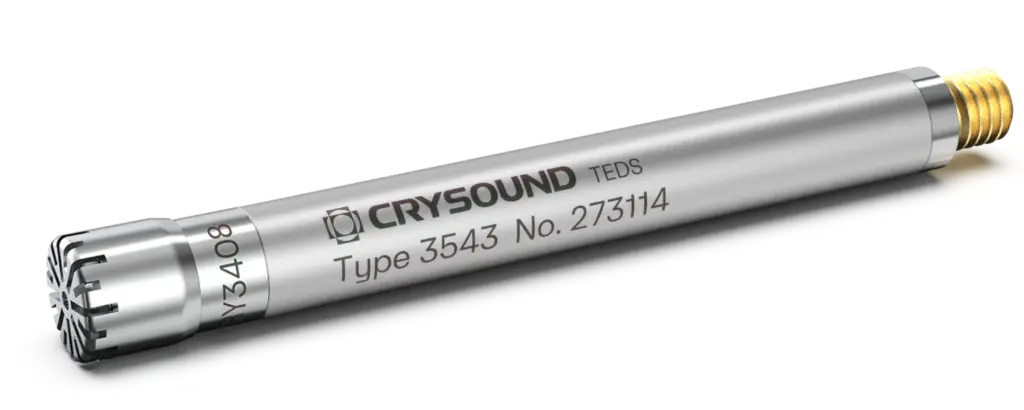
A measurement microphone is a high-precision acoustic transducer designed to measure sound pressure accurately. Its purpose is not to make audio "sound good," but to be truthful, calibratable, and repeatable.
A typical measurement microphone is engineered to provide:
- Known and stable sensitivity (e.g., mV/Pa), so its electrical output can be converted into sound pressure (Pa) or sound pressure level (dB).
- Controlled, near-ideal frequency response (as flat as possible under specified sound-field conditions) for accurate multi-band measurement.
- Excellent linearity and wide dynamic range, maintaining low distortion from very low noise floors to high SPL environments.
- Traceable calibration capability, working with acoustic calibrators or pistonphones to manage measurement uncertainty and maintain a reliable measurement chain.
- Environmental stability, minimizing drift due to temperature, humidity, static pressure, and long-term aging-critical for both lab and field use.
In short: a measurement microphone is the front-end sensor of a metrology-grade measurement chain, where the output must meaningfully represent true sound pressure in a defined sound field.
What Is a Regular Microphone?
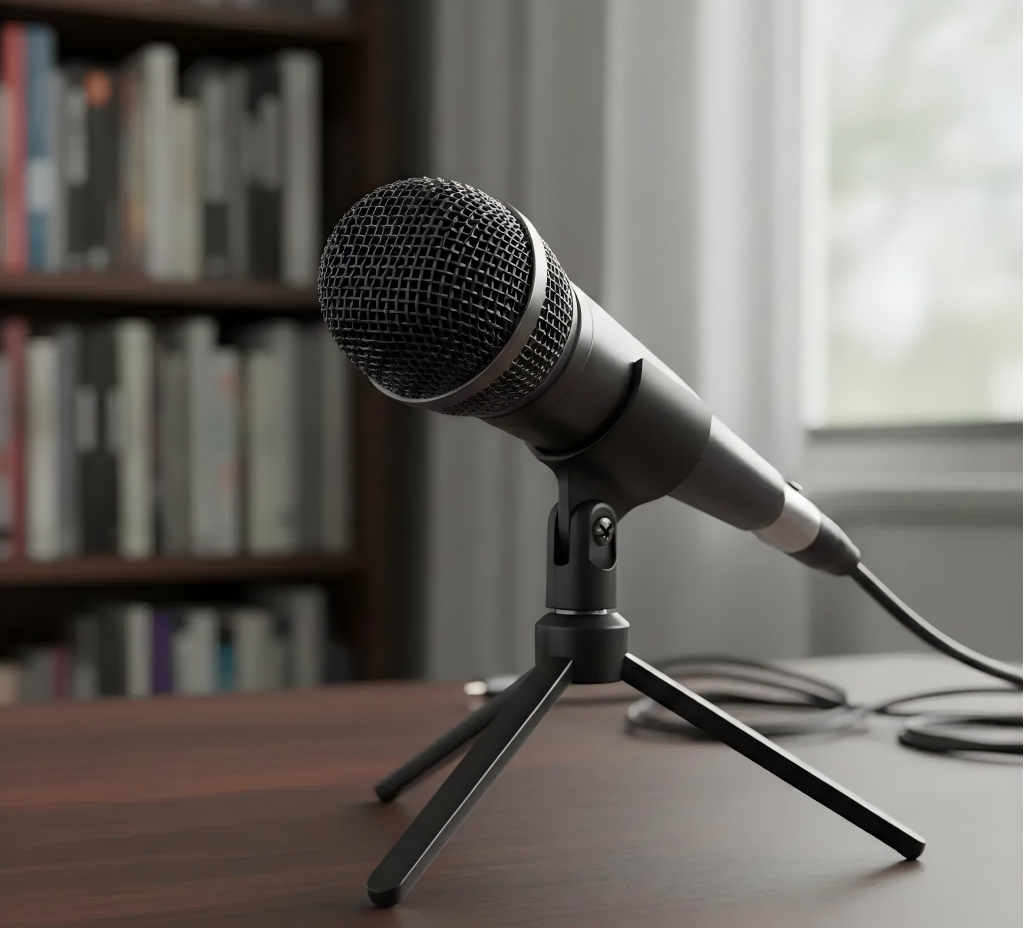
Most microphones people encounter daily-conference mics, phone mics, streaming mics, stage mics, and studio mics-are built for audio capture and production.
They typically prioritize:
- Speech clarity and pleasing timbre
- Wind/plosive resistance and usability
- Directivity and feedback control
- System compatibility, size, durability, and cost
Many regular microphones are intentionally not flat. For example, they may boost the vocal presence band, roll off low frequencies, or apply built-in processing such as noise reduction, AGC (automatic gain control), and limiting. These features can be great for "good sound," but they can severely compromise measurement accuracy.
The Core Difference: Different Goals, Different Design Philosophy
Measurement Accuracy vs. Pleasant Sound
- Measurement microphones aim to represent true sound pressure with accuracy, repeatability, and traceability.
- Regular microphones aim to produce usable or pleasant audio, where tonal shaping is often desired.
Calibration and Traceability: Quantifiable vs. Hard to Quantify
Measurement microphones are designed to support periodic calibration:
Regular microphones are typically treated as functional audio devices-specs may be provided, but traceable metrology calibration is rarely central to their usage.
Quick Comparison Table
| Dimension | Measurement Microphone | Regular Microphone |
| Primary Goal | Accurate, traceable measurement | Audio capture and sound quality |
| Frequency Response | Controlled & defined (free/pressure/diffuse field) | Tuned for application; may be intentionally shaped |
| Calibration | Designed for calibration and uncertainty management | Typically not traceable or routinely calibrated |
| Linearity/Dynamic Range | Emphasizes wide range, low distortion | Limiting/compression/ processing |
| Key Specs | Sensitivity, equivalent noise, max SPL, phase, drift | Sensitivity, directivity, timbre, ease of use |
| Typical Use Cases | Acoustics testing, compliance, R&D, NVH, monitoring | Meetings, streaming, recording, stage, calls |
Why Do You Need a Measurement Microphone?
If your work involves any of the following, a measurement microphone is often essential:
- Acoustic product development: loudspeaker/headphone response & distortion, spatial acoustics, array localization
- NVH engineering: cabin noise, transfer path analysis, order tracking
- Environmental/industrial noise monitoring: long-term stability and verifiable SPL logging
- Standards and compliance testing: traceable results and reproducible procedures across labs
- Acoustic material and silencer evaluation: impedance tubes, reverberation chambers, anechoic measurements
In these scenarios, the real problem is rarely "can you record sound?" The real question is: can you trust the dB value?
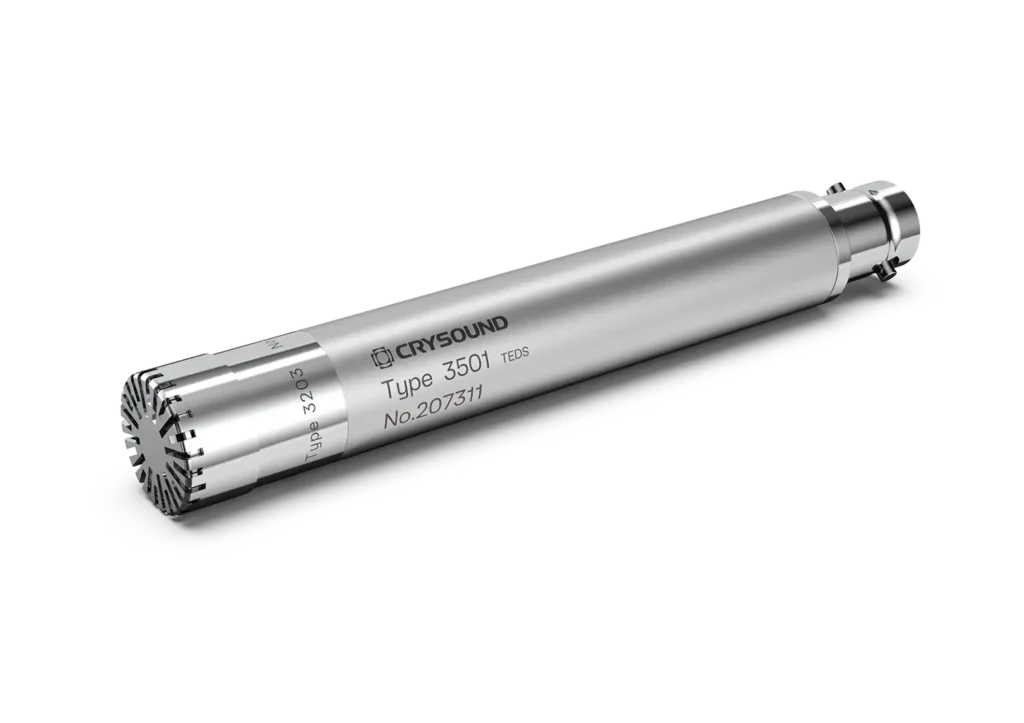
If your work involves any of the scenarios above, CRYSOUND's measurement microphones are specifically designed for these high-standard applications, delivering stable, reliable, and consistent measurement data to fully meet the demands of such use cases.
.112_结果_结果-1024x658.webp)
Conclusion: Measurement Turns Sound into Reliable Data
A regular microphone helps you hear. A measurement microphone helps you verify.
When you need to put acoustics into engineering reports, standards, and closed-loop product improvement, a measurement microphone is the foundation that makes results defensible.
To learn more about microphone functions and measurement hardware solutions, visit our website-and if you'd like to talk to the CRYSOUND team, please fill out the "Get in touch" form.


