CRYSOUND POCKET Acoustic Imaging Camera Now Available on Kickstarter.

CRYSOUND POCKET Acoustic Imaging Camera Now Available on Kickstarter.


A measurement microphone is not just any microphone - it is a precision acoustic sensor designed for traceable, repeatable sound pressure measurement. This guide covers how they work, the different types available, key specifications to compare, and how to select the right one for your application.
What Is a Measurement Microphone?
A measurement microphone is a high-precision acoustic transducer engineered to convert sound pressure into an electrical signal with known accuracy. Unlike studio or consumer microphones that are designed to make audio "sound good," a measurement microphone is designed to be truthful - its output must faithfully represent the actual sound pressure at the measurement point.
The defining characteristics of a measurement microphone include:
- Known, stable sensitivity (expressed in mV/Pa) that can be traced to national or international standards
- Flat, well-characterized frequency response under defined sound-field conditions
- Wide dynamic range with low distortion from noise floor to maximum SPL
- Traceable calibration using pistonphones or acoustic calibrators
- Environmental stability - minimal drift due to temperature, humidity, and atmospheric pressure changes
In practical terms, a measurement microphone is the front-end sensor of a metrology-grade measurement chain. Every specification - from the data acquisition system to the analysis software - depends on the microphone providing an accurate representation of the acoustic environment.
For a deeper comparison between measurement and regular microphones, see our article: Differences Between Measurement Microphones and Regular Microphones.
How Measurement Microphones Work
The Condenser Principle
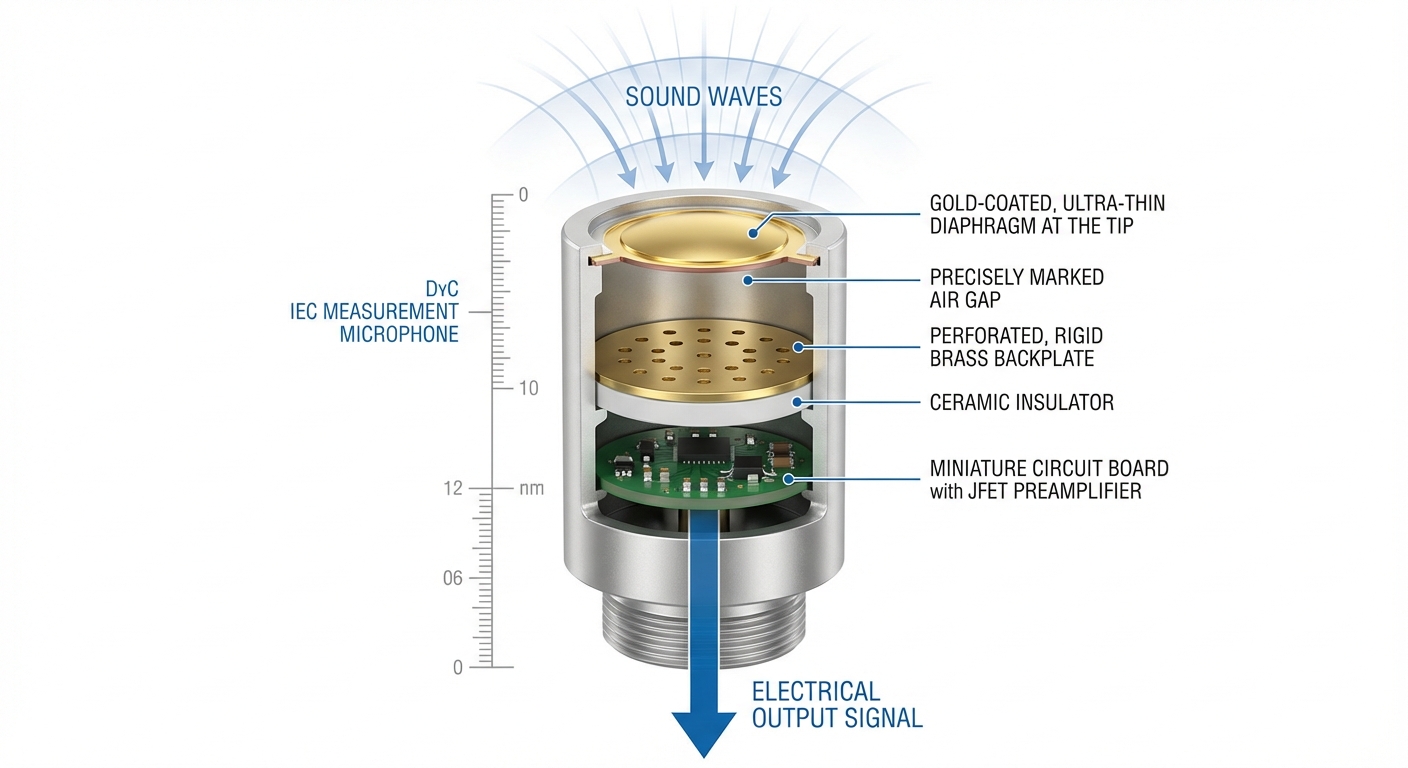
Nearly all measurement microphones are condenser (capacitor) microphones. The core transduction mechanism is simple but elegant:
- A thin metallic diaphragm is stretched in front of a rigid backplate, separated by a small air gap
- The diaphragm and backplate form a capacitor
- When sound pressure deflects the diaphragm, the gap changes, altering the capacitance
- With a constant charge on the capacitor, the capacitance change produces a proportional voltage change
This voltage change is the microphone's output signal. A preamplifier, typically located immediately behind the capsule, converts the high-impedance signal from the capacitor into a low-impedance signal that can travel through cables to the data acquisition system.
Polarization: External vs. Prepolarized
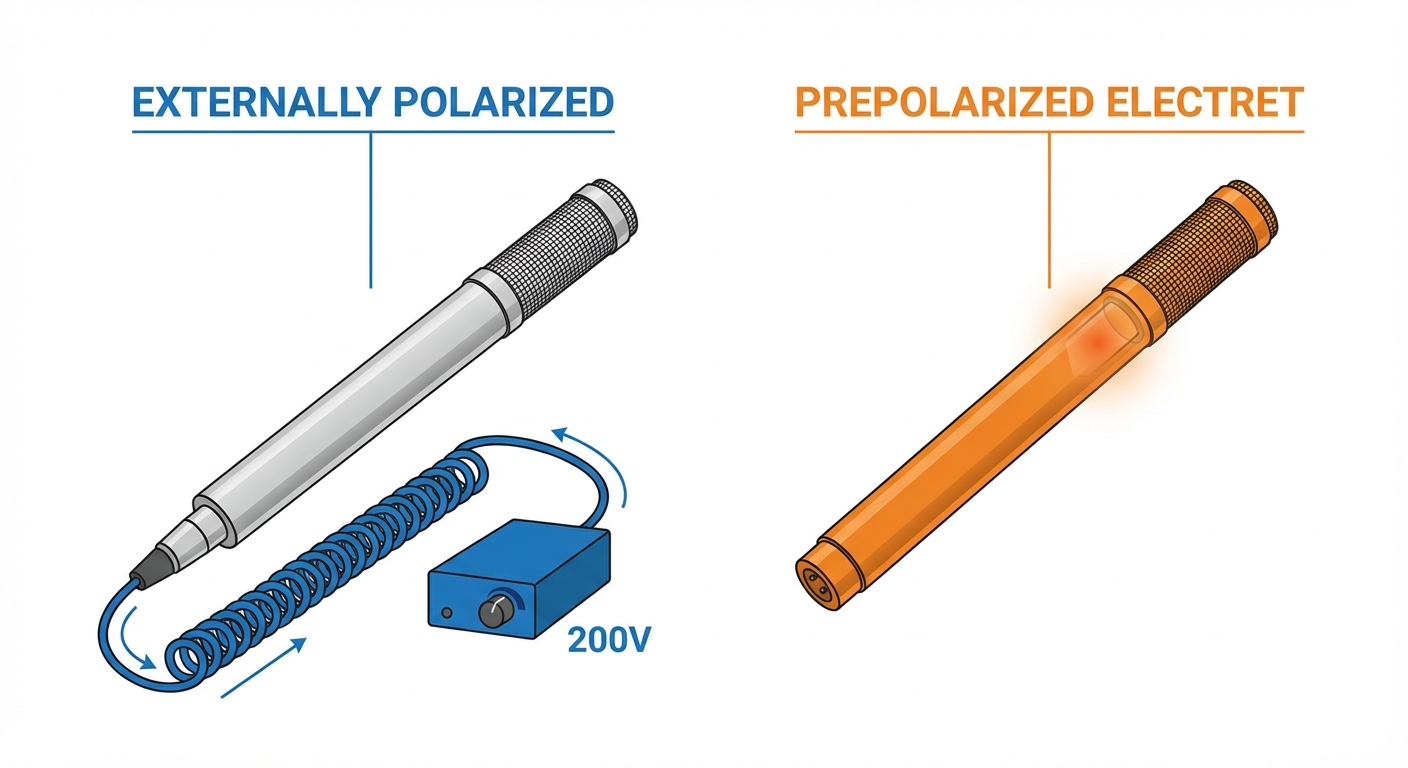
The condenser principle requires a polarization voltage to maintain a charge on the capacitor. There are two approaches:
Externally polarized microphones receive their polarization voltage (typically 200V) from an external power supply through the preamplifier. These microphones are considered the gold standard for the highest-accuracy laboratory measurements because:
- The polarization voltage is stable and well-defined
- No aging effects from the polarization source
- Best long-term stability
Prepolarized (electret) microphones use a permanently charged PTFE (Teflon) layer on the backplate to maintain polarization. Advantages include:
- No external polarization supply needed - simplifies the signal chain
- More resistant to humidity (no risk of charge leakage at high humidity)
- Better suited for field measurements and harsh environments
- Modern prepolarized microphones achieve accuracy comparable to externally polarized models
| Feature | Externally Polarized | Prepolarized |
|---|---|---|
| Polarization source | External 200V supply | Built-in electret layer |
| Best for | Lab/reference measurements | Field and industrial use |
| Humidity tolerance | Sensitive above ~90% RH | Excellent, even in high humidity |
| Long-term stability | Excellent | Very good (modern designs) |
| Signal chain | Requires compatible power supply | Works with standard IEPE/ICP preamplifiers |
The Preamplifier
The preamplifier is a critical but often overlooked component. It serves two functions:
- Impedance conversion: Transforms the microphone's extremely high output impedance (~GΩ) into a low impedance suitable for cable transmission
- Signal conditioning: Provides the power for IEPE/ICP operation or the polarization voltage for externally polarized capsules
A matched microphone-preamplifier set ensures optimal performance. This is why measurement microphones are often sold as complete sets with a matched preamplifier - the combined system is calibrated and characterized as a unit.
Types of Measurement Microphones
Measurement microphones are classified along two primary axes: sound-field type and physical size.
By Sound-Field Type
The choice of microphone type depends on the acoustic environment where measurements will be taken.
Free-Field Microphones
A free-field microphone is designed to measure sound arriving from a single direction in an environment free of reflections (such as an anechoic chamber or outdoors). The microphone's frequency response is compensated for the acoustic diffraction effects caused by its own physical presence in the sound field.
When to use: Outdoor measurements, anechoic chamber testing, source identification, environmental noise monitoring, any scenario where sound arrives predominantly from one direction.
Orientation: Point the microphone directly at the sound source (0° incidence).
Pressure-Field Microphones
A pressure-field microphone measures the actual sound pressure at a surface or in a sealed cavity. It has the flattest possible response when the sound field is uniform across the diaphragm - which occurs in small cavities, couplers, or at surfaces where the microphone is flush-mounted.
When to use: Coupler measurements (headphone and earphone testing), hearing aid testing, measurements in small cavities, flush-mounted surface measurements, acoustic impedance measurements.
Orientation: The microphone diaphragm is placed at or within the measurement surface.
Random-Incidence Microphones
A random-incidence (diffuse-field) microphone is optimized for environments where sound arrives from all directions simultaneously - such as reverberant rooms. Its frequency response is a weighted average of responses at all angles of incidence.
When to use: Reverberation chamber measurements, environmental noise in reflective spaces, any situation where sound arrives from multiple directions.
| Microphone Type | Sound Field | Typical Application | Orientation |
|---|---|---|---|
| Free-field | Sound from one direction | Outdoor noise, anechoic testing, source ID | Point at source |
| Pressure-field | Uniform pressure (cavity) | Coupler testing, headphones, hearing aids | Flush with surface |
| Random-incidence | Sound from all directions | Reverberant rooms, diffuse environments | Any orientation |

By Physical Size
Measurement microphone capsules come in three standard sizes, each with distinct trade-offs:
1-Inch Microphones
The largest standard size. High sensitivity and low noise floor make them ideal for measuring very quiet environments.
- Sensitivity: ~50 mV/Pa (highest)
- Frequency range: Up to ~8-16 kHz
- Best for: Low-frequency and low-level measurements, environmental noise monitoring, building acoustics
- Limitation: Large size limits upper frequency range due to diffraction effects
1/2-Inch Microphones
The most widely used size. Offers a good balance between sensitivity, frequency range, and physical size.
- Sensitivity: ~12.5-50 mV/Pa
- Frequency range: Up to 20-40 kHz
- Best for: General-purpose acoustic measurements, NVH testing, product R&D, sound level meters
- Why it's popular: Versatile enough for most applications; fits standard sound level meter bodies
1/4-Inch Microphones
The smallest standard size. Low sensitivity but the widest frequency range.
- Sensitivity: ~1.6-16 mV/Pa
- Frequency range: Up to 40-100 kHz
- Best for: High-frequency measurements, ultrasonic applications, small coupler measurements, acoustic array elements
- Trade-off: Higher noise floor requires louder sound sources for accurate measurement
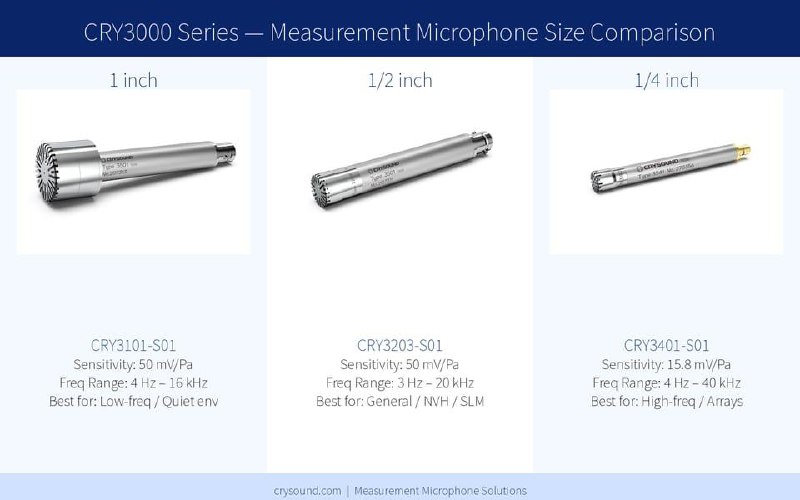
| Size | Sensitivity (typical) | Frequency Range | Dynamic Range | Best For |
|---|---|---|---|---|
| 1 inch | 50 mV/Pa | 4 Hz - 16 kHz | 15-146 dBA | Low-frequency, quiet environments |
| 1/2 inch | 12.5-50 mV/Pa | 3 Hz - 40 kHz | 16-164 dBA | General-purpose, NVH, SLM |
| 1/4 inch | 1.6-16 mV/Pa | 4 Hz - 100 kHz | 32-174 dBA | High-frequency, ultrasonic, arrays |
Key Specifications Explained
When comparing measurement microphones, these specifications matter most:
Sensitivity
Sensitivity defines how much electrical output the microphone produces for a given sound pressure. Expressed in mV/Pa (millivolts per Pascal) or dB re 1V/Pa.
- Higher sensitivity = better signal-to-noise ratio at low sound levels
- Lower sensitivity = higher maximum SPL before distortion
- There is always a trade-off between sensitivity and maximum SPL
Frequency Response
The frequency range over which the microphone provides accurate measurements, typically specified within ±2 dB or ±1 dB. The useful range depends on:
- Microphone size (smaller = wider range)
- Sound-field type (free-field compensation extends the useful range)
- Mounting configuration
Dynamic Range
The span between the lowest measurable level (noise floor) and the highest level before a specified distortion threshold (typically 3% THD). A wider dynamic range means the microphone can handle a greater variety of measurement scenarios.
Self-Noise (Equivalent Noise Level)
The inherent electrical noise of the microphone, expressed as an equivalent sound pressure level in dBA. Lower is better - critical for measuring quiet environments.
- 1-inch microphones: ~15-18 dBA (quietest)
- 1/2-inch microphones: ~16-28 dBA
- 1/4-inch microphones: ~32-46 dBA
Stability and Temperature Coefficient
Long-term sensitivity drift and sensitivity change with temperature. Important for:
- Permanent monitoring installations (fixed outdoor microphones)
- Measurements in extreme environments (engine test cells, climatic chambers)
- Ensuring measurement results are comparable over months or years
IEC Standards Compliance
Measurement microphones are classified according to IEC 61094 series:
- IEC 61094-1: Primary calibration by reciprocity method
- IEC 61094-4: Specifications for working standard microphones (laboratory use)
- IEC 61094-5: Working standard microphones for in-situ (field) use
Sound level meters incorporating measurement microphones must comply with:
- IEC 61672-1: Class 1 (precision) or Class 2 (general purpose)
How to Choose the Right Measurement Microphone
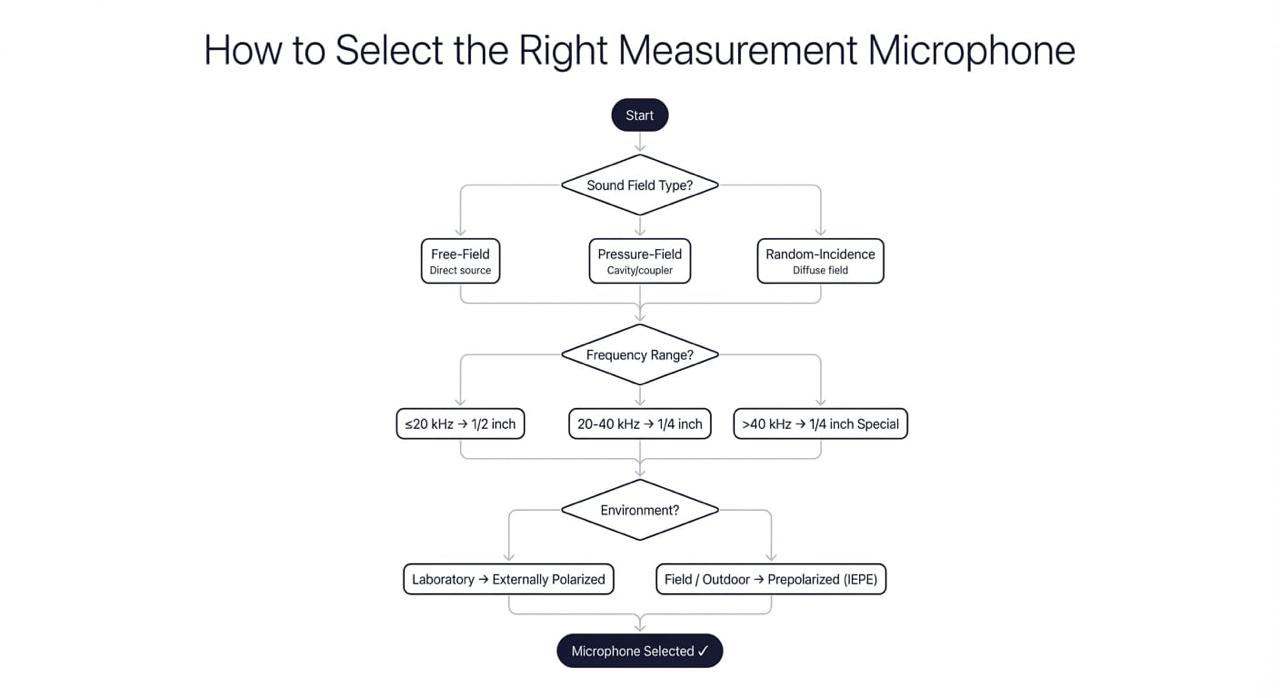
Step 1: Identify Your Sound Field
| Your Measurement Scenario | Recommended Type |
|---|---|
| Outdoor environmental noise | Free-field |
| Anechoic chamber testing | Free-field |
| Headphone/earphone coupler | Pressure-field |
| Hearing aid testing | Pressure-field |
| Reverberant room | Random-incidence |
| Surface-mounted on a machine | Pressure-field |
| General factory noise | Free-field or random-incidence |
Step 2: Determine Required Frequency Range
| Application | Minimum Frequency Range |
|---|---|
| Building acoustics | 20 Hz - 8 kHz |
| Environmental noise | 20 Hz - 12.5 kHz |
| General acoustic testing | 20 Hz - 20 kHz |
| NVH (automotive) | 20 Hz - 20 kHz |
| Electroacoustic product testing | 20 Hz - 40 kHz |
| Ultrasonic measurements | 20 Hz - 100 kHz |
Step 3: Match the Dynamic Range to Your Environment
- Quiet environments (recording studios, anechoic chambers): Choose high-sensitivity microphones (50 mV/Pa, 1/2" or 1") with low self-noise
- Industrial environments (factory floors, engine test cells): Choose lower-sensitivity microphones (4-12.5 mV/Pa, 1/4" or 1/2") with high maximum SPL
- Wide-range applications: Choose microphones with the widest dynamic range available
Step 4: Consider Environmental Conditions
- High humidity or outdoor use: Prepolarized microphones are recommended
- Extreme temperatures: Check the microphone's operating temperature range and temperature coefficient
- Dusty or wet environments: Look for IP-rated solutions (e.g., IP67 for NVH field testing)
- Hazardous areas: Check for ATEX/IECEx certification if required
Step 5: Evaluate the Complete System
A measurement microphone does not work alone. Consider:
- Preamplifier compatibility: Matched sets ensure specified performance
- Data acquisition system: Input impedance, voltage range, and sampling rate must match
- Calibration infrastructure: Do you have access to a pistonphone or acoustic calibrator?
- Software ecosystem: Can your analysis software import calibration data and apply corrections?
Applications
Electroacoustic Product Testing
Testing loudspeakers, headphones, earphones, and hearing aids requires microphones that can accurately capture the device's frequency response, distortion, and directivity. Pressure-field microphones are used in couplers (IEC 60318 ear simulators), while free-field microphones are used in anechoic chambers.
Automotive and Aerospace NVH
NVH (Noise, Vibration, and Harshness) engineers use measurement microphones to characterize cabin noise, identify noise sources, evaluate sound packages, and perform transfer path analysis. Requirements include wide frequency range, high dynamic range, and robustness for field use.
Environmental and Community Noise Monitoring
Long-term outdoor noise monitoring stations require microphones with excellent stability over months or years, low temperature sensitivity, and tolerance to humidity, rain, and wind. Windscreens and weather protection accessories are essential.
Production Line Quality Control
In manufacturing, measurement microphones integrated into automated test systems verify that every loudspeaker, headphone, or microphone meets specifications before shipping. Speed, repeatability, and consistency are critical - the microphone must produce identical results across thousands of units per day.
Building and Architectural Acoustics
Measuring reverberation time, sound insulation, and HVAC noise requires accurate low-frequency performance and the ability to work in diffuse sound fields. Random-incidence microphones are often preferred.
Acoustic Research and Standards Laboratories
Primary and secondary calibration laboratories, standards organizations, and university research groups require the highest-accuracy microphones - typically externally polarized, laboratory-grade capsules calibrated by reciprocity methods.
Sound Source Localization and Beamforming
Microphone arrays used in acoustic cameras and beamforming systems require large numbers of measurement microphones with tightly matched sensitivity and phase response. 1/4-inch microphones are preferred for arrays due to their small size and wide frequency range. For more on acoustic imaging technology, see our guide on acoustic cameras.
Noise Regulation Compliance
Regulatory compliance measurements - workplace noise (ISO 9612), environmental noise (ISO 1996), product noise emission (ISO 3744/3745) - require Class 1 or Class 2 measurement microphones as specified in IEC 61672. Documentation of calibration traceability is mandatory for compliance reporting.
CRYSOUND Measurement Microphone Solutions
CRYSOUND's CRY3000 series measurement microphones cover the full range of sizes, field types, and applications - from laboratory reference measurements to rugged field testing.
Complete Size Coverage: 1/4", 1/2", and 1"
| Model | Size | Field Type | Sensitivity | Frequency Range | Application |
|---|---|---|---|---|---|
| CRY3101-S01 | 1" | Free-field | 50 mV/Pa | 4 Hz - 16 kHz | Low-frequency, quiet environments |
| CRY3203-S01 | 1/2" | Free-field | 50 mV/Pa | 3.15 Hz - 20 kHz | General acoustic testing |
| CRY3261-S02 | 1/2" | Free-field | 450 mV/Pa | 10 Hz - 16 kHz | Ultra-high sensitivity |
| CRY3201-S01 | 1/2" | Free-field | 12.5 mV/Pa | 3.15 Hz - 40 kHz | Extended high-frequency |
| CRY3401-S01 | 1/4" | Free-field | 15.8 mV/Pa | 4 Hz - 40 kHz | High-frequency testing |
| CRY3403-S01 | 1/4" | Free-field | 4 mV/Pa | 4 Hz - 90 kHz | Ultrasonic measurements |
| CRY3202-S01 | 1/2" | Pressure | 12.5 mV/Pa | 3.15 Hz - 20 kHz | Coupler and cavity testing |
| CRY3402 | 1/4" | Pressure | 1.6 mV/Pa | 4 Hz - 100 kHz | High-frequency pressure field |
| CRY3406-S01 | 1/4" | Pressure | 15.8 mV/Pa | 4 Hz - 40 kHz | Low-noise pressure field |
CRY3213: Purpose-Built for NVH
The CRY3213 NVH Measurement Microphone is specifically designed for the demanding conditions of automotive and industrial NVH testing:
- IP67 protection: Fully dust-tight and submersible - operates reliably in engine bays, test tracks, and climatic chambers
- Extended temperature range: -50°C to 125°C, covering extreme hot and cold testing scenarios
- Free-field response: 3.15 Hz to 20 kHz, optimized for the frequency range relevant to cabin noise, powertrain NVH, and road noise
- 50 mV/Pa sensitivity: High enough for quiet cabin measurements, robust enough for engine noise
Matched Microphone-Preamplifier Sets
Every CRYSOUND measurement microphone set includes a matched preamplifier, factory-calibrated as a complete system. This eliminates the guesswork of mixing microphones and preamplifiers from different sources, and ensures that the combined frequency response, noise floor, and dynamic range meet the published specifications.
Calibration and Traceability
All CRYSOUND measurement microphones ship with individual calibration certificates traceable to national standards. For ongoing measurement assurance, see our guide on measurement microphone calibration.
Explore CRYSOUND Measurement Microphones →
Frequently Asked Questions
What is the difference between a measurement microphone and a regular microphone?
A measurement microphone is designed for accuracy and traceability - its output must truthfully represent the sound pressure at the measurement point. A regular microphone is designed for audio quality, often with intentional frequency shaping to enhance speech clarity or musical timbre. For a detailed comparison, read Measurement vs. Regular Microphones.
Do I need to calibrate my measurement microphone?
Yes. Regular calibration - at minimum before each measurement session using an acoustic calibrator - ensures your results are accurate and traceable. Periodic laboratory recalibration (typically annually) verifies long-term stability. Learn more about microphone calibration.
Can I use a 1/2-inch microphone for ultrasonic measurements?
Standard 1/2-inch microphones typically reach up to 20-40 kHz, which is insufficient for many ultrasonic applications. For measurements above 40 kHz, a 1/4-inch microphone is recommended - models like the CRY3403 reach 90 kHz, while the CRY3402 reaches 100 kHz.
What does "free-field" vs. "pressure-field" mean?
A free-field microphone is optimized for measuring sound arriving from one direction in open space. A pressure-field microphone is optimized for measuring sound pressure in enclosed cavities or at surfaces. The difference is in how the microphone compensates for acoustic diffraction effects at high frequencies.
How do I choose between externally polarized and prepolarized?
For laboratory reference measurements in controlled environments, externally polarized microphones offer the best long-term stability. For field measurements, industrial applications, or environments with high humidity, prepolarized microphones are more practical and equally accurate with modern designs.
What IP rating do I need for outdoor or industrial use?
For NVH field testing and outdoor measurements, IP67 (dust-tight, waterproof) provides the best protection. The CRY3213 is specifically designed for these conditions. For general lab use, IP protection is typically not required.
Need help selecting the right measurement microphone for your application? Contact CRYSOUND for expert guidance based on your specific measurement requirements.
NEW
.112_结果_结果_2-scaled-2-300x208.webp)
CRY3213 NVH Measurement Microphone
Field Type
Free-field
Sensitivity
50 mV/Pa, -26±2 dB re 1V/Pa
Frequency Response
3.15 Hz-20 kHz ±2 dB
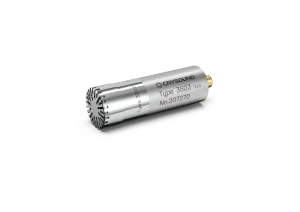
CRY3203-S02 Free-Field Microphone Set, 1/2", 50mV/Pa
Field Type
Free-field
Sensitivity
50mV/Pa, -26±1.5dB re 1V/Pa
Frequency Response
3.15Hz to 20kHz±2dB
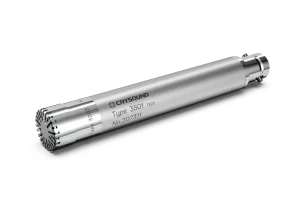
CRY3203-S01 Free-Field Microphone Set, 1/2", 50mV/Pa
Field Type
Free-field
Sensitivity
50mV/Pa, -26±1.5dB re 1V/Pa
Frequency Response
3.15Hz to 20kHz±2dB
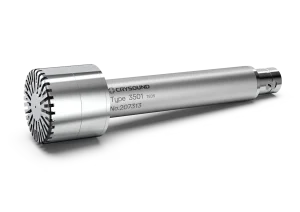
CRY3102-S01 Pressure-Field Microphone Set, 1", 50mV/Pa
Field Type
Pressure-field
Sensitivity
50mV/Pa, -26±1.5dB re 1V/Pa
Frequency Response
4Hz to 8kHz±2dB
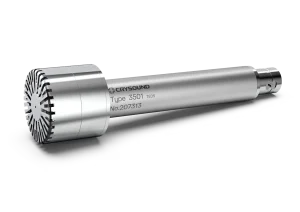
CRY3101-S01 Free-Field Microphone Set, 1", 50mV/Pa
Field Type
Free-field
Sensitivity
50mV/Pa, -26±1.5dB re 1V/Pa
Frequency Response
4Hz to 16kHz±2dB
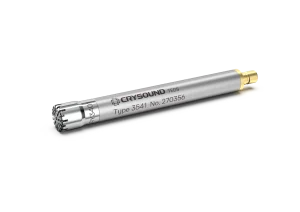
CRY3401-S01 Free-Field Microphone Set, 1/4", 15.8mV/Pa
Field Type
Free-field
Sensitivity
15.8mV/Pa, -36±1.5dB re 1V/Pa
Frequency Response
4Hz to 40kHz±2dB
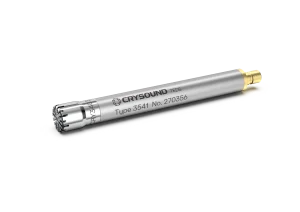
CRY3402-S01 Pressure-Field Microphone Set, 1/4", 1.6mV/Pa
Field Type
Pressure-field
Sensitivity
1.6mV/Pa, -56±3dB re 1V/Pa
Frequency Response
4Hz to 70kHz±2dB
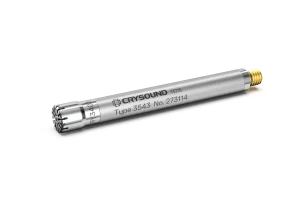
CRY3403-S02 Free-Field Microphone Set, 1/4", 4mV/Pa
Field Type
Free-field
Sensitivity
4mV/Pa, -48±3dB re 1V/Pa
Frequency Response
4Hz to 90kHz±2dB
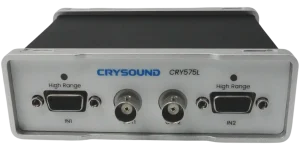
CRY575L Microphone Power Supply, Low-Noise
Frequency Response
10Hz to 60kHz (±0.5 dB)
Input impedance
1MΩ
Output impedance
100Ω


