December 22, 2025
SonoDAQ Enclosure Coating Hardness Test
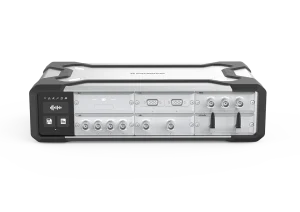
In real DAQ use, enclosure durability and scratch resistance directly affect service life and maintenance cost. This article shares a pencil hardness scratch test on the SonoDAQ top cover (PC + carbon fiber) and compares it with a typical laptop enclosure. The results show how the enclosure performs from 2H to 5H and why the surface finish helps it hold up in daily handling.
How Scratch Resistance Affects DAQ Use
When choosing a DAQ front end, engineers usually look first at the specs—sample rate, dynamic range, synchronization accuracy, channel count… But after a few years of real use, many realize that enclosure reliability and scratch resistance can be just as important to the system’s service life and day-to-day experience.
For soundand vibration test equipment, this is even more obvious. Typical SonoDAQ applications include NVH road tests, on-site industrial measurements, and long-term outdoor or semi-outdoor acquisition, where the device often has to:
- be carried frequently, loaded into vehicles, or fixed on fixtures or test benches;
- be moved between lab desks, instrument carts, and tool cases;
- remain in close contact with other metal equipment, screwdrivers, laptops, and more.
In such environments, a housing that scratches easily not only looks worn, but can also drive up maintenance and replacement costs. To better reflect daily handling, we ran a pencil-hardness scratch test on the SonoDAQ front-end upper cover and used a common laptop enclosure as a reference.
Test Setup
The test was performed strictly in accordance with ISO 15184:2020, and was intended to evaluate the scratch resistance of the UV-cured coating on the outer surface of the SonoDAQ front-end upper cover.
Samples
| Sample | Description |
| A — SonoDAQ top cover | Material: PC + carbon-fiber plate (top/bottom covers), with an internal aluminum frame and corner protection. |
| B — Typical laptop enclosure | Material: Plastic/metal housing with a sprayed coating. |
This test follows the pencil hardness test approach. Pencils of different hardness grades were used to scratch the enclosure surface under consistent contact conditions, and the surface was inspected for any scratches visible to the naked eye.
Test Tools
- Pencil hardness tester, additional weights can be added as required.
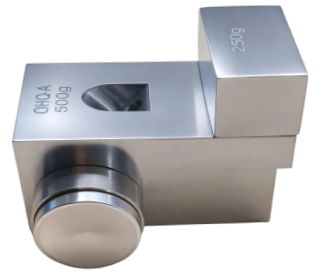
- Pencils: hardness grades 2H, 3H, 4H, and 5H.
Procedure
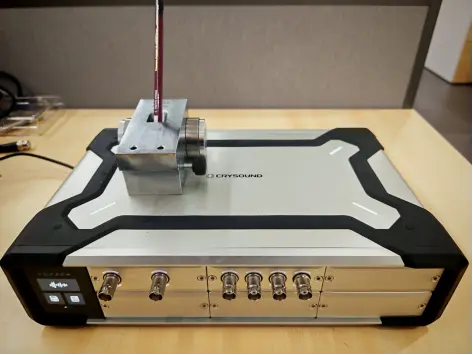
- Insert the pencil into the pencil hardness tester at a 45° angle, with a total load of 750 g (equivalent to applying 7.5 N to the coating surface).
- For each pencil hardness grade, scratch the enclosure surface three times and check whether any visible scratches appear.
- Keep the scratch length and applied force as consistent as possible to ensure comparability across hardness grades.
Results Criteria
- Whether visible scratches appear;
- Whether the surface gloss changes noticeably.
Results
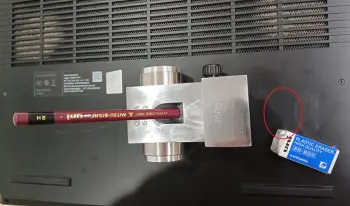
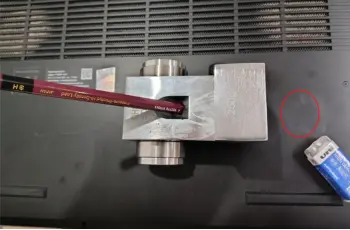
From the results, we could see that the front-end enclosure showed different levels of scratch resistance under different pencil grades. To further validate durability, we ran the same pencil hardness test on a typical laptop enclosure. Laptop housings are usually plastic or metal and also have a painted surface. We used the same method as for the DAQ unit:
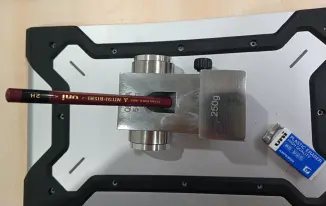
2H Pencil:
| SonoDAQ Pro | Typical Laptop |
![]() | ![]() |
Conclusion: Neither the SonoDAQ enclosure nor the laptop enclosure showed any obvious scratches; visually there was almost no change.
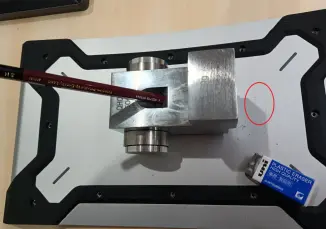
3H Pencil:
| SonoDAQ Pro | Typical Laptop |
![]() | ![]() |
Conclusion: Neither the SonoDAQ enclosure nor the laptop enclosure showed any obvious scratches; visually there was almost no change.
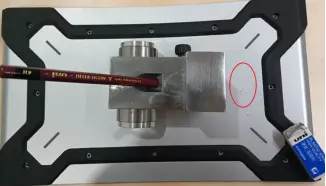
4H Pencil:
| SonoDAQ Pro | Typical Laptop |
![]() | ![]() |
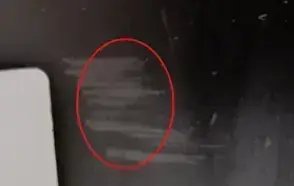
Conclusion: At 4H, the SonoDAQ enclosure still showed no visible scratches; in contrast, the laptop enclosure exhibited clearly visible scuffs, essentially reaching the upper limit of its scratch resistance.
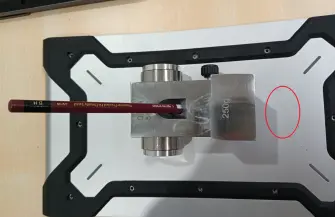
5H Pencil:
| SonoDAQ Pro | |
![]() | ![]() |
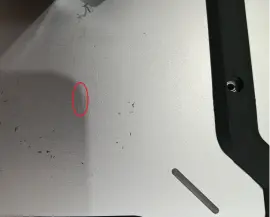
Conclusion: At 5H, light scratches began to appear on the SonoDAQ enclosure, indicating it was approaching its scratch-resistance limit.
Note that the pencil hardness test is primarily a relative comparison of scratch resistance between enclosures; it does not represent a material’s absolute hardness or long-term wear life. However, for assessing whether a surface is “easy to scratch” in everyday use, it is a very direct method.
If we translate the pencil grades into typical real-world scenarios:
- Accidental rubbing from most keys, equipment edges, and tools usually falls in the 2H-3H range;
- 4H-5H corresponds to harder, sharper, and more forceful scratching—often with some deliberate pressure.
At 4H, the SonoDAQ enclosure is still difficult to mark, and it only shows slight scratching at 5H. This means that during normal handling, loading, installation, and daily use, the enclosure is not easy to scratch.
Why It Holds Up
The SonoDAQ front-end enclosure uses a PC + carbon-fiber composite, which provides good mechanical strength and toughness. On top of that, the surface is finished with a spray-and-bake paint process plus a UV-cured top layer, which plays a key role in:
- Increasing surface hardness and improving scratch resistance;
- Improving corrosion resistance and environmental robustness;
- Balancing durability with a premium look and feel.
For instrumentation, “harder” is not always “better.” The right design balances scratch resistance, impact resistance, weight, and long-term reliability. As the results show, SonoDAQ’s enclosure is durable enough for real-world use.
For more information on SonoDAQ features, application scenarios, and typical configurations, please fill out the Get in touch form below to contact the CRYSOUND team. We will provide selection recommendations and support based on your test requirements.
Related Products
Get in touch
Read more
How It Delivers Nanosecond-Level DAQ Synchronization
In audio and NVH testing, keeping signals aligned in time is often harder than increasing channel count or resolution.
With a single chassis, synchronizing several dozen or even a hundred channels is no longer a big challenge. What really hurts is when multiple acquisition chassis are distributed across different locations and connected over a network, yet are still expected to maintain nanosecond-level—or at least sub-microsecond-level— synchronization. Otherwise, high-level analyses such as in-vehicle sound field reconstruction, array beamforming and localization, or structural modal testing will all suffer from misaligned time axes.
One of SonoDAQ’s core design goals is to make this kind of multi-device synchronization feel effortless: plug in the network cable and let the system take care of the rest, so that many units behave like a single instrument. The key enabler behind this is a carefully engineered timing architecture built around PTP and GPS.
Why Is Multi-Device Synchronization So Difficult?
In traditional architectures, multi-device sync is typically handled in a few ways:
- Relying on the operating system clock plus software alignment
- Using one device to output a clock or trigger and configuring all other devices as slaves
- Applying a simple network time protocol such as NTP
These techniques are barely acceptable when synchronization requirements are on the order of tens of milliseconds or a few milliseconds. But when you push into the microsecond or even nanosecond domain, several fundamental problems appear:
- Uncontrolled OS jitter: task scheduling, caching, and driver latency all make the apparent system time wander.
- Network latency and jitter: different paths and switches introduce variable delays that are hard to fully compensate in software alone.
- Long-term drift: even if devices are roughly aligned at startup, any small frequency error in the local oscillators will cause their time bases to slowly diverge over tens of minutes or hours.
SonoDAQ’s approach is to anchor every time-critical action to a common hardware time base, rather than relying on the operating system’s notion of time.
From Network Time to Hardware Time: PTP + PHC
The first step is to make sure every SonoDAQ unit shares the same absolute time.
(1) PTP / GPS as the upstream clock
SonoDAQ can take a unified UTC reference either from IEEE 1588 PTP on the network or from an external GPS receiver. This reference is first fed into the on-board PTP Hardware Clock (PHC) as the local time base. In other words, PTP/GPS provides the world standard time, while the PHC is a local copy of that world time inside each acquisition chassis.
(2) Closed-loop correction every 1/128 s
A one-time alignment at startup is not enough. SonoDAQ continuously compares each local PHC against the reference clock at a period of 1/128 s:
- It evaluates both phase and frequency error at the current instant.
- It applies small, incremental corrections to the PHC, avoiding large jumps;
- Over long operating times, this closed loop continuously suppresses errors caused by crystal temperature drift and aging.
As a result, every SonoDAQ’s PHC closely tracks the PTP/GPS reference and does not quietly drift away over time. At this point, all devices have been brought onto the same nanosecond-grade hardware time base — this is the absolute timing foundation for all subsequent synchronization mechanisms.
PLL + 10 PPS: Bringing the Unified Time into Every FPGA
Once a common PHC is established, we still need to convert it into a tangible hardware signal that every FPGA can feel.
From PHC / 1 PPS to 10 PPS
PTP / GPS usually provides a 1 PPS (one pulse per second) signal. On SonoDAQ this 1 PPS is reshaped and multiplied by an on-board PLL to generate a stable 10 PPS pulse, which is then distributed to each FPGA.

Nanosecond Across Mulit Chassis: Benefits of a Unified Time Base
With this multi-layer timing architecture, SonoDAQ can provide nanosecond-scale alignment within a single chassis and sub-microsecond-level alignment across multiple chassis when deployed with an appropriate PTP/GPS reference and network topology.
For test engineers, these details ultimately translate into very tangible capabilities:
- Full-vehicle NVH testing: in-vehicle and exterior microphones and vibration sensors can be acquired in sync along with speed, torque, and shaft angle signals, enabling more reliable order analysis and transfer-path analysis.
- Multi-point structural modal testing: multiple chassis distributed across a large structure can capture excitation and responses with precise timing relationships, making high-order modal extraction and damping estimation more robust.
- End-to-end delay measurements: a unified time stamp allows you to measure the true latency from stimulus output to response input, which helps tune and compensate complex audio signal chains.

Engineering Experience: A Transparent High-Precision Timing System
Although we have just walked through quite a bit of PTP, PHC, and 10 PPS plumbing, in practice engineers do not need to worry about any of this — SonoDAQ takes care of it automatically.
When you drag data from multiple SonoDAQ units onto the same plot in the software, what you see is already a single, seamlessly aligned time axis. That is exactly what we mean by nanosecond-level synchronization for practical data acquisition.
This is the original design intent behind SonoDAQ: to push the timing infrastructure to the limit, so that engineers can focus entirely on test strategies and data analysis.
To learn more about CRYSOUND SonoDAQ and OpenTest, please visit the CRYSOUND website or contact our team via the “Get in touch” form.
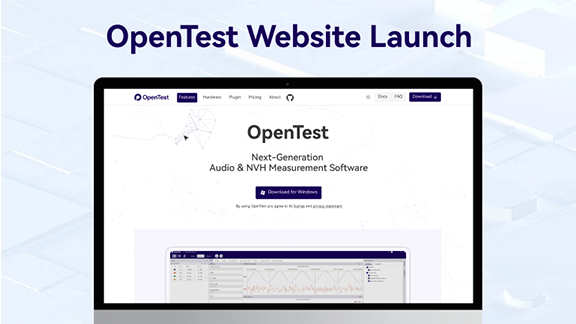
OpenTest Website Launch : Reimagining Audio & NVH Testing
The all-new OpenTest website (opentest.com) is live, bringing product capabilities, ecosystem, docs, updates, and download into a single, streamlined experience to help engineers, researchers, and manufacturers get productive fast.

At a Glance
- Clear information architecture with top-level navigation to Features / Hardware / Plugin / Pricing / About / Docs / Updates / Download.
- Three work modes tailored to real workflows: Measure, Analysis, Sequence.
- Feature matrix in one view covering Monitor, FFT, Octave, Sweep, Sound Power, Export/Report.
- Open ecosystem for hardware and plugins, supporting mainstream audio/DAQ interfaces and multiple development languages.
- Transparent plans with Community, Professional, and Enterprise options.
Bulit for Engineers
Three Work Modes
- Measure Mode — Real-time acquisition with live metrics plus post-run analysis for flexible review.
- Analysis Mode — Deep, offline analysis from data cleaning to computation.
- Sequence Mode — Purpose-built for repetitive/production tests, integrating acquisition → analysis → storage → reporting for repeatable throughput.
Key Capabilities
Monitor, FFT, Octave, Sweep, Sound Power, Export, and Report—covering mainstream acoustic and vibration analysis in lab or line environments.

Open Ecosystem: Hardware & Plugins
- Open Hardware Access Protocol with compatibility for openDAQ, ASIO, WASAPI (and optional private protocols such as NI-DAQmx) to connect a wide range of DAQ devices.
- Three-layer plugin architecture — Algorithm / Theme / Application — enabling full-stack extensibility. Develop with Python, MATLAB, LabVIEW, C++, and more.

Open-Source Core + Commercial Capabilities
- Community
Fully open-source core functions; 2 channels; Algorithm plugins; built-in Monitor/FFT/Octave/Basic Sweep/General Report; community forum support. - Professional
Up to 24 channels; Algorithm + Theme plugins; Advanced Sweep and Sound Power; email support. - Enterprise
Unlimited channels; Algorithm + Theme + Application plugins; white-label options and customization; enterprise-grade support and compliance.

Get Started in Seconds
Download for Windows from the homepage.
The relaunch brings open ecosystem + clear capability boundaries + transparent plans onto one page—smoothing both decision-making and deployment. If you’re building or upgrading an acoustic/NVH testing platform, start with the new site, pick a plan, download, and close the loop from acquisition to reporting—faster.
SonoDAQ Pro: Flexible Sound and Vibration DAQ System
In sound and vibration testing, flexibility is a decisive factor—especially when test requirements evolve rapidly. SonoDAQ, with its modular, scalable architecture, helps users easily manage everything from simple tests with a single device to complex, large-scale, multi-channel data acquisition. Whether in laboratory environments or industrial sites, SonoDAQ provides efficient, accurate data acquisition solutions, maximizing the adaptability and scalability of the system.
Easy Testing with One Device, Scalable Expansion with Multiple Devices
When testing requirements are modest, such as road tests or basic vibration testing, SonoDAQ Pro can easily meet the required number of channels with a single device. In this case, users only need one device to perform high-precision data acquisition, which is efficient and helps avoid unnecessary upfront hardware investment.
However, as testing needs increase, especially in scenarios that require numerous sensors or synchronized multi-channel acquisition, SonoDAQ offers flexible expansion solutions. Users can connect multiple SonoDAQ Pro units in a daisy-chain or star topology to achieve large-scale data acquisition. For example, when conducting NVH testing or sound and vibration testing for large equipment, users can add more devices as needed, scaling up to hundreds of channels while ensuring high-precision synchronization across all devices.
This scalability allows customers to avoid purchasing entirely new acquisition systems each time. By simply cascading existing SonoDAQ Pro units, they can easily cover more complex testing needs and avoid the common issues of device redundancy and high costs seen in traditional systems.

Flexible Configuration to Meet Various Needs
Even without large-scale acquisition needs, SonoDAQ remains highly flexible. With its modular design, users can easily adjust and reconfigure the system according to changing test requirements. For instance, if only temperature or strain signals are required, users can simply select the corresponding module and insert it into the chassis, without purchasing a new mainframe.
This design makes SonoDAQ suitable for everything from simple laboratory tests to complex field tests. Users can expand the system as needed, without worrying about future expansion limits. Whether it’s basic data acquisition or advanced signal analysis, SonoDAQ provides accurate, flexible data acquisition solutions, significantly enhancing testing efficiency and cost-effectiveness.

Flexibility Brought by Modular Design
The modular design of SonoDAQ is the core of its flexibility. Users can select different input modules, output modules, sensor interface modules, and more based on project requirements, and easily plug-and-play or upgrade them as needed. Whether it’s adding more sensor channels or expanding with new functional modules, users can quickly implement changes by swapping modules, without affecting the normal operation of the existing system. This design ensures long-term device usability and enables SonoDAQ to adapt to ever-changing test requirements.
When future requirements change, such as testing additional signal types (e.g., temperature, pressure, strain), SonoDAQ Pro can easily meet these new testing needs by simply swapping modules, allowing the overall system to continue running efficiently without the need for a full system overhaul.

For example, an automotive manufacturer needs to perform NVH testing. Initially, they may only need 4–8 channels for in-car noise testing. In this case, engineers can use a single SonoDAQ Pro device to complete routine testing tasks. When they need to expand the testing scope and add more sensors (such as measuring vibration, strain, or temperature at different locations), they can simply daisy-chain multiple SonoDAQ Pro devices together. Through synchronization technology, they can ensure data consistency across all devices without redesigning the system or changing existing test procedures.

Beyond automotive NVH, the same scalable architecture can be applied to aerospace components, industrial machinery, and even high-channel-count consumer electronics testing.
Expand as Needed, Effortlessly Tackle Any Testing Challenge
The flexible expansion capability of SonoDAQ allows it to scale from simple single-channel testing to large-scale multi-channel data acquisition. Whether it’s for in-vehicle testing, industrial monitoring, or scientific research, SonoDAQ provides accurate, reliable data acquisition solutions. Its modular design and flexible system topology not only meet current needs but also enable quick adaptation to evolving testing scenarios in the future. Choosing SonoDAQ means moving away from fixed hardware configurations and instead adjusting the system based on needs, ensuring smooth, repeatable execution of every test.
SonoDAQ is ready to transform your testing process—from simple single-device setups to large-scale, multi-channel systems. Contact us now: fill out the “Get in touch” form below, and our team will get back to you shortly.