


When engineers verify microphones, sound level meters, or high-intensity noise sources above 160 dB SPL, the key question is no longer only "can the sensor survive?" but "can the working standard microphone still measure accurately without adding its own distortion?"
High sound pressure level measurements above 160 dB present unique challenges for acoustic testing systems. In this range, microphone distortion can significantly affect measurement accuracy. This article explains how distortion occurs in working standard microphones, how to build a reliable high-SPL test environment, and how to select microphones suitable for 160 - 170 dB measurements.
How Does Distortion Occur When SPL Exceeds 160 dB?
In high SPL acoustic testing, distortion refers to additional spectral components introduced into the output signal of a working standard microphone due to nonlinear response. These components generally appear as harmonic distortion and noise components.
When the sound pressure level exceeds 160 dB SPL, the microphone diaphragm may experience two major effects:
- Excessive diaphragm vibration amplitude - The diaphragm displacement becomes large enough that it can no longer follow the acoustic waveform with perfect linearity.
- Generation of additional signal components - Frequency components not present in the original sound field may appear in the microphone output signal.
These additional components are defined as Total Harmonic Distortion (THD).
Under 160-170 dB high SPL measurement conditions, these nonlinear effects become increasingly significant. As a result, measurement data may appear stable while actually deviating from the real acoustic field.
Therefore, in high sound pressure level measurements, distortion control is a critical factor in determining whether the measurement results remain accurate and reliable.
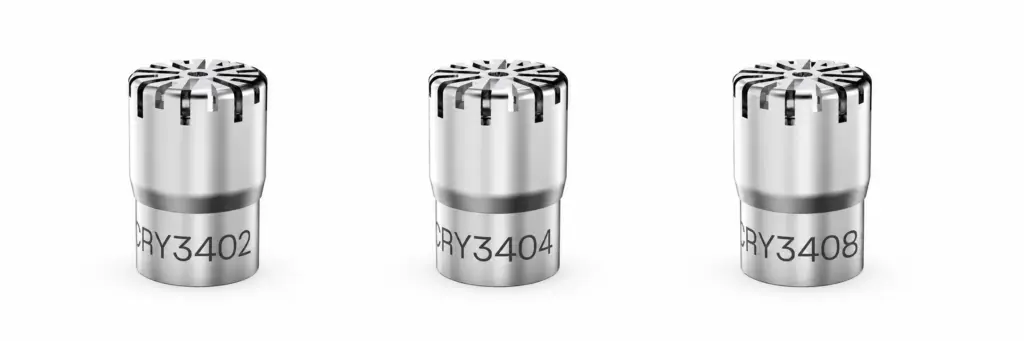
What Is a Working Standard Microphone for High SPL Testing?
A Working Standard Microphone is positioned between laboratory reference microphones and general measurement microphones. Its performance is defined by international electroacoustic standards such as IEC 61094, ensuring reliable accuracy and stability for industrial high SPL acoustic testing.
For 160-170 dB high SPL measurements, the key performance requirement is:
- Total Harmonic Distortion (THD) ≤ 3% within the specified frequency range at sound pressure levels between 160-170 dB SPL
THD represents the ratio of distortion components introduced by nonlinear system behavior in the microphone and measurement chain. For example, if THD = 3%, this means that up to 3% of the measured signal energy may originate from distortion generated by the measurement system rather than the actual acoustic signal. In international electroacoustic standards, THD ≤ 3% is generally considered the acceptable distortion limit for high SPL measurements.
Why Use Distortion Curves as a Reference? What Does THD Above 3% Mean?
A distortion curve illustrates how the distortion level of a working standard microphone changes as the sound pressure level increases. In high sound pressure level testing, the distortion curve provides one of the most important indicators for evaluating microphone performance.
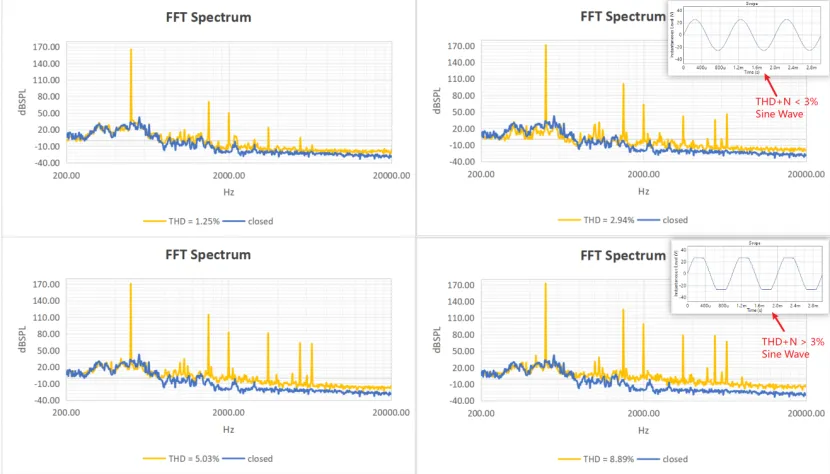
Figure 2. FFT spectrum comparison showing distortion increase under rising high-SPL conditions.
Under 160-170 dB SPL conditions:
- The diaphragm material may enter a nonlinear mechanical response region
- Harmonics appear at integer multiples of the original signal frequency
- The proportion of harmonic components increases with increasing sound pressure level
When THD exceeds 3% during high SPL acoustic testing:
- Harmonic components significantly interfere with the original acoustic signal
- Sound power calculations and spectral analysis may deviate from the actual acoustic conditions
- Measurement accuracy in high sound pressure level measurements is reduced
Therefore, when selecting a microphone for 160-170 dB high SPL tests, it is essential to confirm that the distortion curve remains below 3% within the required SPL range.
How to Build a High SPL Test Environment
A properly designed high SPL test environment is essential for performing reliable high sound pressure level measurements. The entire measurement system should follow recognized electroacoustic standards and ensure sufficient dynamic range.
Reference Standards
High SPL acoustic measurements commonly reference these international standards, depending on the microphone type, calibration workflow, and application scenario:
- IEC 61094-4 - Working Standard Microphones
- IEC 61094-5 - Comparison Calibration Method for Working Standard Microphones
- IEC 60942 - Sound Calibrators
System Components
A typical high SPL acoustic measurement system includes:
- Working standard measurement microphone - For 160-170 dB high SPL tests, the microphone is typically selected with measurement capability above 170 dB SPL and THD < 3% at the target sound pressure level. These criteria help maintain accuracy and reduce uncertainty in high SPL acoustic measurements.
- Preamplifier - Must provide high input dynamic range, adequate output voltage swing, overload margin, and overload indication capability. Insufficient dynamic range in the preamplifier may cause signal clipping even when the microphone itself operates within its linear range.
- Data acquisition system - Often uses 24-bit high-resolution acquisition, sampling rate ≥ 192 kHz, and large dynamic range signal capture. The overall system dynamic range is typically recommended to be ≥120 dB.
- Analysis software - Should support THD analysis, spectral analysis, and high SPL acoustic signal processing to evaluate distortion performance under extreme sound pressure levels.
- Sound source positioning and mounting structures
Environmental Control
Environmental factors strongly influence high SPL measurement accuracy. Typical environments for high SPL testing include anechoic chambers and semi-anechoic chambers. The objective is to minimize acoustic reflections, structural scattering, and mounting interference.
For jet noise testing or aerodynamic noise measurements, additional factors must be considered, including airflow noise, mechanical vibration, and high temperature environments. Additional equipment such as windscreens, vibration isolation mounts, and stable positioning structures may be required.
Calibration
Before conducting high sound pressure level measurements, the measurement system should be calibrated on site. Common calibration levels using IEC 60942 sound calibrators include:
- 94 dB @ 1 kHz / 250 Hz
- 114 dB @ 1 kHz / 250 Hz
Calibration verifies microphone sensitivity, system drift, and proper system operation. However, sound calibrators only verify low-level reference points and cannot validate system linearity at 170 dB SPL.
CRYSOUND > 160 dB Working Standard Microphone Selection
Selecting the correct microphone is the first step in performing reliable high SPL acoustic testing.
| Model | Type | Maximum SPL (THD Ratio < 3%) |
| CRY3402 | Pressure Field | 170 dB |
| CRY3404 | Pressure Field | 175 dB |
| CRY3408 | Pressure Field | 180 dB |
In addition to maximum SPL capability, engineers should evaluate the THD value at 170 dB SPL. Lower distortion indicates better linearity and higher reliability in high sound pressure level measurements.
Working Standard Microphone Distortion Curve Comparison
Two representative working standard microphones were compared within the 160-170 dB SPL range:
- CRY3402 - The distortion curve gradually increases. At 170 dB SPL, THD approaches but does not exceed the 3% limit, meeting the working standard microphone requirement.
- CRY3404 / CRY3408 - With improved linear design, the distortion curves remain flatter. THD stays below 1.8% across the measurement range, providing a larger performance margin for high SPL acoustic measurements.
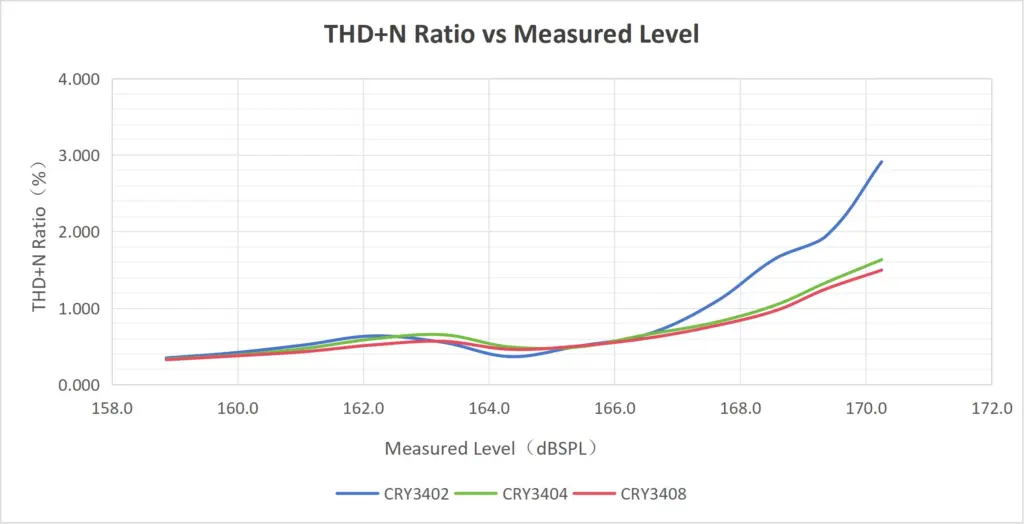
Figure 3. THD ratio versus measured level for representative working standard microphones.
At 170 dB SPL, all tested microphones maintain THD < 3%, meeting the requirements for working standard microphones used in high SPL testing. CRY3404 and CRY3408 show lower distortion, indicating superior linear performance in extreme high sound pressure level environments.
Measured THD Data and Standards Compliance
Note: The following THD comparison should be interpreted under the stated high SPL measurement conditions, including the target SPL range, calibration status, microphone configuration, data acquisition settings, and acoustic test environment. Actual field results may vary with sound source stability, mounting geometry, temperature, background noise, and system overload margin.
Steady high sound pressure level sources were used during testing. The table below shows the THD test results of three working standard microphones within the 160-170 dB SPL range:
| Sound Pressure Level (dB SPL) | CRY3402 - THD Ratio (%) | CRY3404- THD Ratio (%) | CRY3408 - THD Ratio (%) |
| 158.9 | 0.332 | 0.336 | 0.327 |
| 159.9 | 0.392 | 0.386 | 0.376 |
| 161.1 | 0.491 | 0.473 | 0.432 |
| 162.2 | 0.610 | 0.600 | 0.521 |
| 163.3 | 0.515 | 0.654 | 0.568 |
| 164.3 | 0.329 | 0.493 | 0.462 |
| 165.4 | 0.516 | 0.494 | 0.506 |
| 166.5 | 0.695 | 0.656 | 0.608 |
| 167.6 | 1.190 | 0.813 | 0.769 |
| 168.6 | 1.594 | 1.042 | 0.969 |
| 169.4 | 1.713 | 1.334 | 1.251 |
| 170.2 | 2.912 | 1.634 | 1.498 |
Data Interpretation
- Standards Compliance - All listed working standard microphones meet the working standard requirement at 170 dB (THD < 3%), indicating that the measurement data is valid.
- Engineering Significance - The lower THD of CRY3404/ CRY3408 means that when measuring complex noise signals (such as broadband aircraft engine noise), harmonic interference is reduced, the spectrum remains cleaner, and the measurement results are more reliable.
- Selection Recommendation - For projects requiring high reliability and long-term stability, models with larger performance margins are recommended.
Applications of High SPL Working Standard Microphones in Various Industries
The following examples illustrate the application of high SPL working standard microphones in typical industrial scenarios.
Aerospace: Aircraft Engine Noise Certification
Scenario: Aircraft engines generate extremely high sound pressure level noise (often exceeding 160 dB) during takeoff thrust conditions. Airworthiness certification standards such as FAR Part 36 and ICAO Annex 16 require precise measurement of engine noise.
Value: High SPL working standard microphones are used to build measurement arrays on engine test stands or airport test sites to measure the spatial distribution of engine noise. Low-distortion measurements ensure accurate sound power calculations and allow test data to meet certification requirements.
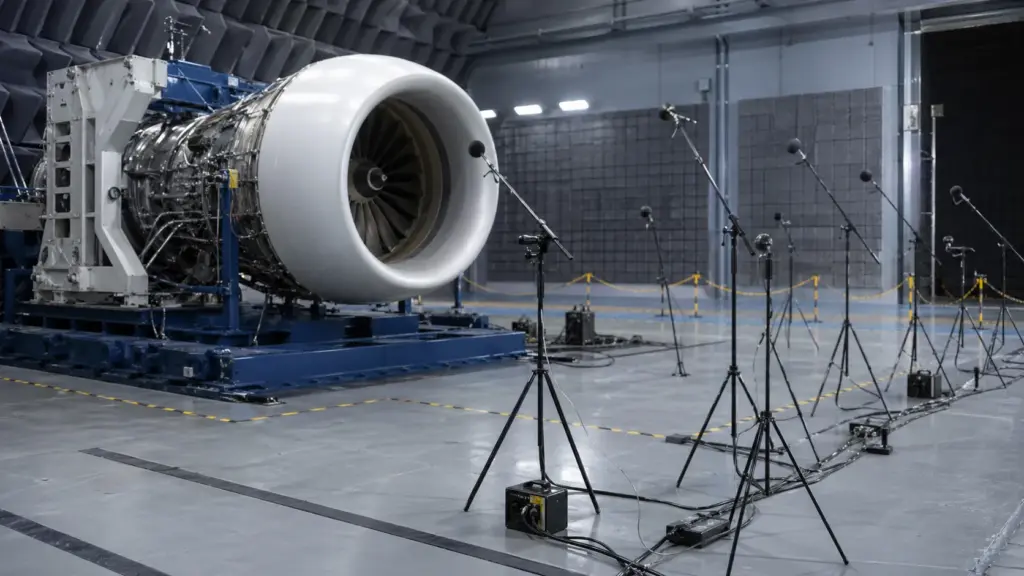
Figure 4. Aircraft engine noise certification setup in an anechoic test environment.
Aerospace and Aerodynamic Experiments: Jet Noise Research
Scenario: In jet noise experiments or high-speed airflow studies, the sound pressure level near the jet outlet may reach 160-170 dB. Under such conditions, ordinary microphones may exhibit diaphragm nonlinear response or signal clipping, leading to distortion in spectral analysis.
Value: High SPL microphones enable accurate recording of broadband noise and harmonic structures on jet test rigs, providing reliable data for jet noise reduction design, engine nozzle optimization, and aerodynamic research.
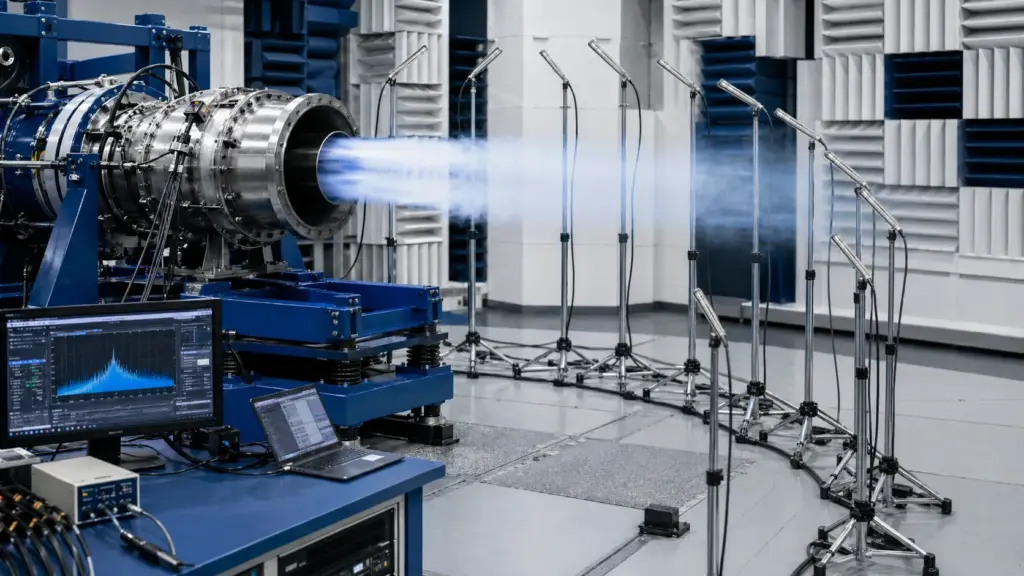
Figure 5. Jet noise research rig used for high-SPL aerodynamic acoustic testing.
Industrial Aerodynamic Equipment: High-Power Jet Device Testing
Scenario: Large aerodynamic equipment or industrial jet devices (such as gas injection systems or high-power nozzles) generate extremely high sound pressure level noise during operation. Ordinary microphones may overload, making it difficult to accurately analyze equipment noise characteristics.
Value: High SPL microphones can be used for near-field measurements, accurately capturing sound pressure levels, spectral characteristics, and sound source distribution, thereby supporting equipment structural optimization and noise reduction design.

Figure 6. Near-field measurement of a high-power jet device.
Defense and Scientific Research: Shockwave and Explosion Acoustic Measurement
Scenario: In explosion simulations, shockwave research, and weapon acoustic testing, instantaneous sound pressure levels may far exceed the range of ordinary acoustic measurements. If the measurement system does not have sufficient linear range, shockwave waveform distortion or amplitude misinterpretation may occur.
Value: High SPL microphones maintain good linearity in high-energy acoustic fields, allowing researchers to accurately record shockwave pressure variations, energy distribution, and spectral characteristics, providing reliable data for safety assessment and experimental research.

Figure 7. Shockwave and explosion acoustic measurement.
Acoustic Laboratories and Metrology Research: High SPL Calibration Testing
Scenario: Acoustic laboratories and metrology institutions often need to verify the linearity and distortion performance of measurement systems under high sound pressure level conditions. If the reference microphone itself exhibits high distortion, it cannot serve as a reliable measurement reference.
Value: Using working standard microphones for high SPL calibration testing allows engineers to evaluate the performance of acoustic equipment under extreme sound pressure conditions and ensure that the entire measurement system meets standard requirements.
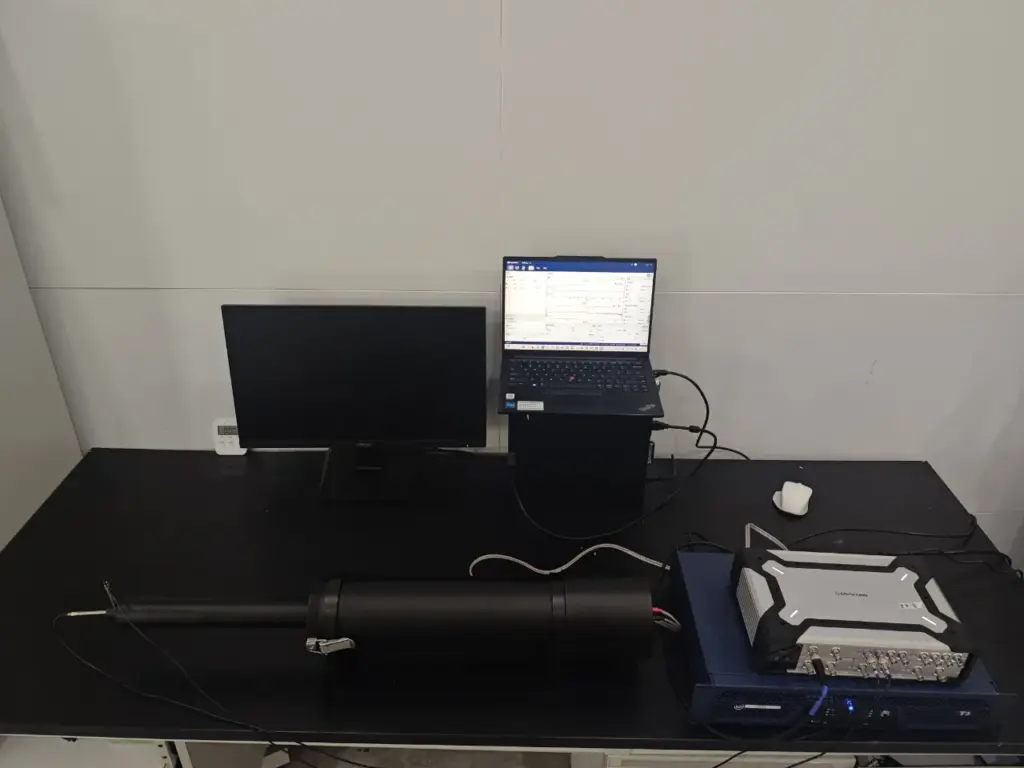
Figure 8. High-SPL calibration and measurement system setup.
CRYSOUND High SPL Testing Solution
To address industrial high SPL acoustic testing challenges, CRYSOUND provides a complete high sound pressure level measurement solution, including CRY3402 pressure-field microphones, CRY3404 microphones, CRY3408 high-level microphones, high dynamic range data acquisition systems, and acoustic analysis software.
- High SPL microphone selection: Supports different 160-170 dB SPL measurement scenarios with working standard microphones selected according to sensitivity, maximum SPL, and distortion performance.
- Distortion-controlled measurement: Helps engineers compare THD curves and select microphones with sufficient overload margin for the target sound pressure level.
- Complete test chain: Combines measurement microphones, preamplifiers, data acquisition hardware, and analysis software to reduce uncertainty across the full acoustic measurement system.
- Application support: Provides technical support from equipment selection and system setup to calibration workflow, field measurement, and acoustic data analysis.
Summary and Frequently Asked Questions
In 160-170 dB high SPL testing, selecting and correctly using working standard microphones that meet the distortion requirement (THD < 3%) is the foundation for obtaining valid measurement data. By analyzing distortion curves and validating performance under real application conditions, engineers can ensure that measurement results are accurate and reliable. For broader microphone background, see our measurement microphone guide and sound calibrator explanation.
FAQ
Q: If the distortion of a working standard microphone is 2.95% after calibration, can it still be used?
A: Yes. As long as the distortion remains below 3%, it complies with the standard. However, its performance trend should be monitored carefully, and it should be used cautiously for critical measurements before the next calibration cycle.
Q: How can we ensure that field test results meet the required standards?
A: The measurement system must be verified using a sound calibrator before and after testing, and the test environment (background noise, temperature, etc.) must comply with the relevant measurement standards.
Q: Why can ordinary measurement microphones not measure 170 dB?
A: Ordinary measurement microphones typically have a maximum linear sound pressure level of only 130-150 dB. Beyond this range, the diaphragm enters a nonlinear region, signal clipping occurs, and measurement errors increase rapidly. Therefore, high-SPL working standard microphones must be used for measurements around 170 dB.
Q: What is a working standard microphone used for in high SPL measurement?
A: A working standard microphone is used as a reliable reference-grade measurement microphone in calibration, verification, and high SPL test workflows. It helps engineers evaluate sound pressure levels and distortion behavior while maintaining traceability to laboratory reference standards.
Q: How should engineers select a microphone for high SPL acoustic testing?
A: Engineers should consider maximum SPL, microphone sensitivity, THD performance at the target SPL, preamplifier overload margin, calibration requirements, and the actual test environment. For 160-170 dB SPL applications, a high-level working standard microphone with documented distortion performance is usually preferred.
Explore CRYSOUND working standard microphones and acoustic measurement solutions for high-SPL testing and calibration applications. To obtain detailed distortion curve calibration reports or discuss a specific high-SPL measurement setup, please use the Get in touch form below. Our engineering team will contact you shortly.


