

How does your phone instantly and accurately connect to your earphones instead of someone else’s in a room full of Bluetooth devices? Why does your smart fitness band sync data exclusively to your phone app after a workout? This dedicated “one-to-one” connection relies on the Bluetooth 5.0 unicast mechanism. Its intelligence goes far beyond simple pairing—it lies in how it maintains a stable, efficient, and private wireless link with extremely low power consumption.
Core Philosophy of Connection Strategy: Precision and Energy Efficiency
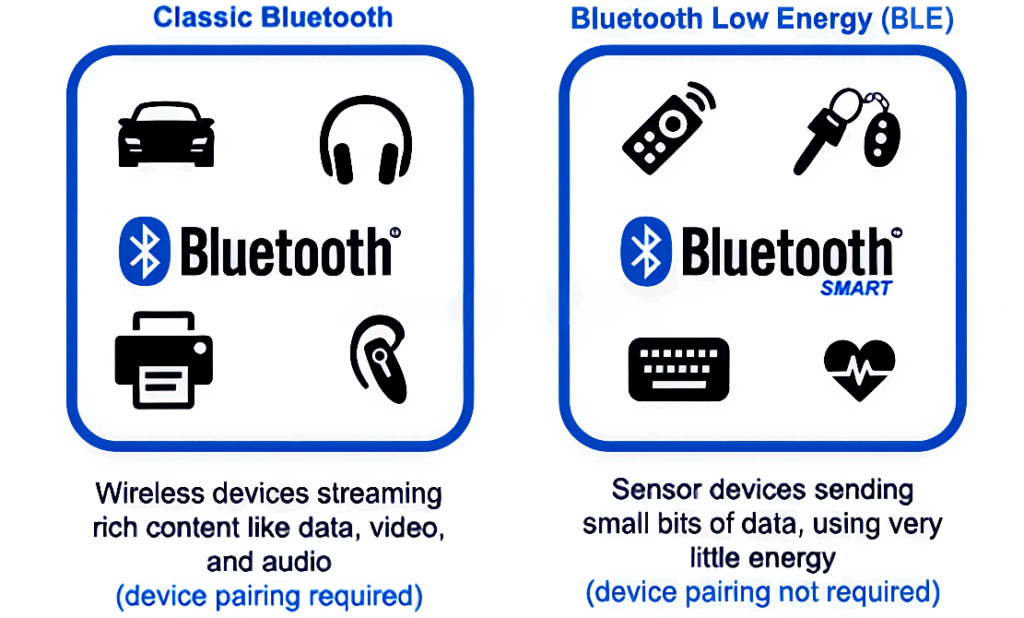
Unlike Classic Bluetooth, which focuses on establishing a persistently online data channel, the Bluetooth 5.0 Low Energy (LE) unicast mode adopts a “wake-on-demand, instantaneous communication” design philosophy. It no longer maintains a continuous connection link but instead achieves efficient communication through a precise timing synchronization mechanism.
After devices pair (e.g., a phone and a fitness band), they do not stay in a constantly connected state. Instead, they negotiate and establish a “connection interval,” waking up synchronously only at predetermined moments to complete microsecond-level data exchange before immediately entering a deep sleep state. This mechanism allows devices to remain in an ultra-low power state for over 99% of the time, providing the core support for the long battery life (months to years) of IoT devices.
Connection: Dynamic Coordination Under Precise Timing
The establishment and maintenance of a Bluetooth 5.0 unicast connection rely on a precise timing coordination mechanism. The connection establishment process is as follows:
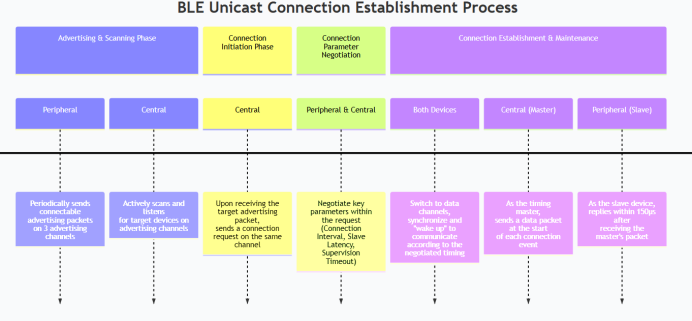
- Advertising and Scanning Phase: The peripheral device (e.g., earphone) sends advertising packets containing identity information at fixed intervals. The central device (e.g., phone) continuously scans on the advertising channels, searching for the target device.
- Connection Initiation Phase: The central device sends a connection request to the peripheral, which includes initial communication timing and suggested connection interval parameters.
- Connection Parameter Negotiation: This is the core of connection optimization. Beyond the connection interval, two other key parameters are negotiated:
- Slave Latency: When the slave device (e.g., fitness band) has no data to send, it can skip waking up for a specified number of connection interval cycles, thereby extending its sleep time.
- Supervision Timeout: A threshold for judging the connection state. If no valid communication occurs within this timeout period, the connection is considered lost, triggering reconnection or disconnection procedures.
- Connection Establishment and Maintenance: The master and slave devices switch to data channels, synchronizing their sleep and wake cycles according to the previously negotiated timing. This enables ultra-low power consumption while ensuring stable communication.
New Product: CRY578 Bluetooth LE Audio Interface Empowering BLE Testing
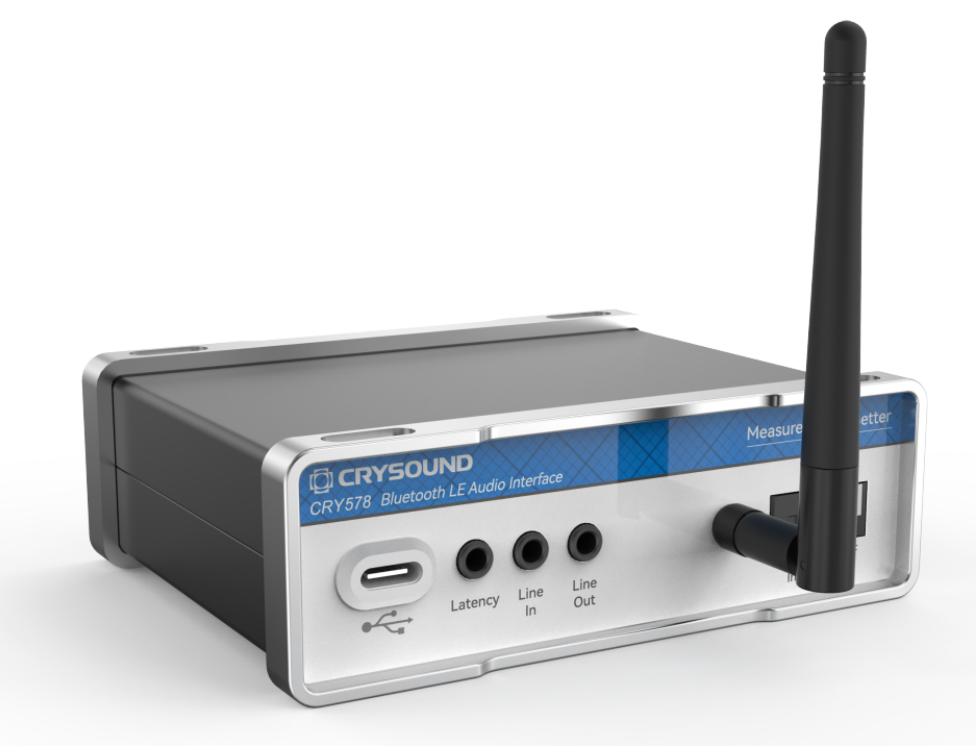
With the introduction of the new high-performance, low-complexity LC3 codec by the LE Audio standard, Bluetooth Low Energy (BLE) technology can now achieve stable transmission of high-quality stereo audio while maintaining its ultra-low power characteristics. Compared to traditional solutions, the LC3 codec can reduce bandwidth requirements by approximately 50% at the same audio quality or improve audio quality at the same bandwidth, effectively addressing the pain point of balancing low power consumption with high audio fidelity.
In response to this technological trend, our newly launched CRY578 Bluetooth LE Audio Interface comprehensively supports audio performance testing for both Classic Bluetooth (BR/EDR) and Bluetooth Low Energy (BLE), covering core metrics such as frequency response, distortion, and audio latency. It is suitable for the R&D and quality inspection phases of various Bluetooth audio products, including TWS earphones, smart speakers, and wearable devices.
For detailed specifications, application cases, or to inquire about trial opportunities for the CRY578, please fill out the “Get in touch” form below.